Sheryl Crow – Glasgow Royal Concert Hall

Live music, Music Review

Having recently opened shows for the likes of legendary artists Phil Collins and the Eagles, Sheryl Crow is grateful to be back in front of her own audience for a while. With the promise of a two-hour set featuring “a bunch of old things and…some new things too” regulars know to expect a great night. For first-timers the setlist, front heavy with mega hits like “If It Makes You Happy” and “All I Wanna Do”, is a shock to the system and an assertive reminder of why Crow, now in her late 50s, has maintained a position as one of the most revered and sought-after songwriters and female vocalists for over 2 decades.

Her energy and enthusiasm is relentless and it’s clear Crow still enjoys playing the older songs. The crowd reacts with lively call and response singalongs and dancing in the aisles. Crow acknowledges, engaging audience participation, for at least as much as she can understand of the Glasgow accent and vernacular. She shies away from recent albums for the most part but introduces a few tracks from her forthcoming release Threads, due at the end of August. The first of these is “Prove You Wrong”, a collaboration with country star Maren Morris and rock veteran Stevie Nicks. It has an instant classic rock feel that tends a little formulaic towards the end but is no less enjoyable in the context of modern rock radio playlists. Another new single, “Live Wire”, comes under the blues influence of its contributors Bonnie Raitt and Mavis Staples, and is introduced with a cracking anecdote from the recording session with Staples. As one of the slower songs in the set – and it’s by no means a ballad – “Live Wire” is evidence that Crow still has the skill to craft a meaningful and catchy song without sounding like a rehash of former glories or a nostalgic tribute to the successes of youth.

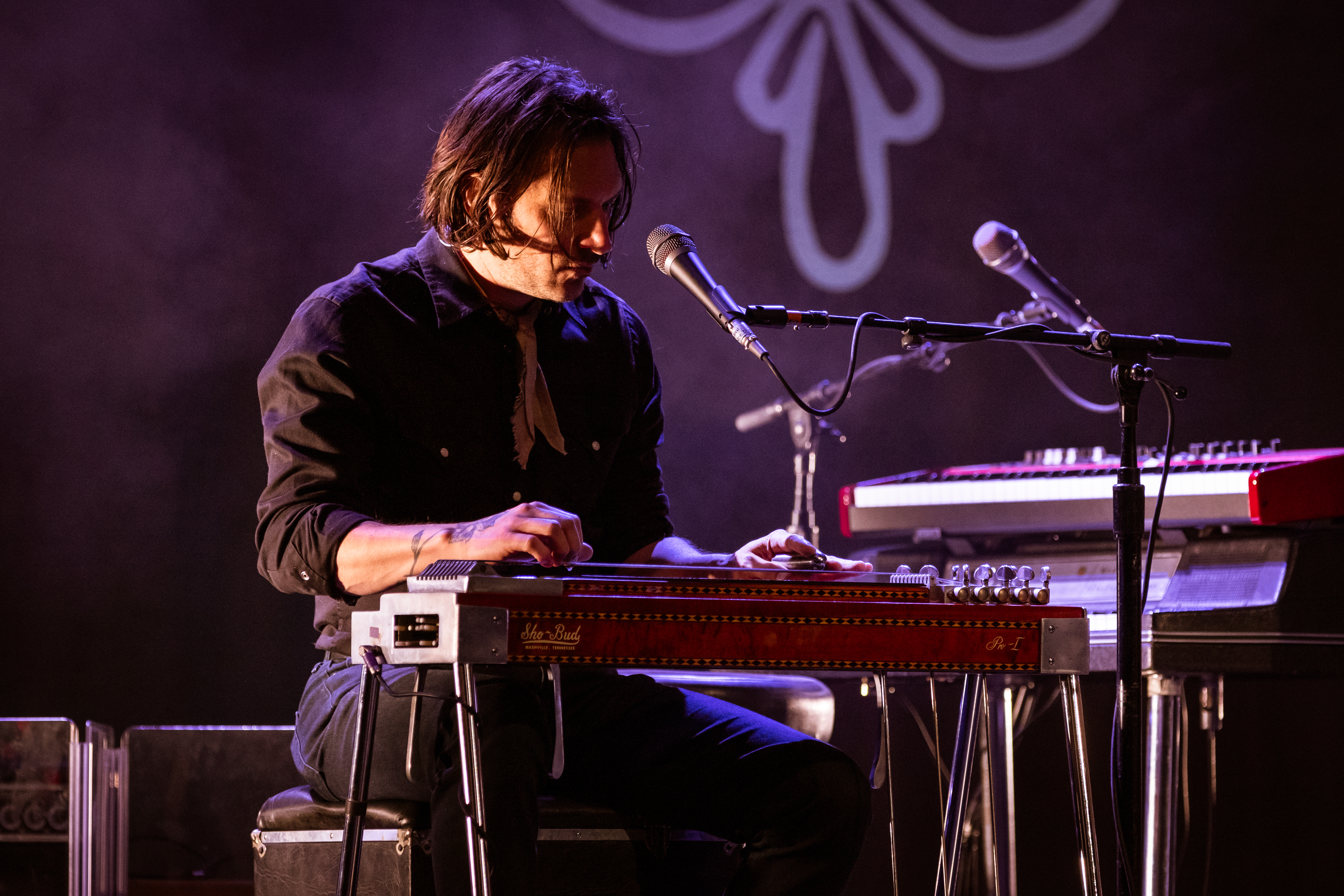
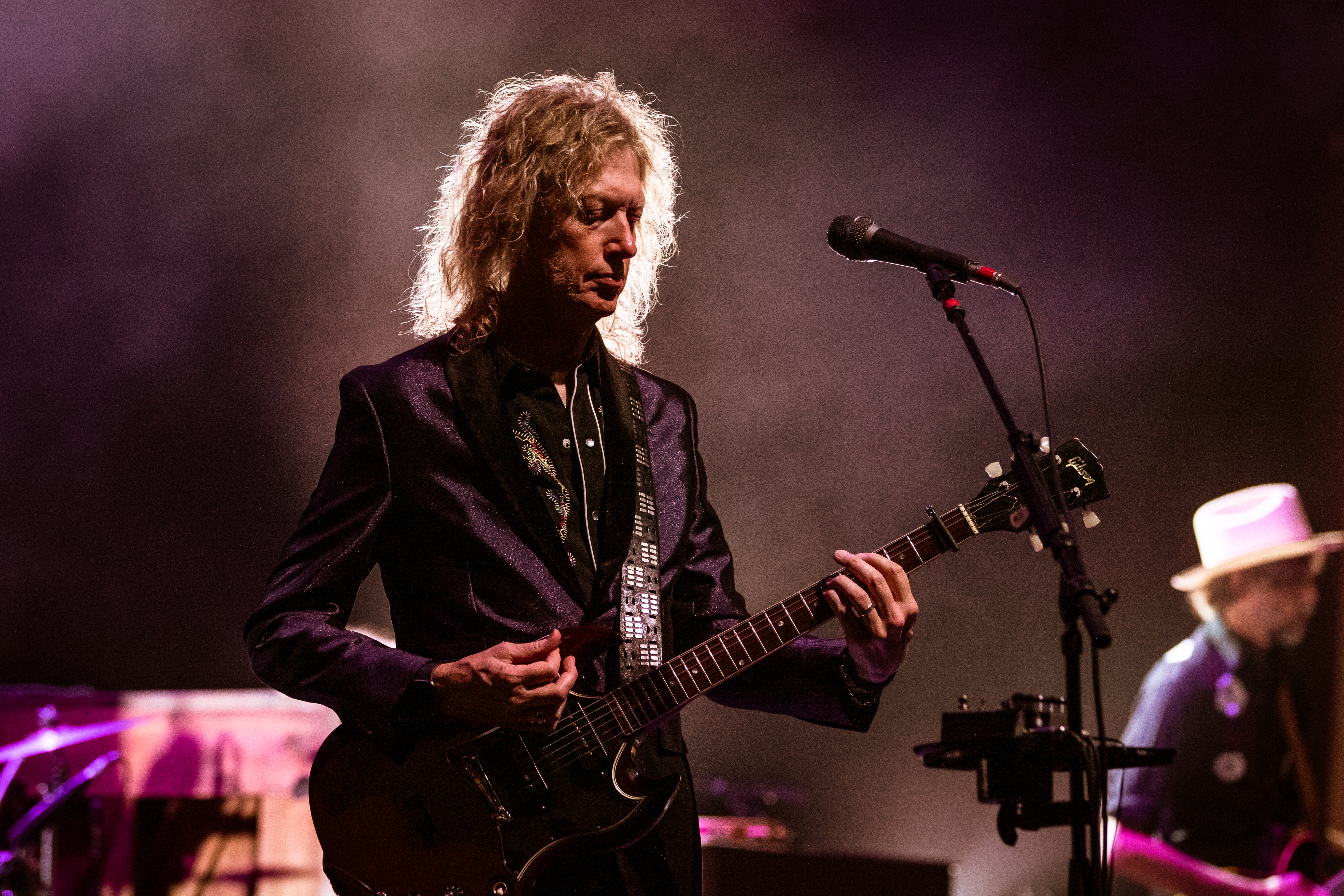
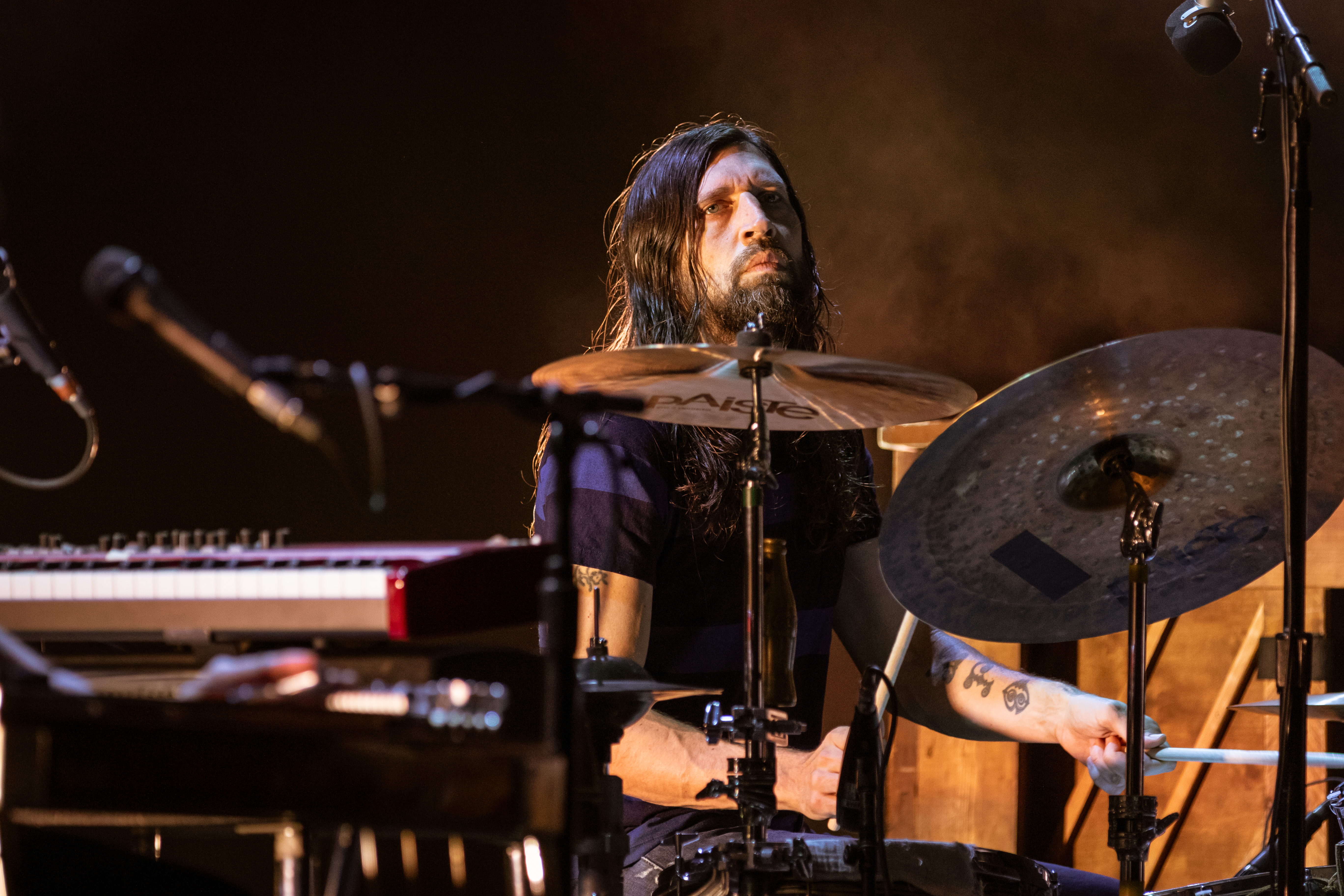
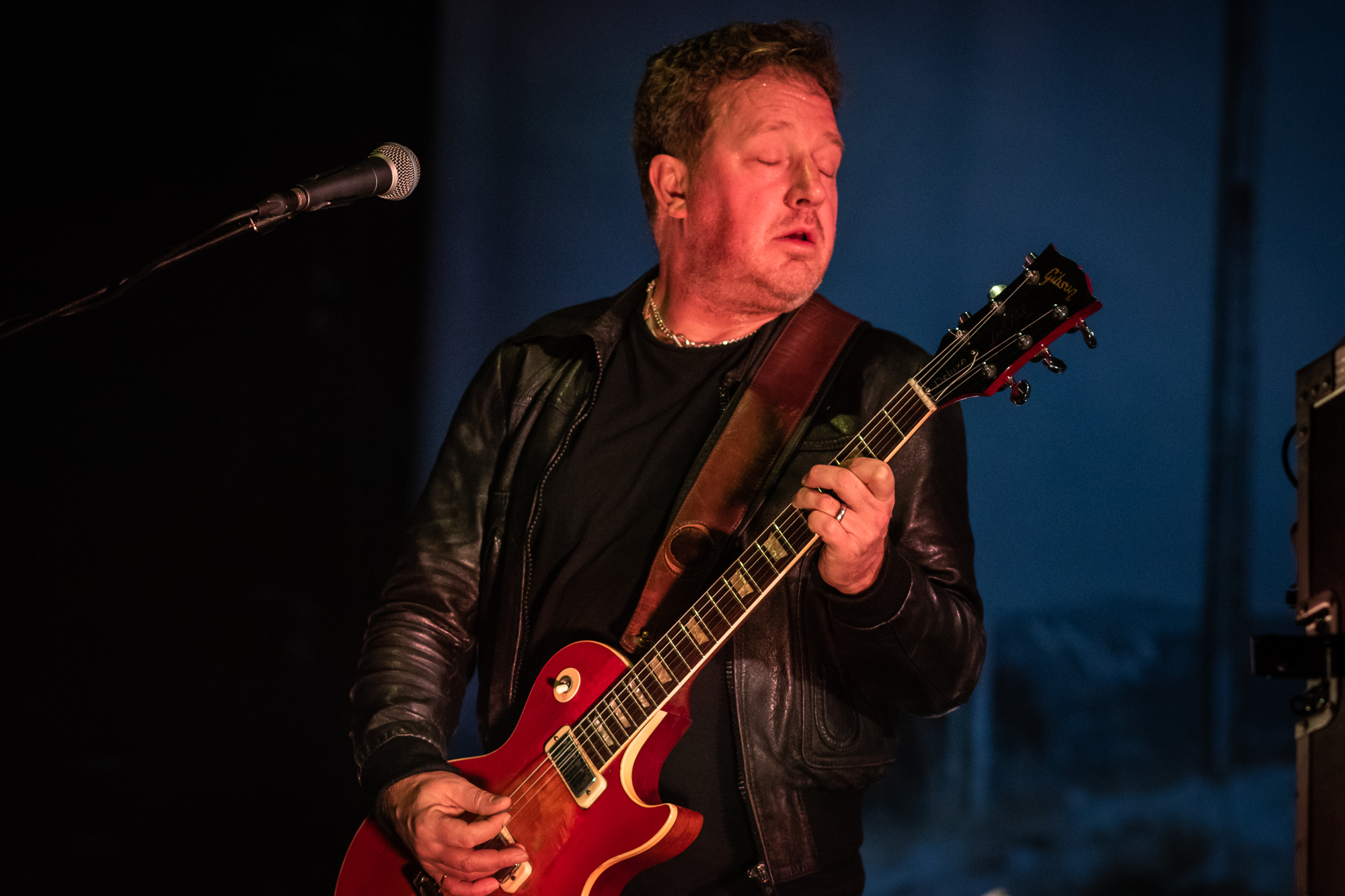
Despite adhering mostly to the acoustic guitar throughout, Crow’s knack for creating rock anthems is indisputable and well supported by her six-piece band that includes two lead guitarists of equal genius in Audley Freed and Peter Stroud; the latter garnering extra attention from the singer for his “snazzy jacket” in addition to his expertise with the six-string. The sound is further embellished with Joshua Grange on pedal steel, Jen Gunderman on piano and Robert Kearns providing bass and particularly stand out vocals as a substitute for Joe Walsh on new duet “Still The Good Old Days”, a song that Crow admits is “about being my age”. Yet the clarity and ease of her voice on the opening of “The Difficult Kind” shows an ageless strength and beauty; her voice is as good as it’s ever been. Sadly, there are times when the full force of the band is too much and Crow’s still-powerful vocal is overwhelmed, mainly by the treble of her own guitar. It’s disappointing to experience this in a room like the Concert Hall which usually delivers perfectly balanced levels, for any genre or musical style. Nevertheless the crowd is on her side and she receives a standing ovation before she’s even finished the set. Admittedly, the performance of “Best Of Times” is well deserving; Crow takes her microphone from its stand and commands the stage from end to end with multiple charged harmonica solos, set against intense strobing as the band gathers around the drum kit to pool and play off  their collective energies.

The final song of the set, “Steve McQueen”, features Crow playing a glittery red, white and blue electric guitar while her two sons – acting as occasional guitar techs throughout the night – join in on maracas from behind the keyboards. When she returns for an encore she mentions that they spent their day over at the Glasgow Science Centre and had a great time taking in the city. She dedicates “Soak Up The Sun” to her Glasgow audience in honour of the beautiful weather, before closing out with a grand rendition of “Real Gone”. The crowd need no further persuasion and remain on their feet for the duration. Warmly received at the top of the show is Hebridean singer-songwriter Colin MacLeod, himself no stranger to opening some pretty big stages, having supported the likes of Van Morrison, Robert Plant and Roger Waters in the last twelve months alone. He played a brief but beautiful solo set of melancholic-sounding songs, drawn mainly from his 2018 debut Bloodlines, with two new songs performed on acoustic guitar sandwiched into the middle of his set. MacLeod shows himself to be a versatile performer; an accomplished guitarist as well as a gifted storyteller and songwriter, with a voice as warm and mellow as a 21 year old single malt.
Travis; The Man Who 19th Anniversary – SSE Hydro

Live music, Music Review

You don’t need an excuse to listen to Travis’ 1999 sophomore album The Man Who; it’s a beautiful, timeless record loaded with endearing melodies, vibrant acoustic guitars and po-faced love songs. It’s the sort of album you listen to because you still like it, because you can’t remember a time when you didn’t like it, and probably because you can remember a time in your life when it didn’t exist and that time wasn’t as good. It’s polarising in that sense; life before and life after The Man Who. Music before, and music after. If you’ve welcomed this album into your life then you know what I’m talking about. Released in the wake of Britpop when pastiche was less of a trend, The Man Who marked a turning point, or at least a dividing line, in pop music. Without any knowing guidance, and despite being sonically informed by Oasis at the time, Travis came to define the sensitive sound of the four-piece male rock band at the turn of the century. Their iconic songs, loved or loathed, dominated radio the world over and lead the way for so many bands to follow from Coldplay through Snow Patrol and up to Mumford & Sons.

In light of this then, Travis themselves need no excuse to celebrate and tour the album that launched them into the pop-rock stratosphere so many years ago. 19 years ago, in fact. 19 is not a significant anniversary but The Man Who is a great album so why not? Fans want to hear it, the band want to play it. The music economy doesn’t get simpler than that these days. A run of shows earlier in the summer took in numerous venues across England, as well as some festival slots, so the final two-weeks of 2018 bring them around again and home to Glasgow’s SSE Hydro just in time for Christmas, and 2 years to the day since they last played here on the Everything At Once Tour.

Isle of Lewis singer songwriter Colin Macleod released one of the year’s best albums in Bloodlines and as the first of two supports for the night he delivers stripped back renditions of five songs from the record, as well as a melancholy interpretation of Ring of Fire. Beautifully understated and delicate from beginning to end, his set feels naturally calm amid the excitement and anticipation of the evening. He concedes his own disbelief at opening the show, admitting that Writing To Reach You was the first song he ever played. Right now though his own songcraft is fully matured and his confidence on stage serves him well, alone in the spotlight.

The second support are relative “old favourites” of Travis’ audience, and certainly owe a debt to the acoustic rock path paved by The Man Who. That said Turin Brakes have never stood in the shadows and since touring with Travis in 2001 they have remained friends and contemporaries, not rivals. Their divergent musical roads couldn’t be better exemplified than in tonight’s performance. A 10-song set draws from across their catalogue, never focussing heavily on one period and certainly not trading on nostalgia, but rather offering a cohesive sonic representation of where the band are now. And it’s a great sound. They’ve always been known to indulge their rock tendencies in the live setting and tonight is no exception. They’re clearly having a lot of fun; whether it’s because they’re out to impress as a support act, or because they don’t have the pressure of headlining, it doesn’t seem to matter, their performance is top shelf. Older hits like Painkiller and Underdog are reworked with fresh intros and some mint distortion on the acoustic guitars. If anyone walked in during Black Rabbit expecting a Travis concert they’d be very surprised by the rambling proggy jam happening on stage. It keeps on the sunny side of excess though and the band are sent off with just the appropriate level of enthusiasm ahead of the main act.

I want to be objective about what happened next but there’s an obvious reason I bought a ticket for this show. Here instead are some facts about the gig:

Between support sets Fran Healy came out to the barrier and met fans, shook hands, posed for photos, signed things, chatted to people.

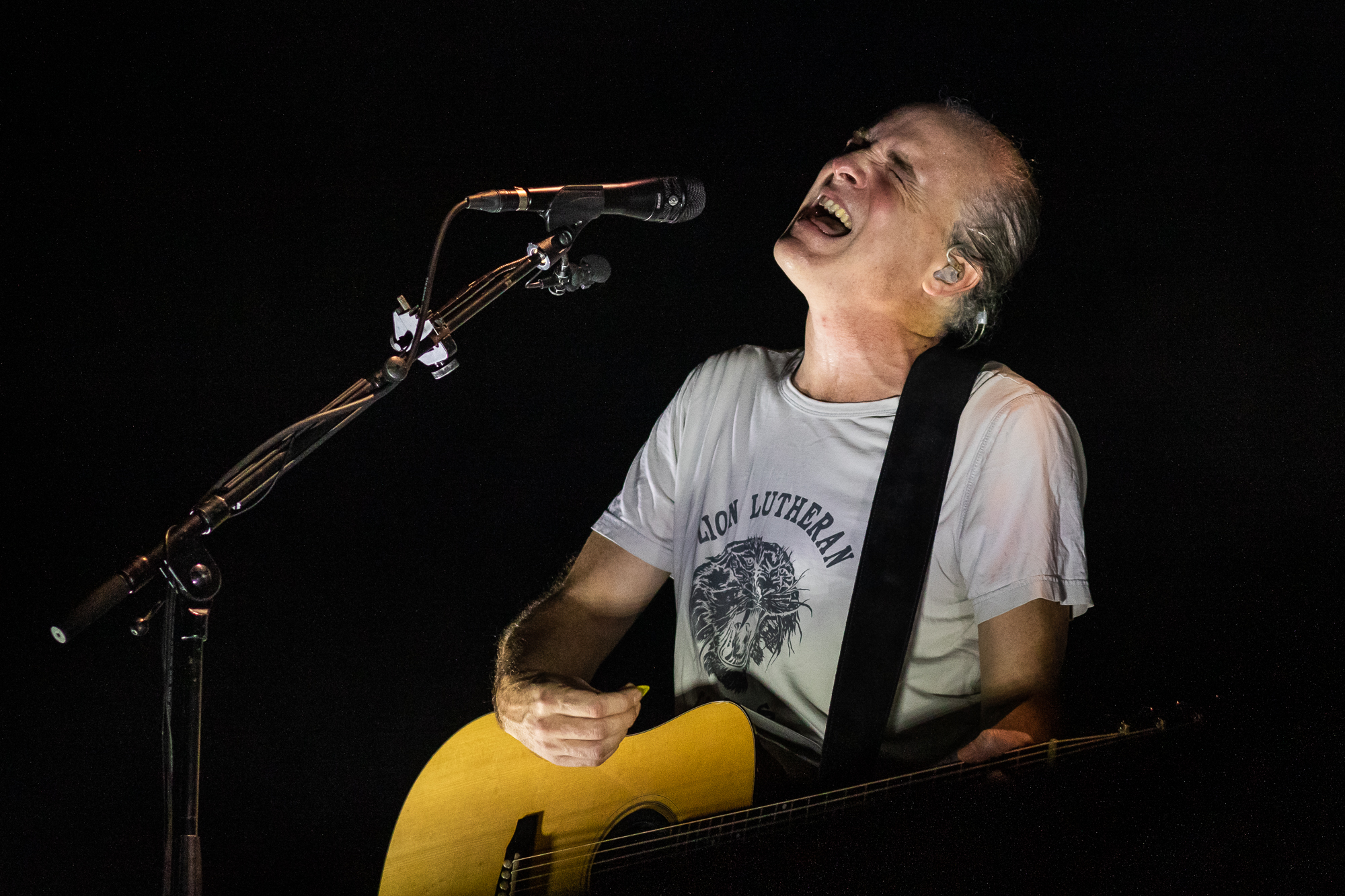
On stage Fran wore a kilt and a “Zion Lutheran Cougars” t-shirt identical to the one he wore in the video for Why Does It Always Rain On Me?

Andy Dunlop got very sweaty, very quickly.

Dougie Payne smiled a lot.

The band played The Man Who from start to finish, including its hidden track Blue Flashing Light, and then left the stage.

The second half of the set comprised a “best of” selection of singles and closed with a Christmas medley, accompanied by a couple of brawling jakey Santas.

But what was it like? Well honestly, it was pretty special. The nature of a start to end album show is that inevitably a band has to play their hits as they lie, i.e. Driftwood, Turn and Why Does It Always Rain On Me? went out in the first half. It’s unorthodox to play your biggest single in the first hour of your show and it felt a bit strange to be pogo-ing  so early in the night but the other side of this is that the band get to play some songs that otherwise wouldn’t make it onto the usual setlist. I haven’t heard Last Laugh of the Laughter in years and the harmonies were sweeter than I can ever remember. It was perhaps the only song that sounded different from the album version, and only because of the strength of the backing vocals, the rest was very true to the original sound. Another take on this format is that some of the band’s more challenging songs also have to come out. Much as they might be endeared to the hardcore fandom moments like Luv and She’s So Strange were reminders of why The Man Who was critically derided as a collection of “sad” “ballads”, the latter in particular proving a bit of a stretch for Fran’s vocal chords. But there were fond memories and pleasing anecdotes to go along with these old songs and the band have never lost their wondrous humour which always keeps their live shows so engaging and entertaining.

The second half of the set highlighted a few other things about The Man Who. Firstly, that the significance of the album to fans cannot be understated; once upon a time these were some of the only Travis songs in existence and they were adored mightily and whole-heartedly which, in the context of the live show, means the album falls so naturally and familiarly on the ears that it sounds like a “best of” in itself, even up against the established singles like Side and Closer. Every song is so well received. Secondly, that Travis’ true nature has always been as a rock band. From the opening chord of Blue Flashing Light the atmosphere in the arena is completely changed, electrified, amplified. The Man Who happens to be a cohesive collection of quiet songs and there are many others in the catalogue (see The Invisible Band) but when given a platform, or an entire half a set, the band choose to play loud, choose to rock out, choose guitar solos, choose to traverse the stage, choose to jump off the drum kit. The Man Who is another side to that band but it was never the limit of their abilities or interests. Lastly, that Travis are a band from Glasgow and were they not, they would never have written as iconic a song as Why Does It Always Rain On Me? because where else in the world could they have found inspiration in the best audience of voices to belt out such an anthem?