Maximo Park – Queen’s Hall

Live music, Music Review

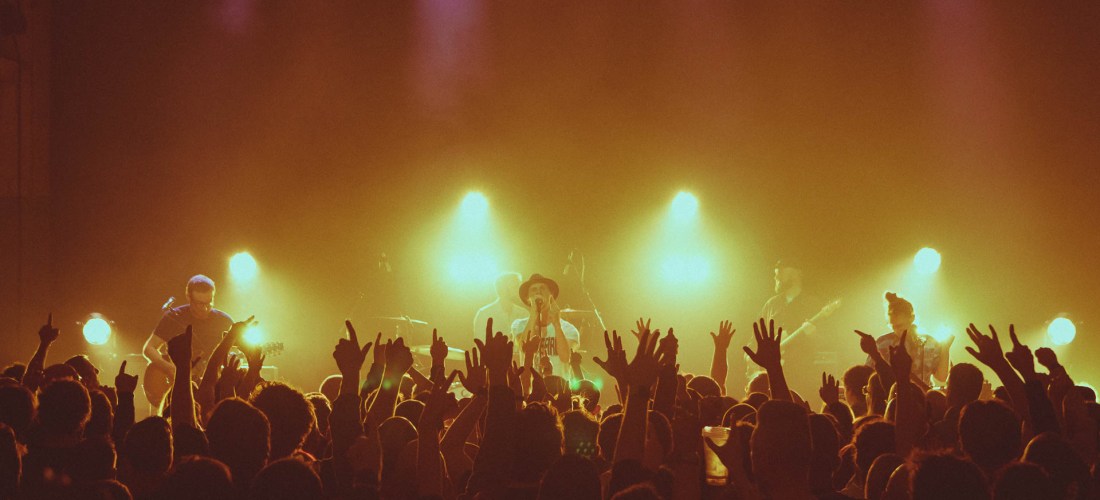
Maximo Park are thrilled to play the Queen’s Hall for the first time, even when things don’t go exactly to plan.

The music of Maximo Park, the indie rock outfit from northeast England, has been called many things over the band’s 20-plus-year history, including – but not limited to – “intellectual”, “energetic”, “intense”, “political”, “optimistic”, “endearing”, “romantic”, “emotional”, “passionate” and “sincere”. A lot of very broad, human qualities embodied in their sound and in their lyrics especially. At different times they’ve been categorised as “alternative rock” and “post punk” and “art pop” but regardless of pigeonholing the loudest reviews have generally been quite positive; critics like to say nice things about this band.

I’m not here to argue with the tastemakers of history but one thing that isn’t mentioned enough, in my opinion, is how awkwardly self-aware this band is and has always been. And when I say “this band” I’m really talking about its most expressive incarnation, its mouthpiece. I’m talking about Paul Smith, frontman, lyricist, self-anointed spokesperson, social media manager, mailing list usurper. The singer who appears to be 105% present in every performance and 110% in his head at all times.
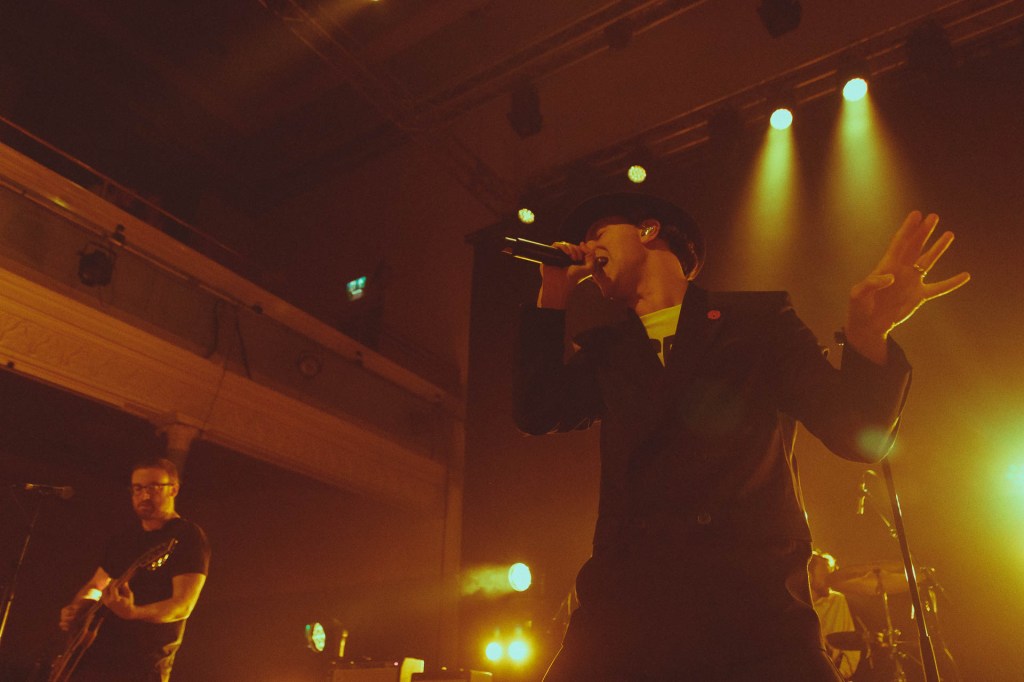
Paul Smith has made a career out of turning the banal surreal, out of punctuating abstract scenes with his own unmistakable, visceral, whiplash-inducing lyrical couplets. He’s very good with the words. And dancing. And singing, too; excellent with the singing. Yet, when he’s on stage he often comes across as if he’s dodging imaginary word bullets. It’s like his superpower is intuiting what not to say so as to avoid getting retroactively cancelled in 30 years’ time. It must be a real struggle when you have such an actively extensive lexicon, to find just the right way of saying “this song is about geographical privilege in the arts” or “bodily autonomy”, for example – legitimate examples, by the way – and yet Smith insists on trying this for every song, or at least every other song and most songs in between. It’s distracting to watch him calculating in real time – he talks a lot for someone who says very little – but true fans and word nerds understand and appreciate the effort. He’s really a sensitive, new age guy.

Anyway, no-one talks about this nearly enough for my liking.

You know what makes this band so great? And, especially, what makes this band so great live?

Duncan Lloyd: Founder, guitarist, songwriter and former co-frontman – once-upon-a-time, before the incumbent magnetic frontman arrived – this guy is just effortlessly cool. His mere presence brings the average temperature of any room down by approximately six degrees Celsius. Understated is an understatement when you’re talking about Duncan Lloyd – he’s on stage, guitar is everywhere but you have no idea where it’s coming from because this guy has effervesced into pure sonic air. That’s right, this guy is so cool he defies physics. Also if you look up the Maximo Park Wikipedia timeline of band members you’ll see that for the last five years Lloyd is credited with guitars, keys, bass and backing vocals; the guy could literally form a Maximo Park one-man tribute band.

Speaking of one-man bands…

You know what else makes this band so great?

Tom English plays the drumkit like it’s an orchestra, like he’s an orchestra. Like he’s conductor and concertmaster; melody, counter melody, harmony and – of course – percussion. He exacts tonality, timbre and tempo from his instrument with the stone-faced charm of Charlie Watts doing his best impression of Animal from The Muppets, or vice versa. His style is emphatic, idiosyncratic. His fills often underscore the ferocity of Lloyd’s own percussive strumming without ever entertaining the spotlight for even a second, though you’d happily listen to him pound out a sixteen-minute solo, given half the chance.

I could go on. I will go on.

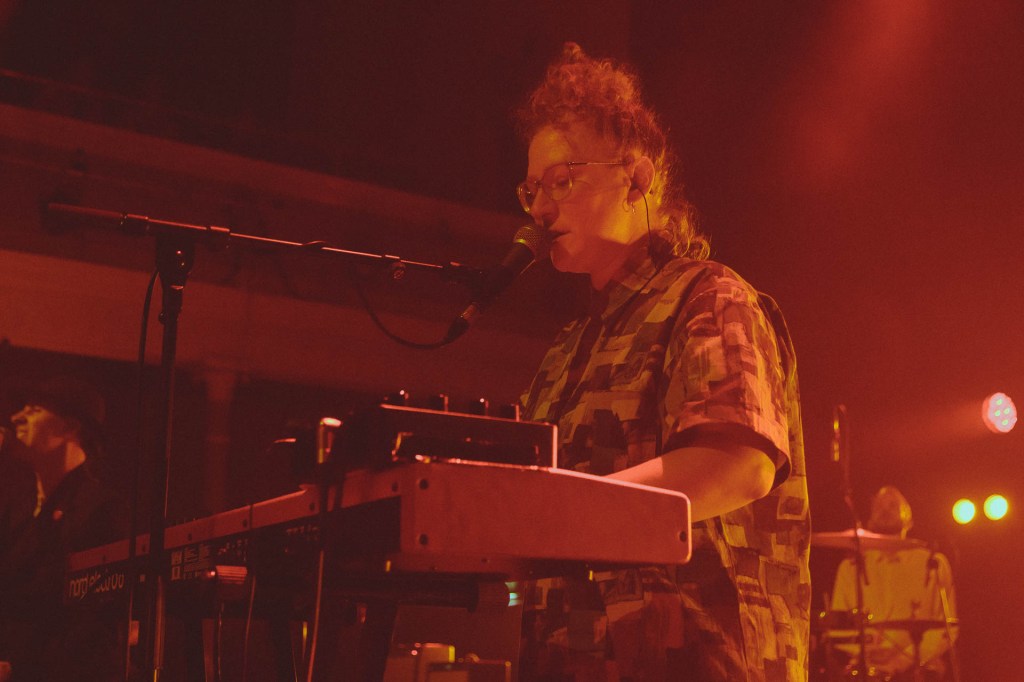
Jemma Freese, joined the band as a touring member in 2019 following original keyboardist Lukas Wooller’s departure and immigration to Australia – he’s doing fine; he DJs with a friend of mine in Melbourne sometimes, comes back to visit family in Yorkshire and complain about the weather. Jemma Freese is now an integral part of the Maximo Park live set-up and like Smith’s higher consciousness she probably doesn’t get the attention she deserves. There are times when, especially on the earlier songs, the only thing elevating their performance above the band’s very energetic original recordings is that deliciously indefinable X-factor that is the human voice, Jemma’s voice, and also a particularly juicy keyboard line delivered with just the right amount of spice. Jemma Freese is a musical master chef and connoisseur of tone. When she sings, you listen. When she plays, you feel something: sated.
What’s missing?

Bass. Okay, sure, sometimes in acoustic sets they’ll go without, but you wouldn’t go without, if you had a choice. Listening to Maximo Park songs without bass would be like watching The Wizard of Oz without the colour green. It’s the same story and the characters are all accounted for but suddenly that witch isn’t so scary and the Emerald City is, well, it’s just a city, isn’t it? There’s a fantastical magic about the basslines that Maximo Park deploy, something elemental, that was forged in their very beginning and that carries on today through the presence of Andrew Lowther who was loaned to the band by their musical brothers, Field Music, and who now, like a shared favourite toy, has to be agreeably passed back and forth between the two bands seemingly until one of them outgrows their enjoyment of him, or he’s broken beyond repair. Hopefully never the latter.

So these five humans get together in Edinburgh on a gloomy, autumnal Friday night in 2024. They bash out 18 songs in roughly 75 minutes. I know without checking my watch that it’s about 75 minutes because in the 30-something times I’ve seen them live they’ve only once pushed the 80-minute mark. They have a setlist formula and – eight albums in – they’re sticking to it. The sound is surprisingly good for a room that’s not designed for or suited to amplified instruments.

It’s going well for them until halfway through when a crackle in the monitors breaks Smith’s concentration and the system has to be rebooted. It’s fine, actually, they weren’t building great momentum with the new song / old song / new song rhythm at that point anyway, more of a haunted house stop-start carnival ride energy. This added bit of improvised drama plays into the performance-as-art-installation vibe they’ve been cultivating on the recent instore junket for Stream of Life, their latest collective release about geographical privilege and bodily autonomy (among other things). They persevere serendipitously towards emotional and technical catharsis through a semi-acoustic rendition of the album’s title track that’s really nice. And then they power through the rest of the set like it’s business as usual, which it is: Two back-to-back smash hits to close out the set and then two unsuspecting old favourites for the encore.

Now there’s a word to describe Maximo Park that doesn’t come up very often: Consistent. They’re a consistent live band. They’re consistent on record. They’re reliable. Professional. These aren’t the sexy qualities that we lust after in our Rock Gods and Pop Stars, these are traits on a whole other level. These are the characteristics we seek out in life partners, ride-or-die besties, colleagues, godparents to our children and, importantly, qualities we aspire to embody ourselves. We seek and we find them in our favourite bands. No wonder critics like to say such nice things about them.
The National – Edinburgh Castle

Festivals, Live music, Music Review

No matter how many times you’ve seen The National live before, you never quite know what their next performance will deliver: Chaos; Ecstasy; Frivolity; Indignation; the Apocalypse. Just about anything is possible.

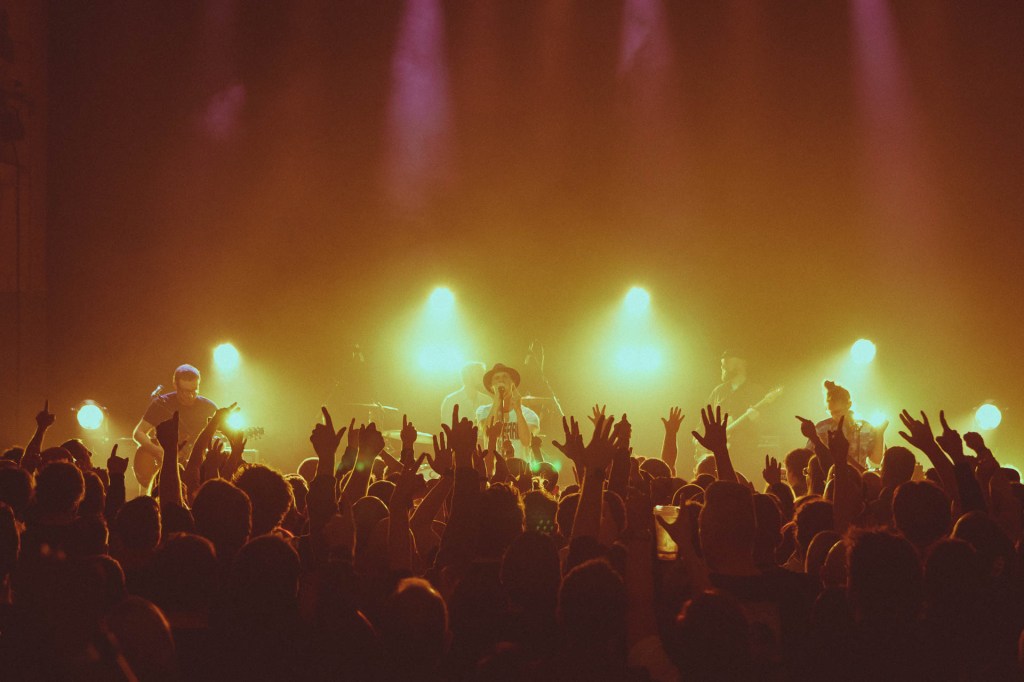
The darkly solemn lyrics of frontman Matt Berninger coupled with the delicately euphoric indie rock tones of his six bandmates are a heady mix on record but when given the large-scale flesh-and-blood treatment of an arena – or temporary stadium, in front of a castle, atop an extinct volcano – the experience is thoroughly intoxicating.

Their headline performance at Edinburgh Castle capped off a string of hugely successful summer festival dates and open-air shows across Europe and the UK including Primavera Sound, Montreux Jazz Festival and Glastonbury, and as testament to their still ever-growing popularity, fans travelled from all over to be in attendance, with some transient international visitors even buying tickets on the night.

Bess Atwell opened the night; her buttery, mellifluous vocal resonating over the Old Town in the early evening sun. The ease of her performance belied any end-of-tour emotions she may have been feeling, as well as the illness which she later disclosed via social media. Instead she played with an easy charm, drawing mostly on songs from her latest album “Light Sleeper” which was produced by The National’s Aaron Dessner. The opening 1-2 of “Everybody Who’s Not In Love With You Is Wrong” and “Release Myself” was even more devastating than on record and the building beauty of “Something Now” soared as the clouds broke to allow a little golden light onto the highest grandstand seating.

When The National arrived on stage Berninger was in a savagely playful mood, mingling and tormenting fans and occasionally spouting political quips. At times his voice came with more force than melody but as the set wore on he seemed to settle into the songs with a commanding -and less threatening- presence.

Throughout “Don’t Swallow The Cap” he focused his effort on collecting and arranging cardboard signs from the audience; an unusual recent phenomenon for anyone other than Springsteen but it seems this expression of fandom is making a welcome comeback.

The run of “I Need My Girl”, “Slow Show” and “Sorrow” drew a particularly adoring reaction from the crowd but the intensity was regularly offset by Berninger’s tangential introductions and he even maliciously disembowelled a soft toy with his teeth during “Alien”.

The set concluded with “Fake Empire” before the band returned for a five-song power-encore that featured a duet with Bess Atwell, a dedication to Scott Hutchison and Tiny Changes and Berninger testing the limit of his microphone lead as he roamed the audience during “Terrible Love”. The almost-traditional closer of an unplugged “Vanderlyle Crybaby Geeks” cascaded from all sides of the castle as Berninger gathered his cardboard mementos and exited the stage, leaving just acoustic guitars and a few hundred voices echoing their refrain.

The Big Moon – Summerhall

Live music, Music Review

If there was ever any question over the popularity of guitar bands in the last few years consider this; The Big Moon are on their second round of touring through the UK since releasing their sophomore record at the beginning of January. And they’ve only gone and sold the place out! Following on from a successful run of shows supporting Bombay Bicycle Club earlier in the month they return to Scotland on the very last – leap – night of February to headline Edinburgh’s Summerhall.

Anticipation is palpable with a queue snaking down the stairs and out into the courtyard. Fans are eager to get in early and snag a good position. They’re also keen to look the part and the merch table is already busy flogging t-shirts and albums; a positive sign for any artist in the streaming age but especially for new and breaking bands.

There’s a big portion of the audience already in place when tour support Prima Queen take to the stage. They don’t say much for the first few songs and only really get chatty before the end of the set when they mention that their bassist got dumped 20 minutes before soundcheck – “so rock’n’roll” – and that they put their band name on the drums because they forgot to mention it at previous shows. The mood is light and the band have a great chemistry on stage. Lead vocals are shared between guitarists Louise MacPhail and Kristin McFadden. They have that kind of effortlessly powerful command of harmonies, familiar to fans of boygenius and Alvvays, and with tones and melodies made for summer festival afternoons blissing out under blue skies. It’s a gentle kind of warm up set that closes out with “Milk Teeth” and “Mexico” and leaves the crowd slightly swaying, slightly nodding, ready for the main event.

From the moment The Big Moon appear there’s a buzzing warmth in the room. It’s not quite Beatles hysteria but it’s damn infectious! They meet that audience energy with the scratchy jangle of debut album opener Sucker which, despite its usual dynamic shifts, remains buoyant throughout. They follow up swiftly with the pulsing disco vibe of Don’t Think before settling into a lyrical groove with Take A Piece. The new songs are just as enthusiastically received as those from the band’s Mercury nominated 2017 release Love In The 4th Dimension despite being vastly different in both sound and subject matter. Of course in the live setting there’s minimal production to hide behind and every catchy chorus and driving guitar feels just as vibrant and raw as it should. Lyrically, Juliette Jackson’s direct and literal style is engaging whether lamenting youthful relationships, wrestling inner demons or staring defiantly into the void. Witty couplets cut through the repetitive choruses and reconnect the audience with the characters and emotions at the heart of each song. There’s flutes, there’s sing-alongs, there’s even a Fatboy Slim cover, either side of which Jackson is off the stage and down on the barrier leading “a gentle song with some yelling at the end” (Waves) followed by a riotous crowd favourite (Bonfire). The end comes around too quickly for fans who are vigorous in their applause and even after the last song, after the house music starts playing, are unwilling to accept that there won’t be an encore tonight. Naturally it’s disappointing for everyone who wanted to hear more from the band but there’s something so heartening about an authentic rock performance that elicits such an organic reaction from those present. It’s refreshing. It’s invigorating. It’s healthy. Guitar bands like Prima Queen and The Big Moon are good for the health of the industry.

John Grant – Edinburgh Playhouse

Live music, Music Review

Full Disclosure: I love John Grant. From the very first play of Pale Green Ghosts – which I bought purely on the basis of Amazon’s persistent recommendation and the colour of the typeface used for his name on the cover – I was head over heels for his earthy baritone and acerbic lyrics. The unfamiliar blend of piano balladry and electronica got right under my skin. Without investigating his musical lineage or consulting any of my gig buddies I bought a ticket for his show at the O2 ABC that October and found myself on the barrier, positively beaming for the entire set. He had this sexy disco lumberjack vibe going that was utterly endearing; I walked away from that gig dazed but heart-full. I saw John play in each of the next 3 years. His performances with the Royal Northern Sinfonia were astonishingly beautiful and incredibly inspiring. At the very last show of touring Pale Green Ghosts, on his birthday no less, he dueted on Glacier with Villagers’ Conor O’Brien, dedicating it to Ireland, where same-sex marriage had recently been legalised by popular vote.

Each show and every tour was, in its own way, very special – I mean, the last time I saw him, at Celtic Connections, one of my very best friends was supporting – and so when I arrived at the Edinburgh Playhouse on Monday evening my heart was already this kind of translucent sponge, eager to soak up as much of that voice and wit and charm as the night would allow. As it happened, the night allowed for plenty as the show was expected to run from 8pm until approximately 9.30pm with no support or interval. 90 minutes to just sit and absorb. You could feel the excitement and anticipation among the crowd, hurrying into their seats and checking times with every steward on the way in.

When the lights went down almighty applause erupted and sustained until John and his band were all in their positions. Then, a pause. The pulsing beat and electronic arpeggio opening You Don’t Have To saw the crowd instantly nodding along. It was calm for the most part; soothing melancholy love songs interspersed with increasingly raucous applause and the occasionally indecipherable come-on from somewhere in the back of the stalls. The set was light on songs from the most recent album, 2015’s Grey Tickles, Black Pressure, but flowed nicely and allowed John to move between synth, piano and vocal duties regularly, working the stage strategically. With otherwise perfect posture he committed to TC & Honeybear with his whole body, expressing through piano sentiments that cannot quite be articulated by words and melody combined.

The performer-audience cycle repeated thus; powerfully emotive song, rapturous applause, restorative pause. “I’m glad we can enjoy silence together” John quipped. “This is for you” he continued before delivering a first class rendition of GMF. One “fun song to play” lead to another and Pale Green Ghosts was met with yet a greater level of enthusiasm from the already fervent crowd. There was a maelstrom of lights across the stage and in the centre, while not singing, John stood with his hands outstretched toward the heavens, as if conducting the storm. This exhibition filled the vastness of the stage convincingly with the drummer at one point upstanding to play. The sheer physicality of the sound was reciprocated with thunderous applause after a final flash plunged the stage into darkness, so loud that you couldn’t even hear John’s gratitude. This cleared the sonic landscape for newcomer and title track from the forthcoming album Love Is Magic, due in October. The bittersweet, synth-heavy song isn’t exceptional to his usual pallette but stood out partly for the fact it is very familiar to some fans and not at all to others; the mixed reception was noticeable. The song features layers of sounds filtering through like an 80s sci-fi soundtrack or arcade game (most likely inspired by the latter; John was actually wearing an Atari Centipede t-shirt). Perhaps it stood in contrast to what played before it; it certainly couldn’t be more different to what followed. In its emphatic simplicity Glacier lays John’s sonorous voice as the centrepiece, gradually adorned with piano flourishes that grow into an epic flurry of percussive harmonies. It was followed swiftly and gracefully by Queen Of Denmark as John took to the piano to conduct the rest of his band through the dramatic finale, fists futilely pounding at the keyboard while guitar and drums battled for ultimate supremacy of volume. As the last brutal dynamic explosion occurred many of the crowd quickly leapt from their seats in fits of furious applause. I wouldn’t have believed those 3000 people could get any louder, but here, they sure showed me! The madness spread until all three levels of seating had delivered a standing ovation and beckoned John and his supporting musicians back to the stage.

Although it was obviously a planned encore it was pitched to the audience, rather than the occasion. Sigourney Weaver made it into the final act by request. In one final burst of shimmering synth, Black Belt had people throwing shapes in their seats, even out of their seats, like the weekend was just getting started. After an hour and 50 minutes of music everywhere you looked there were people grooving and smiling and bouncing, all under the spell of John Grant. And even if they weren’t, I was. I am. I love John Grant.

Setlist

You Don’t Have To

Outer Space

Marz

Grey Tickles, Black Pressure

Global Warming

TC and Honeybear

It’s Easier

GMF

Pale Green Ghosts

Love Is Magic

Glacier

Queen of Denmark

___

Vietnam

Caramel

It Doesn’t Matter To Him

Sigourney Weaver

Black Belt

New Worlds; Bill Murray, Jan Vogler & Friends – Festival Theatre

Discovery, Live music, Music Review

“I swear to you there are divine things more beautiful than words can tell.”

Critiquing performance requires an open mind. Sure, some understanding of form, style and genre will help. Context is important; knowing where and how a piece fits within an artist’s catalogue can provide insight into what is being presented. In the theatre or concert hall a trained eye will scrutinise presence and movement, the ears will assess vocalisation and technical proficiency, and the mind will follow storylines and characterisation. Critiquing performance requires a wealth of experience and knowledge of the subject. In this respect I am not qualified to pass judgement on Bill Murray and Jan Vogler’s “New Worlds” production but with an open mind I have observed this:

The show draws links between Johann Sebastian Bach and Ernest Hemingway, Van Morrison, Mark Twain and George Gershwin. It pairs comedy with classical music. It is rooted in the deep love of literature, poetry and performance. It is not a play, or a musical, or a recital, or a reading yet it draws on all of these performance types, creating a sort of cabaret experience that is at times abstract and entertaining, while otherwise being complete, immersive escapism.

The audience reflects this diversity; there are ladies in pearls and gentlemen in suits, there are students and retirees, celebrities, a couple down the front of the stalls in iconic red “Zissou” beanies. This collaboration clearly has broad appeal. It’s delightful to witness so many different people gathered in one room and once the show gets going everyone is off on a journey together.

The concept for the show is quite simple: American actor, Murray and German cellist, Vogler met a few years ago and became firm friends over their mutual interests in classical music and American literature. In 2016 the notion for a performance combining these came when Vogler heard Murray’s public reading of a Walt Whitman poem. The task of connecting the dots between music and words across continents is equally ambitious and exciting and the two leads, joined by Mira Wang on violin and Vanessa Perez on piano, are invested in delivering something that is both entertaining and enlightening.

The programme begins with an extract from an interview with Hemingway, Murray acting as interviewer and interviewee – acting as all characters throughout the evening in fact, his is the only voice heard from the stage. This isn’t as confusing as it sounds since he is an accomplished voice actor; later he portrays three separate French characters within a single scene to humorous effect. The Hemingway piece functions as an introduction for Vogler and his instrument.  His playing is delicate and precise and in an instant the audience understands – this is a world class performance. There is a sort of thematic chronology to the programme. Overall the tone is quite light, romantic, with vivid language setting the mind to distant places and periods.  On Ravel’s “Blues” the playing is especially jovial as Wang shines, both in her playing and appearance. The stage is minimal but glamorous, set before a grand piano, the respective performers in their suits and gowns. There are no distractions, the focus is always on the music or the words. Yet it’s not an entirely static or regimented production; audience participation is welcomed on “It Ain’t Necessarily So” as Murray’s naturally gruff vocal is revealed for the first time. His contributions are mainly spoken but as the evening progresses he becomes more inclined to melody. To be clear, Bill Murray is not a fantastic live singer. Anyone expecting him to pull off a Bing Crosby screen-to-stage transformation will walk away disillusioned.  That’s not where his strength lies. In the lower register his voice is sweet and expressive, his accent softened slightly for added sensitivity to dynamics but as a skilled, dramatic performer he knows how to use his full range of voice to convey sentiment. He uses, or rather brutalises, a Van Morrison number to really stretch those vocal chords before laying into an utterly captivating reading from “The Adventures of Huckleberry Finn”.  Vogler’s tender rendition of Henry Mancini’s “Moon River” elevates this beautiful piece of storytelling and even as Murray speaks Vogler, a metre or so to his right, sits spellbound in silent rapture. Like a parent reading to a child, putting on different voices and accents for the characters, Murray holds his audience in this most intimate and calmly intense moment. Suspense in the story translates to suspense on the stage, emphasising how well crafted this showcase truly is.

The partnering of music with verse is confounding and revelatory to the very last. Songs feature towards the end of the set with an amusing medley from “West Side Story”. Indeed it’s part of the greater narrative of the show but doesn’t necessarily add anything besides humour – an opportunity for Murray to shake out some inner silly that’s obviously been bubbling below the surface all night. He’s done well to stay assuredly serious this long. The performers all take their leave but are hastily beckoned back with admirable vigour. “We got nowhere else to go” Murray tells the audience wryly and the ensemble proceed to run through a spontaneous repertoire of songs and poetry as diverse as the preceding event. There’s tittering among the audience in response to Murray’s pronunciation of loch before a “Loch Lomond” singalong ensues with the house lights illuminating the crowd and drawing them into the production once more.

This surreal evening closes with Bill Murray ambling through the stalls tossing long-stemmed roses to patrons. And a standing ovation. I’m still not entirely sure what we’ve just witnessed; something fun, intriguing, special, musical, unique, creative, inspiring, something beautiful…more than words can tell.

Courtney Marie Andrews – Summerhall

Live music, Music Review

From beginning to end, the intimate authenticity of Courtney Marie Andrews’ live performance is astonishing. There’s a rare, indefinable quality in the room; it’s warm, it’s dark, and somehow the stage and crowd feel closer than close. It’s one of those instances where artist and audience are engaged in a perfect symbiosis that results in transcendent gratification. The experience seems not to be confined within the walls and high, angular ceiling of Summerhall’s Dissection Room, in fact it seems not to take place within any defined space or time.

Opening the show is Virginia native Twain, aka Mat Davidson, with a softly spoken stage manner that belies his intensely emotive songwriting and delivery. Reminiscent of early Bright Eyes or Jose Gonzalez’s more plaintive moments, he offers up his gentle soul to those gathered and is received with a mix of tender patience and awe. The audience is drawn in to his memories of youthful folly and reflections on the daily challenges of living in America right now. It’s a brief but sweet encounter that leaves the heart tethered slightly to the final note, hoping to hear just one more song for closure.

Since her last visit to Scotland Courtney Marie Andrews has released an album of overwhelming lamentation with patches of hope and humility. May Your Kindness Remain is an externalised view of loneliness, longing and regret delivered with heartbreaking conviction. Leading off where that album ends, the sorrowful hymn-like Long Road Back to You articulates precisely the solitary troubadour lifestyle Andrews has been living for the last decade. There’s an aching distance in her relationships with both people and places, and a weariness at independence. Two Cold Nights in Buffalo, Kindness of Strangers and bluesy Border each speak to the sense of community, co-operation and respect that underpins so much of Andrews’ songwriting, imbuing her music with an honest and defiant nostalgia.

In the haze of golden orange lights and barren desert imagery that emptiness and longing become physical sensations, resonant in the rumbling thunder of bass and drums in the confessional Near You. It’s getting very warm now. When Andrews moves to the piano for a set of three songs the intensity of emotion is almost too much to take. Two lines into This House sees the show halted dramatically as a man in the crowd faints right in front of the stage. After a brief interlude for medical assistance (we’re assured the man is alright, much to everyone’s relief) Andrews resumes her set and runs through song after song with minimal explanation, leaving her music and lyrics to do all the talking. Gospel-infused May Your Kindness Remain is as much a life lesson as any parent, ex-lover or friend could wish upon the object of their affection; everyone should be reminded that “a kind heart don’t cost a dime” now and then. It’s the perfect message to close out the set.

Courtney Marie Andrews has been called an ‘old soul’ on account of her wise-beyond-her-years songwriting, and it’s true there is a vintage familiarity to her. That angelic white dress worn on the cover of May Your Kindness Remain, and at every show of this tour, possesses sleeves fashioned out of your great grandmother’s lace curtains, and her comfortable conversation flows as if from a childhood friend. But beyond that she crafts deeply relatable, mature and endearingly human songs. She is often compared to classic country and folk singers of the 60s and 70s such as Joni Mitchell and Emmylou Harris but based on her recent albums and shows like tonight’s, generations of female artists will one day aspire to be likened to Courtney Marie Andrews.

“All I’ve ever needed was a little time to grow” she claims on Honest Life and tonight the young singer songwriter demonstrates admirably just how much she has.