Bear’s Den – Newcastle University Student Union

Live music, Music Review

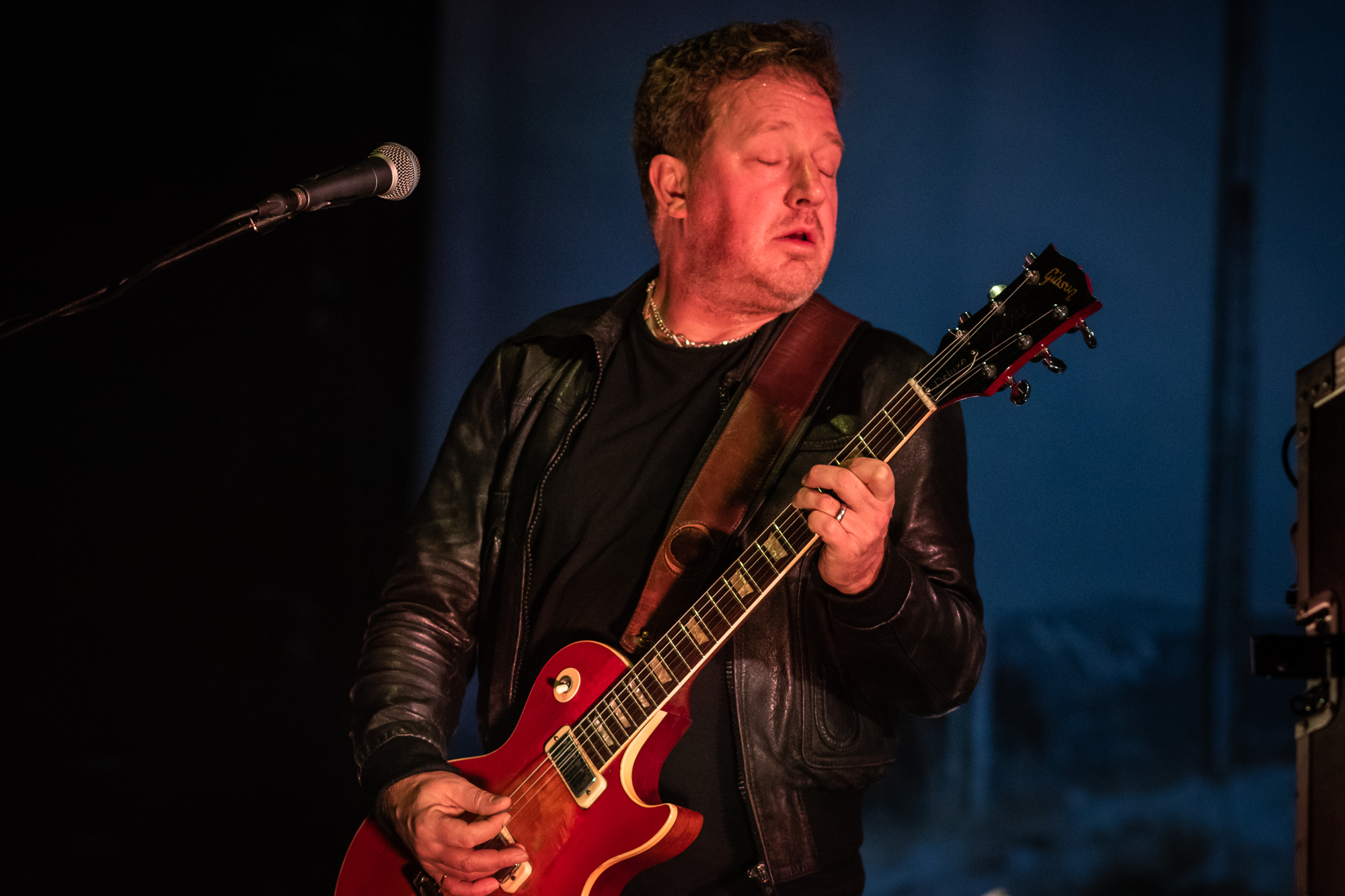
On their second round of touring in the UK this year Bear’s Den have perfected a balance between arena rock and acoustic folk, packing out large clubs while performing with astonishing intimacy to an ever expanding and keenly devoted fan base.

The second-to-last night of this run finds the band, performing as a six-piece, in the rather sleek subterranean venue of Newcastle University’s Student Union. It’s not the grandest space they’ve entertained but it’s also not the shabbiest. From touring heavily in their early years, Bear’s Den have learned to work a lot of different rooms, on any given night of the year; a crowded university basement on a Sunday night is well within their command. And anyway there’s a kind of calm to November gigs that suits this music; when the nights start drawing in early, everyone switches to their heavier coats, as the air densifies with cold and skies become a little less stable. Summer isn’t long forgotten but folk are still happy to be indoors; it’s hygge season, and it’s the ideal climate for a Bear’s Den gig.

This evening’s kindling, the first of two support sets, is provided by Tusks, the spine-tingling musical endeavour of Londoner Emily Underhill. She’s on double duties tonight, opening the show and running the merch table, and yet with only 20 minutes allocated to get this one job done she doesn’t force a performance, easing herself and the audience gently into her mesmeric melodies. Underhill sings graciously through her register, at times slipping into a soft falsetto, but she is at her most affecting when she employs her high, full voice, as on the stunning title track to her latest LP Avalanche. Quieter moments like Demon (“…it’s actually a love song”) test the warmth of the early crowd and, gratefully, they seem to be thawing.

At 8pm the crowd has almost trebled, with a restless rabble engulfing the room as Flyte take to the stage. Although technically now a trio, since the departure of keyboardist/guitarist/vocalist Sam Berridge earlier this year, Flyte have maintained their full-bodied soundscape and delighted audiences throughout the summer with the addition of Jessica Staveley-Taylor (aka “Jess from The Staves” aka “one-third of The Staves”) into their line-up. Opening with a couple of songs from their debut album The Loved Ones, the set is kind of a slow burn up to White Roses, after which the crowd is a lot more settled and receptive. It’s just as well because the band follow this up with their breath-taking a capella cover of Alvvays’ Archie, Marry Me which, if you haven’t heard it, is about the kindest bit of self care you can offer your ears, at any time of year. Go; look it up now and feel the nourishment! They finish off with two crackers in Cathy Come Home and the glowing album opener Faithless.

The stage is dark before Bear’s Den emerge; a disorienting red aura fills the air as the unusually dramatic but iconic opening of Thus Spake Zarathustra heralds the main event. There’s no denying that this particular piece of music will heighten the anticipation of anyone’s arrival but Bear’s Den are not the showiest of bands, so it’s only fitting that they don’t actually walk on until the theme has played out in full; the gag is funnier when they don’t take it to that obvious, excessive conclusion. Humour is one of the band’s many charms.

Leading off with Fuel On The Fire, Elysium and Dew On The Vine, the set has a fairly similar running order to previous shows on the So that you might hear me tour, with the inclusion of two brand new tracks from the band’s forthcoming Only Son of the Falling Snow EP. The first of these is the title track which lead singer Andrew Davie describes as “a kind of Christmas carol, reflecting back over your life”. True to form, it’s a sorrowful meditation backed by some incongruous major chords and uplifting trumpet. It’s glorious. This is followed up with the – possibly even more exquisite – piano-lead ballad The Star of Bethnal Green, which takes its name from a pub adjacent the studio where Kev Jones conceived it. The lyrics paint love as a spiritual experience, at once inspiring, hopeful and comforting. Even in its relatively bare form it feels brighter than most songs in the Bear’s Den catalogue. And as festive folk songs go it’s no less than butterfly-inducing! It’d be show-stopping but Bear’s Den control their own inertia and it’s from here straight into Crow, a bona fide tear-jerker that depicts grief in a way that is uniquely Bear’s Den.

Davie has a knack for relating extraordinary human emotions through deeply personal experiences; his inclusion of very specific details, dates, names, locations, renders a stronger and more immediate connection to the particular events or relationships he’s recounting, as in Hiding Bottles and Above The Clouds of Pompeii, but his broader language leaves scenes open for listeners’ own attachments. This manner of lyricism, this telling-all-without-telling-everything style of writing is one of the reasons fans become so endeared to the band; seeing themselves and their lives in the songs, feeling connected in their shared humanity. At its very least live music is a communal experience.

The unpretentious, candid honesty of their delivery further sets the band apart, such as when they go “off-mic” to hear the crowd singing along to Magdelene. When they unplug completely to perform Don’t Let The Sun Steal You Away unamplified from the edge of the stage it receives one of the loudest rounds of applause all night, igniting the band and setting them on a skyward trajectory. These moments are unique to each crowd no matter how many times the band plays the same set of songs.

The Love That We Stole sounds bigger and bolder than it ever has. The guitars grow louder across Red Earth & Pouring Rain as heavy red light flickers. After the threatening and thunderous build on When You Break, driving and anthemic Auld Wives feels like respite. So much for the calm! The “last song” and “encore” are exposed as conventions but when the band return after a brief period of rousing applause they offer the sincerest and humblest thanks. And when they step out into the centre of the audience to perform Blankets of Sorrow they bring the communal experience to another level of intimacy. It’s a cosy place to be on a Sunday night in November.
Travis; The Man Who 19th Anniversary – SSE Hydro

Live music, Music Review

You don’t need an excuse to listen to Travis’ 1999 sophomore album The Man Who; it’s a beautiful, timeless record loaded with endearing melodies, vibrant acoustic guitars and po-faced love songs. It’s the sort of album you listen to because you still like it, because you can’t remember a time when you didn’t like it, and probably because you can remember a time in your life when it didn’t exist and that time wasn’t as good. It’s polarising in that sense; life before and life after The Man Who. Music before, and music after. If you’ve welcomed this album into your life then you know what I’m talking about. Released in the wake of Britpop when pastiche was less of a trend, The Man Who marked a turning point, or at least a dividing line, in pop music. Without any knowing guidance, and despite being sonically informed by Oasis at the time, Travis came to define the sensitive sound of the four-piece male rock band at the turn of the century. Their iconic songs, loved or loathed, dominated radio the world over and lead the way for so many bands to follow from Coldplay through Snow Patrol and up to Mumford & Sons.

In light of this then, Travis themselves need no excuse to celebrate and tour the album that launched them into the pop-rock stratosphere so many years ago. 19 years ago, in fact. 19 is not a significant anniversary but The Man Who is a great album so why not? Fans want to hear it, the band want to play it. The music economy doesn’t get simpler than that these days. A run of shows earlier in the summer took in numerous venues across England, as well as some festival slots, so the final two-weeks of 2018 bring them around again and home to Glasgow’s SSE Hydro just in time for Christmas, and 2 years to the day since they last played here on the Everything At Once Tour.

Isle of Lewis singer songwriter Colin Macleod released one of the year’s best albums in Bloodlines and as the first of two supports for the night he delivers stripped back renditions of five songs from the record, as well as a melancholy interpretation of Ring of Fire. Beautifully understated and delicate from beginning to end, his set feels naturally calm amid the excitement and anticipation of the evening. He concedes his own disbelief at opening the show, admitting that Writing To Reach You was the first song he ever played. Right now though his own songcraft is fully matured and his confidence on stage serves him well, alone in the spotlight.

The second support are relative “old favourites” of Travis’ audience, and certainly owe a debt to the acoustic rock path paved by The Man Who. That said Turin Brakes have never stood in the shadows and since touring with Travis in 2001 they have remained friends and contemporaries, not rivals. Their divergent musical roads couldn’t be better exemplified than in tonight’s performance. A 10-song set draws from across their catalogue, never focussing heavily on one period and certainly not trading on nostalgia, but rather offering a cohesive sonic representation of where the band are now. And it’s a great sound. They’ve always been known to indulge their rock tendencies in the live setting and tonight is no exception. They’re clearly having a lot of fun; whether it’s because they’re out to impress as a support act, or because they don’t have the pressure of headlining, it doesn’t seem to matter, their performance is top shelf. Older hits like Painkiller and Underdog are reworked with fresh intros and some mint distortion on the acoustic guitars. If anyone walked in during Black Rabbit expecting a Travis concert they’d be very surprised by the rambling proggy jam happening on stage. It keeps on the sunny side of excess though and the band are sent off with just the appropriate level of enthusiasm ahead of the main act.

I want to be objective about what happened next but there’s an obvious reason I bought a ticket for this show. Here instead are some facts about the gig:

Between support sets Fran Healy came out to the barrier and met fans, shook hands, posed for photos, signed things, chatted to people.

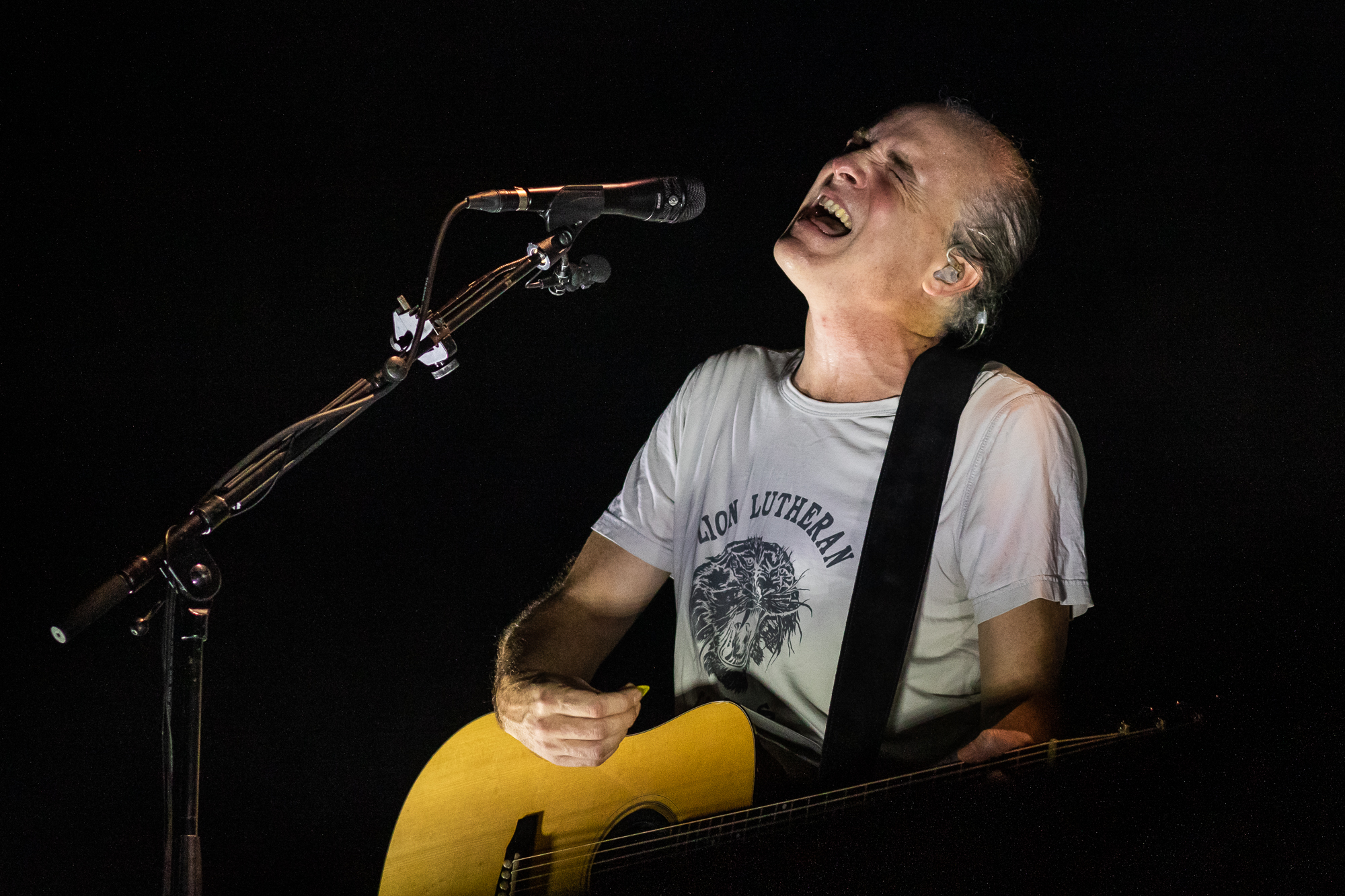
On stage Fran wore a kilt and a “Zion Lutheran Cougars” t-shirt identical to the one he wore in the video for Why Does It Always Rain On Me?

Andy Dunlop got very sweaty, very quickly.

Dougie Payne smiled a lot.

The band played The Man Who from start to finish, including its hidden track Blue Flashing Light, and then left the stage.

The second half of the set comprised a “best of” selection of singles and closed with a Christmas medley, accompanied by a couple of brawling jakey Santas.

But what was it like? Well honestly, it was pretty special. The nature of a start to end album show is that inevitably a band has to play their hits as they lie, i.e. Driftwood, Turn and Why Does It Always Rain On Me? went out in the first half. It’s unorthodox to play your biggest single in the first hour of your show and it felt a bit strange to be pogo-ing  so early in the night but the other side of this is that the band get to play some songs that otherwise wouldn’t make it onto the usual setlist. I haven’t heard Last Laugh of the Laughter in years and the harmonies were sweeter than I can ever remember. It was perhaps the only song that sounded different from the album version, and only because of the strength of the backing vocals, the rest was very true to the original sound. Another take on this format is that some of the band’s more challenging songs also have to come out. Much as they might be endeared to the hardcore fandom moments like Luv and She’s So Strange were reminders of why The Man Who was critically derided as a collection of “sad” “ballads”, the latter in particular proving a bit of a stretch for Fran’s vocal chords. But there were fond memories and pleasing anecdotes to go along with these old songs and the band have never lost their wondrous humour which always keeps their live shows so engaging and entertaining.

The second half of the set highlighted a few other things about The Man Who. Firstly, that the significance of the album to fans cannot be understated; once upon a time these were some of the only Travis songs in existence and they were adored mightily and whole-heartedly which, in the context of the live show, means the album falls so naturally and familiarly on the ears that it sounds like a “best of” in itself, even up against the established singles like Side and Closer. Every song is so well received. Secondly, that Travis’ true nature has always been as a rock band. From the opening chord of Blue Flashing Light the atmosphere in the arena is completely changed, electrified, amplified. The Man Who happens to be a cohesive collection of quiet songs and there are many others in the catalogue (see The Invisible Band) but when given a platform, or an entire half a set, the band choose to play loud, choose to rock out, choose guitar solos, choose to traverse the stage, choose to jump off the drum kit. The Man Who is another side to that band but it was never the limit of their abilities or interests. Lastly, that Travis are a band from Glasgow and were they not, they would never have written as iconic a song as Why Does It Always Rain On Me? because where else in the world could they have found inspiration in the best audience of voices to belt out such an anthem?