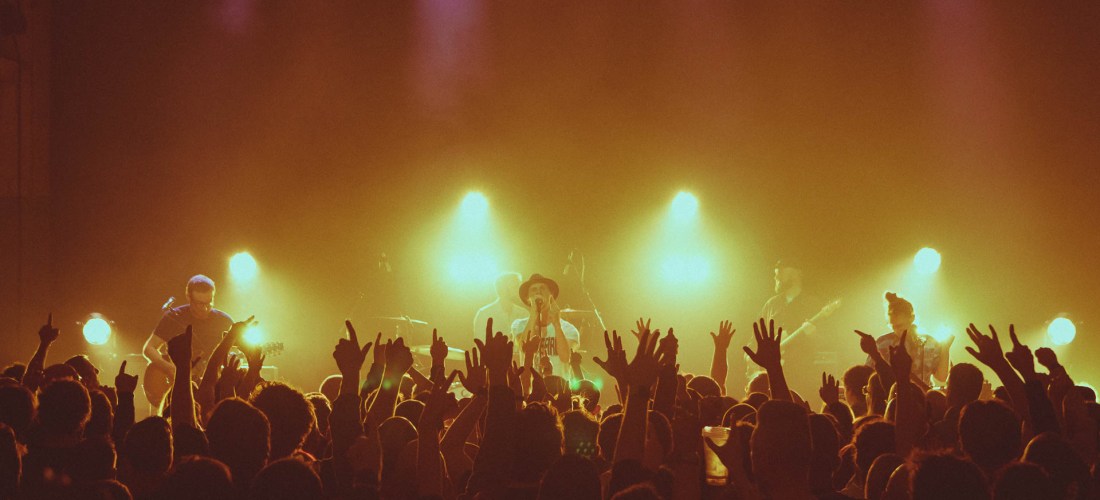
Maximo Park are thrilled to play the Queen’s Hall for the first time, even when things don’t go exactly to plan.

The music of Maximo Park, the indie rock outfit from northeast England, has been called many things over the band’s 20-plus-year history, including – but not limited to – “intellectual”, “energetic”, “intense”, “political”, “optimistic”, “endearing”, “romantic”, “emotional”, “passionate” and “sincere”. A lot of very broad, human qualities embodied in their sound and in their lyrics especially. At different times they’ve been categorised as “alternative rock” and “post punk” and “art pop” but regardless of pigeonholing the loudest reviews have generally been quite positive; critics like to say nice things about this band.
I’m not here to argue with the tastemakers of history but one thing that isn’t mentioned enough, in my opinion, is how awkwardly self-aware this band is and has always been. And when I say “this band” I’m really talking about its most expressive incarnation, its mouthpiece. I’m talking about Paul Smith, frontman, lyricist, self-anointed spokesperson, social media manager, mailing list usurper. The singer who appears to be 105% present in every performance and 110% in his head at all times.
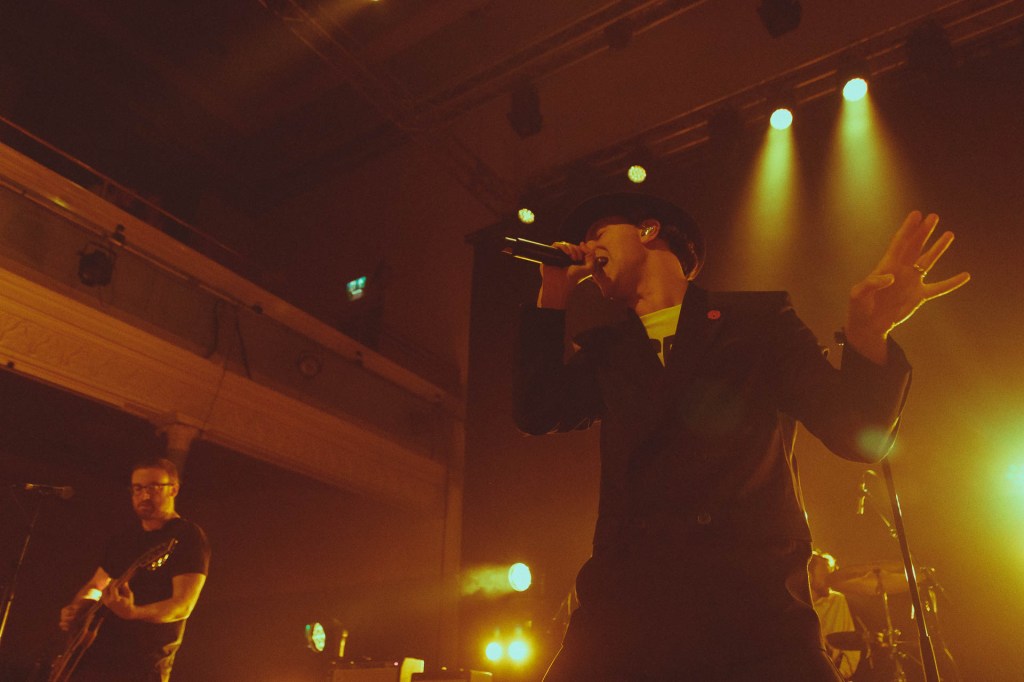
Paul Smith has made a career out of turning the banal surreal, out of punctuating abstract scenes with his own unmistakable, visceral, whiplash-inducing lyrical couplets. He’s very good with the words. And dancing. And singing, too; excellent with the singing. Yet, when he’s on stage he often comes across as if he’s dodging imaginary word bullets. It’s like his superpower is intuiting what not to say so as to avoid getting retroactively cancelled in 30 years’ time. It must be a real struggle when you have such an actively extensive lexicon, to find just the right way of saying “this song is about geographical privilege in the arts” or “bodily autonomy”, for example – legitimate examples, by the way – and yet Smith insists on trying this for every song, or at least every other song and most songs in between. It’s distracting to watch him calculating in real time – he talks a lot for someone who says very little – but true fans and word nerds understand and appreciate the effort. He’s really a sensitive, new age guy.
Anyway, no-one talks about this nearly enough for my liking.
You know what makes this band so great? And, especially, what makes this band so great live?
Duncan Lloyd: Founder, guitarist, songwriter and former co-frontman – once-upon-a-time, before the incumbent magnetic frontman arrived – this guy is just effortlessly cool. His mere presence brings the average temperature of any room down by approximately six degrees Celsius. Understated is an understatement when you’re talking about Duncan Lloyd – he’s on stage, guitar is everywhere but you have no idea where it’s coming from because this guy has effervesced into pure sonic air. That’s right, this guy is so cool he defies physics. Also if you look up the Maximo Park Wikipedia timeline of band members you’ll see that for the last five years Lloyd is credited with guitars, keys, bass and backing vocals; the guy could literally form a Maximo Park one-man tribute band.

Speaking of one-man bands…
You know what else makes this band so great?
Tom English plays the drumkit like it’s an orchestra, like he’s an orchestra. Like he’s conductor and concertmaster; melody, counter melody, harmony and – of course – percussion. He exacts tonality, timbre and tempo from his instrument with the stone-faced charm of Charlie Watts doing his best impression of Animal from The Muppets, or vice versa. His style is emphatic, idiosyncratic. His fills often underscore the ferocity of Lloyd’s own percussive strumming without ever entertaining the spotlight for even a second, though you’d happily listen to him pound out a sixteen-minute solo, given half the chance.

I could go on. I will go on.
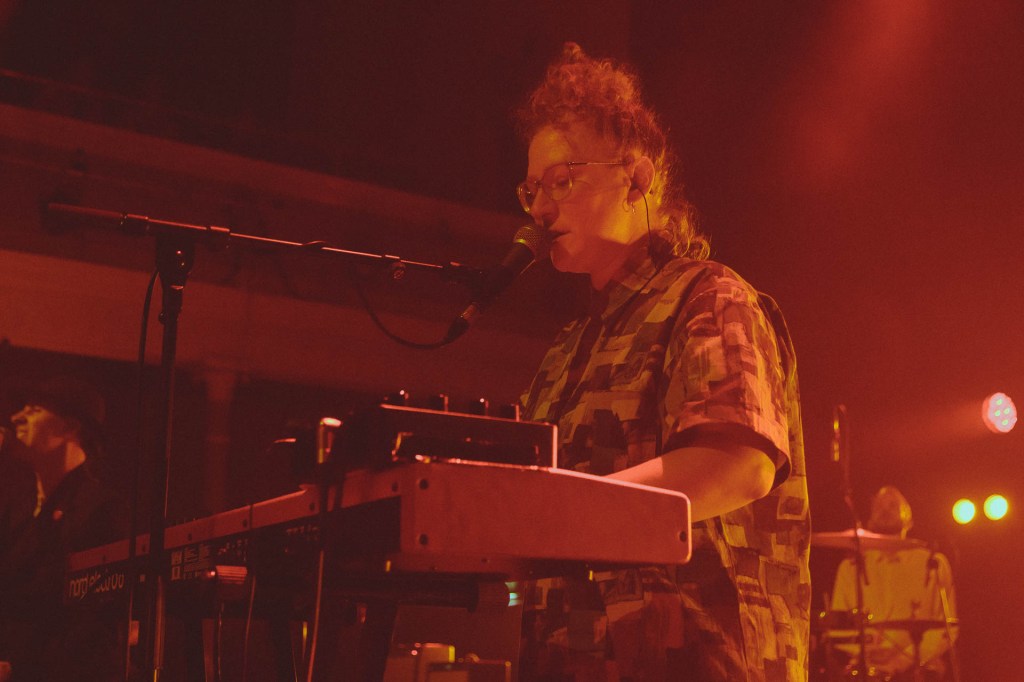
Jemma Freese, joined the band as a touring member in 2019 following original keyboardist Lukas Wooller’s departure and immigration to Australia – he’s doing fine; he DJs with a friend of mine in Melbourne sometimes, comes back to visit family in Yorkshire and complain about the weather. Jemma Freese is now an integral part of the Maximo Park live set-up and like Smith’s higher consciousness she probably doesn’t get the attention she deserves. There are times when, especially on the earlier songs, the only thing elevating their performance above the band’s very energetic original recordings is that deliciously indefinable X-factor that is the human voice, Jemma’s voice, and also a particularly juicy keyboard line delivered with just the right amount of spice. Jemma Freese is a musical master chef and connoisseur of tone. When she sings, you listen. When she plays, you feel something: sated.
What’s missing?
Bass. Okay, sure, sometimes in acoustic sets they’ll go without, but you wouldn’t go without, if you had a choice. Listening to Maximo Park songs without bass would be like watching The Wizard of Oz without the colour green. It’s the same story and the characters are all accounted for but suddenly that witch isn’t so scary and the Emerald City is, well, it’s just a city, isn’t it? There’s a fantastical magic about the basslines that Maximo Park deploy, something elemental, that was forged in their very beginning and that carries on today through the presence of Andrew Lowther who was loaned to the band by their musical brothers, Field Music, and who now, like a shared favourite toy, has to be agreeably passed back and forth between the two bands seemingly until one of them outgrows their enjoyment of him, or he’s broken beyond repair. Hopefully never the latter.
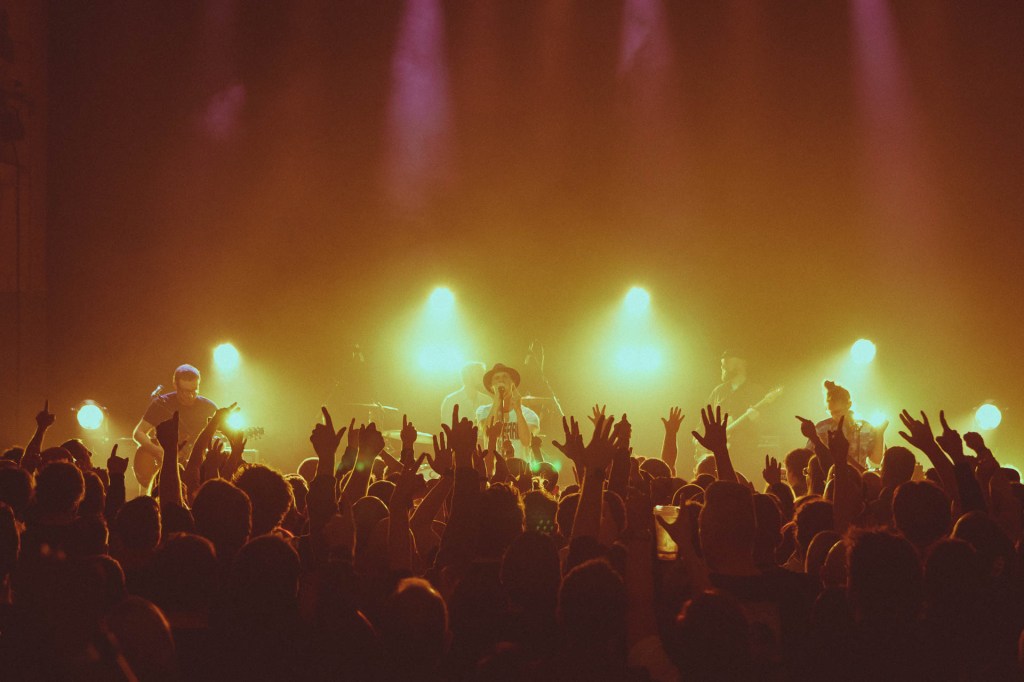
So these five humans get together in Edinburgh on a gloomy, autumnal Friday night in 2024. They bash out 18 songs in roughly 75 minutes. I know without checking my watch that it’s about 75 minutes because in the 30-something times I’ve seen them live they’ve only once pushed the 80-minute mark. They have a setlist formula and – eight albums in – they’re sticking to it. The sound is surprisingly good for a room that’s not designed for or suited to amplified instruments.
It’s going well for them until halfway through when a crackle in the monitors breaks Smith’s concentration and the system has to be rebooted. It’s fine, actually, they weren’t building great momentum with the new song / old song / new song rhythm at that point anyway, more of a haunted house stop-start carnival ride energy. This added bit of improvised drama plays into the performance-as-art-installation vibe they’ve been cultivating on the recent instore junket for Stream of Life, their latest collective release about geographical privilege and bodily autonomy (among other things). They persevere serendipitously towards emotional and technical catharsis through a semi-acoustic rendition of the album’s title track that’s really nice. And then they power through the rest of the set like it’s business as usual, which it is: Two back-to-back smash hits to close out the set and then two unsuspecting old favourites for the encore.
Now there’s a word to describe Maximo Park that doesn’t come up very often: Consistent. They’re a consistent live band. They’re consistent on record. They’re reliable. Professional. These aren’t the sexy qualities that we lust after in our Rock Gods and Pop Stars, these are traits on a whole other level. These are the characteristics we seek out in life partners, ride-or-die besties, colleagues, godparents to our children and, importantly, qualities we aspire to embody ourselves. We seek and we find them in our favourite bands. No wonder critics like to say such nice things about them.
 Heart Of Wonder