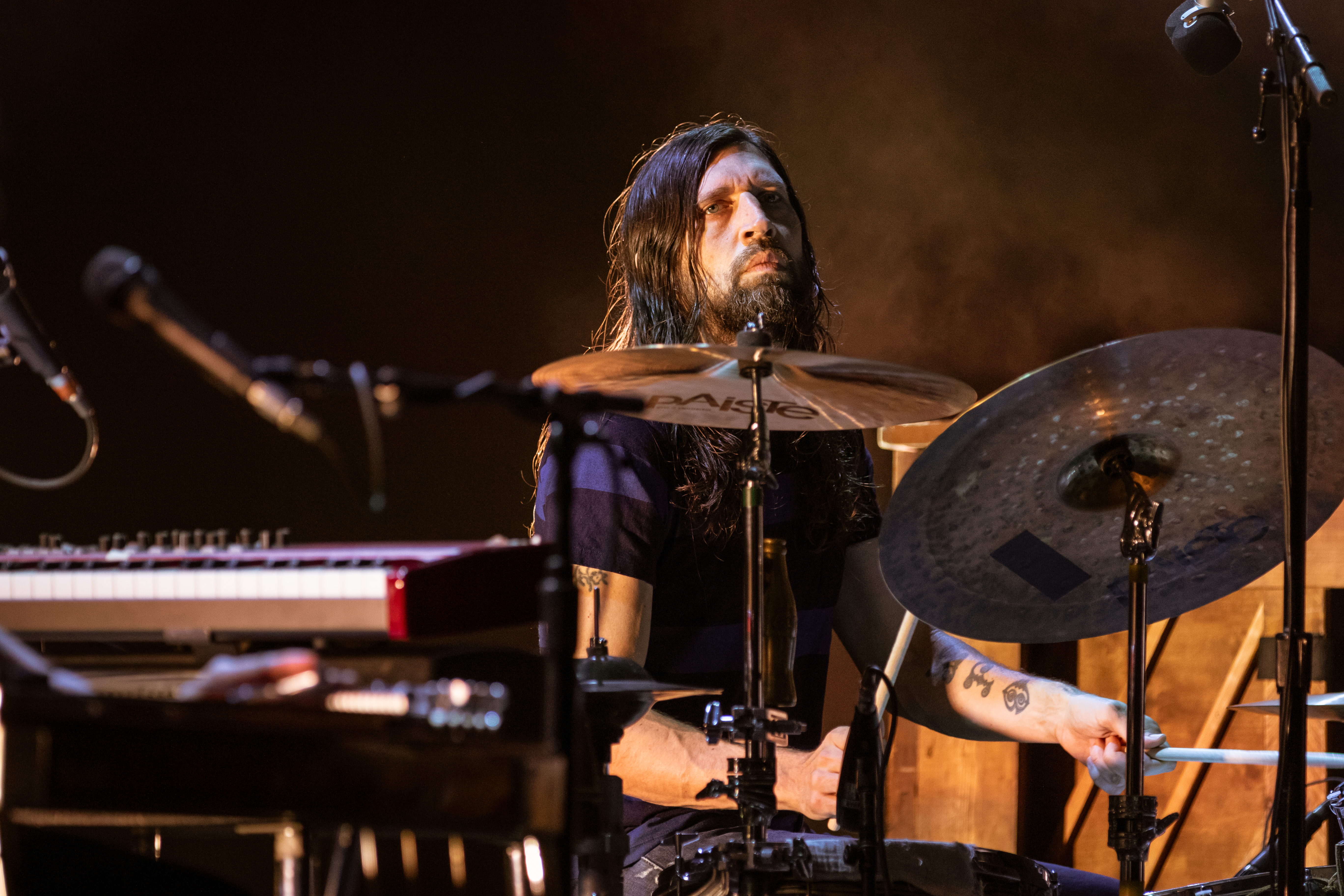
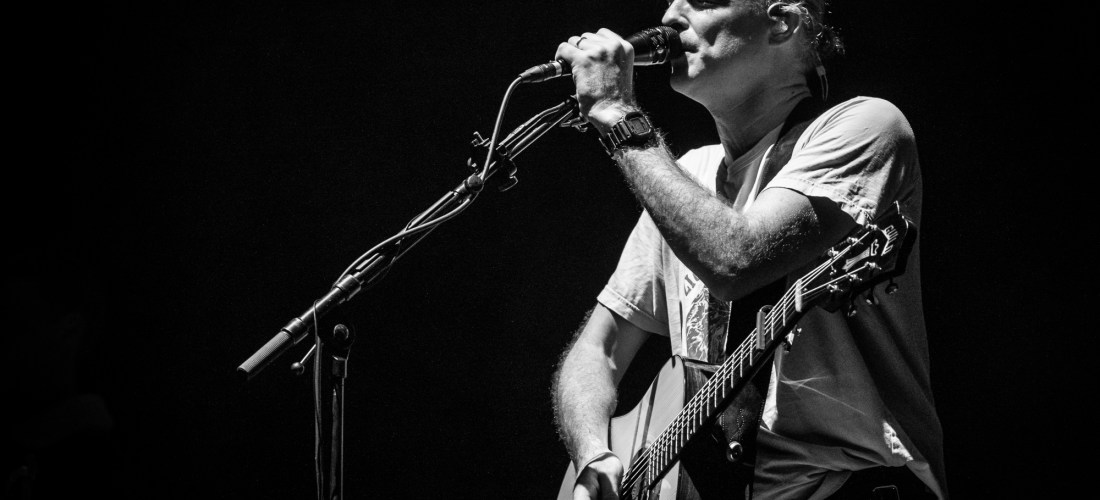
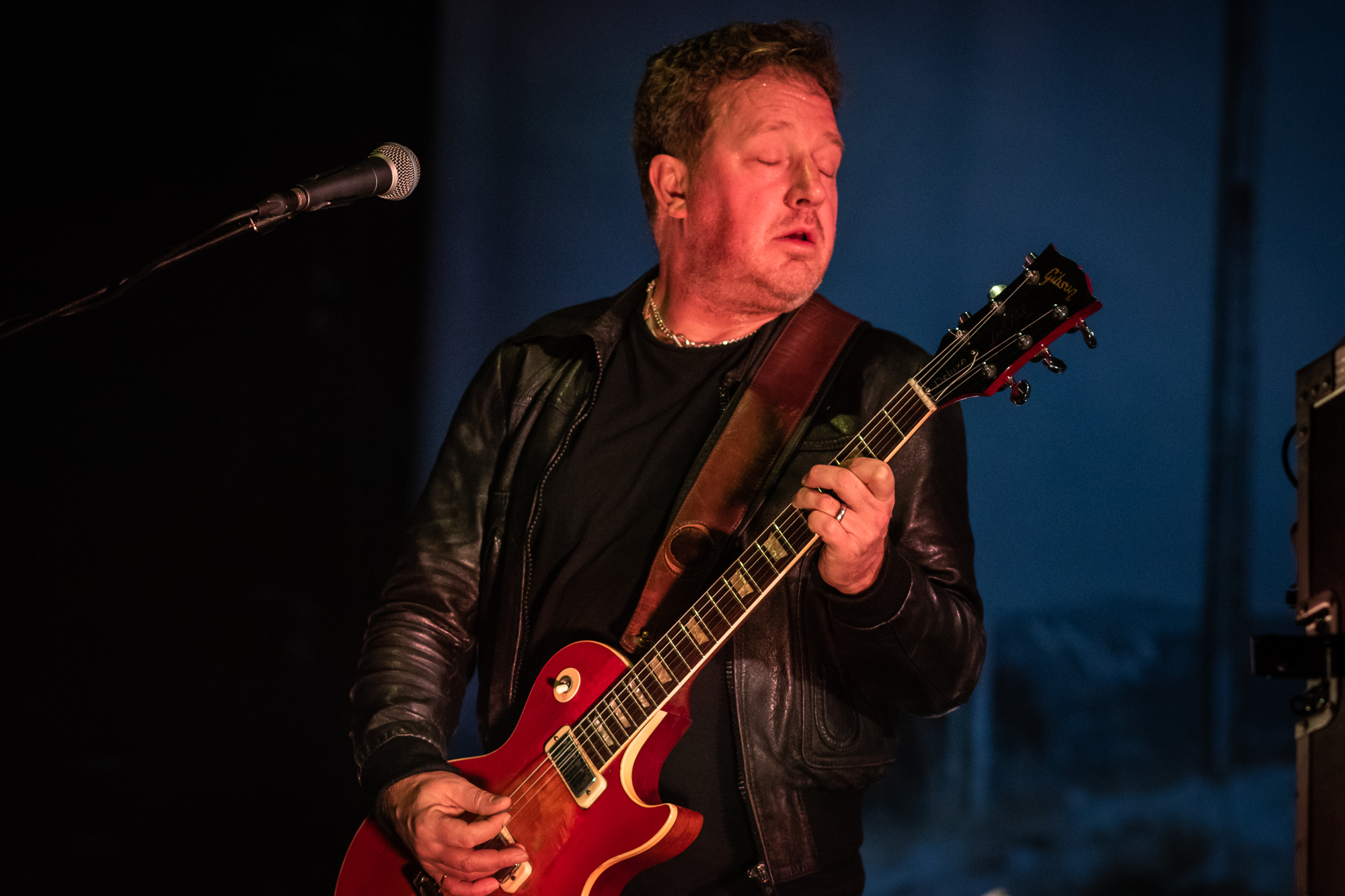
Jamie T – O2 Academy Glasgow

Live music, Music Review

Jamie T is back in the game!

The indie punk poet kicked off his first headline tour in five years at Glasgow’s O2 Academy – the first of two sold out shows at this venue. Where it’s typical for big acts to schedule gaps in their tours for adding extra shows once the original dates sell out, Jamie T (real name Jamie Treays) is bookending his now-11-date run somewhat unconventionally with second visits to Glasgow and Manchester respectively. Read into it what you like but the singer-songwriter’s unwavering popularity in university towns, particularly across the north, is undeniable.

What’s also apparent from the excitable crowd in Glasgow is that Jamie T inspires the kind of obsessive loyalty in fans that’s usually reserved for rock legends and pop music’s elite. These are a different breed of devotee who can withstand years of relative silence, an absence of musical output, and minimal social media interaction and still be ready to swarm on any opportunity to see their man perform. Fans have travelled from all across the UK and some even made the trip from Europe to be at the opening night of The Theory of Whatever Tour. If Jamie T has casual fans they likely missed out on tickets; this show is packed with only die-hards!

Those who arrive before 8pm – a good majority – are treated to the first official public performance by new outfit 86TVs. The band sound like all the best elements of your parents’ record collection with mind-altering melodic hooks and irresistible vocal harmonies, crisp, steady drums and groovy bass lines, all delivered with an unassuming air of confidence. It’s the kind of performance to convince naive audiences that great songs come easily and genius is the default of true creatives. The fact that 86TVs comprises four veterans of the indie rock scene maybe goes some way to dispelling this myth but it doesn’t detract from the exceptional quality of their opening set. That they only play for 28 minutes is a real disappointment.

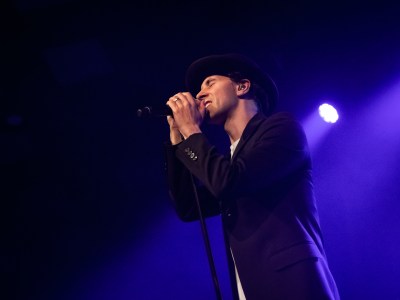
There’s no false bravado when Jamie T takes to the stage; the artist possesses a genuine and earned swagger. In the 15 years since the release of his debut album, Panic Prevention, Treays has established a unique status within the UK music scene through his authentic vulnerability, disarming wit and unashamedly astute lyricism. Largely evading the burden of hype and expectation, he has committed diligently to his craft and consistently delivered savvy, incisive, relevant and fun songs that defy the boundaries of any one genre. His fifth LP, for which the tour is named, is a collection as clever as it is charming.

The Glasgow crowd is a mix of ages – young couples brace and embrace along the barrier beside an adolescent boy and his guardian, and on the other side an older gentleman raises his walking stick with vigour. The set opens with 90s Cars and The Old Style Raiders, as per the latest album, and the audience responds like they’re old favourites. Jamie T has always been something of a sonic shape-shifter, and comfortably anachronistic, so it’s curious and exciting that right now he sounds the closest to indie that he ever has.

Acknowledging that he hasn’t played out in a while, Treays intends to deliver a set that covers all eras of his career, with something for everyone. And he does. There are highlights upon highlights; to borrow a phrase, it’s all thriller no filler. The ukulele foundation of Spider’s Web underscores one of many joyful singalongs and sees friends boosting friends on shoulders; the opening chord of Salvador chimes like a call to attention and is met with a plaintive chorus of voices near enough to wake the dead. A Million & One New Ways To Die is another song that embodies the “new fave” with its oddly familiar guitar motif and anthemic pseudo-emo chorus. Solo ballad St. George Wharf Tower is a bold but beautiful move in front of a restless crowd and he follows it up with Back In The Game – just a man and his acoustic bass guitar – showcasing the accomplished intricacy and vibrancy of his songwriting, as it was and continues to be.

Pint cups are launched towards the Academy’s central dome as The Man’s Machine and 368 bring the show towards a ferocious climax, yet both audience and band remain equally buoyant, in synchronised ecstasy. Chants of “Jamie-fucking-T” bring about a three-song encore during which the audience, facing in all directions, bounce, swell and radiate jubilation en masse. At the end the atmosphere is simultaneously chaotic and focused, pure, ragged, and elated; an honest reflection on the music of an artist still finding his edge and an audience willing to follow him there.

Maggie Rogers – O2 Academy Glasgow

Live music, Music Review

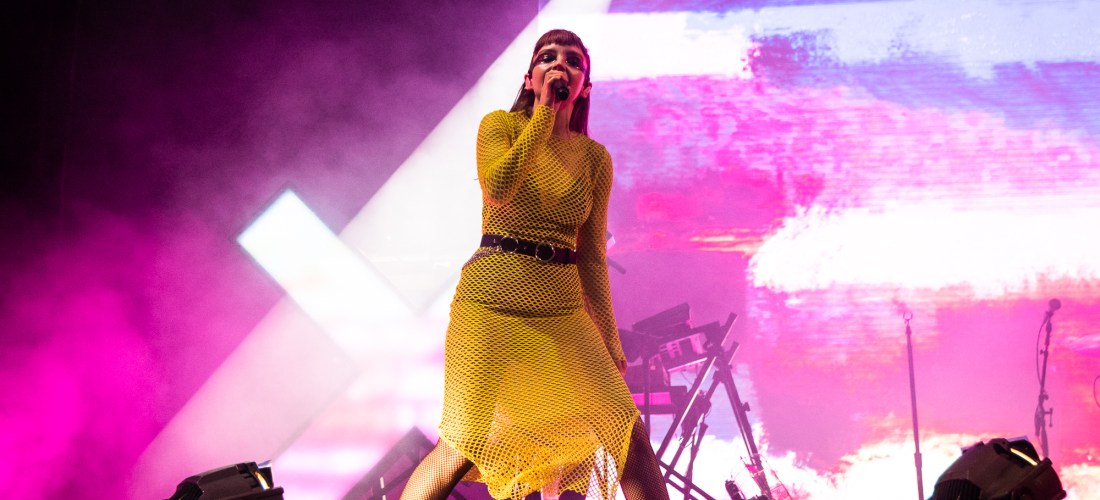
November this year begins, as we’ve come to expect, mild and rainy. It’s an otherwise innocuous Tuesday, perfect for doing nothing after a weekend – and Monday – revelling in our first proper Halloween celebrations for three years. Maggie Rogers has other plans though; she wants us to be together, to dance and sing and scream, and who are we to refuse such an invitation?

Our evening commences with a sweet serenading by Samia, whose charm exists somewhere between her lofty vocals, a cute ra-ra skirt and cowboy-boot combo, and the dance school finesse of her stage presence. She’s radiant as she introduces her songs, vignettes of youthful innocence and disillusionment, romantic fantasy and the banality of everyday life, each received with generous screams of recognition. With two songs left she asks, “Can you come on the rest of the tour? I feel like we’ve reallyโ€ฆconnected.” I feel like we have too, in pursuit of escapism.

That’s what this night is all about: Feeling connected. Rogers said via social media that her aim for each night of this tour is to deliver a set which “starts with some heat, leaves the middle for an emotional release, and still brings us all together at the end.” This is precisely what ensues.

Latest album Surrender is played out in its near-entirety over the course of the night, giving ample opportunities for catharsis both on the stage and within the audience. Want Want is explosive. Alaska and Love You For A Long Time elicit exuberant singalongs. Shatter leaves everyone desperately breathless. Silhouetted like a phantom at the back of the stage, Rogers exorcises some deep frustration on Honey before composing herself within the quiet solace of The Blue Nile’s Let’s Go Out Tonight. It’s a perfect turning point, a place to rebuild from. In the live context Symphony has an air of Fleetwood Mac about it, emphasised towards the end as Rogers dances and spirals in perfect synchronicity with the band’s tight ritard.

“I missed this,” she declares simply. Like a close friend, a sense of identity, a vital organ? One can only imagine what “missing this” for the last three years has felt like for an artist with so much emotional investment in their live exchange. Back In My Body presents as a kind of reconciliation with that touring life. It’s not always glamorous but it has a purpose that Rogers, now even academically, understands. Between the powerful percussion that closes Begging For Rain and the raw vocal and acoustic guitar on Horses, Rogers mines a deep seam of emotion to wrap up the set. Even before the climax, following Anywhere With You, the crowd erupts into such thunderous applause that it delays the big finale of Light On and That’s Where I Am. Rogers and her band stand in awe, gratitude glistening all over them. They drive the performance to its incendiary conclusion and return for an encore that feels both extravagant and essential. Surrender’s closing track Different Kind of World exists to mollify the end of this night together; a feeling and a memory to carry with us as we walk back out into our dreary reality. A connection. Thank you, Maggie.

A version of this review is published by The Modern Record

Maximo Park – Barrowland Ballroom

Live music, Music Review

Paul Smith is selling socks at the Barrowlands.

“We’ve got three-hundred pairs to shift,” the Maximo Park frontman tells his attendant audience, “and tea towels!” Hosiery and kitchen linens may not be conventional stock at most indie rock concerts but in the face of unsustainable economic structures and an industry in crisis, creative merchandising is a necessity. It isn’t enough to simply write, record and release great songs because no-one pays for great songs; artists have to sell stuff, and sell well, to finance their musical endeavours and basic living. Having great songs will help though.

To this end Maximo Park have hit the road to tout their wares throughout the UK. As Smith explains at one point, “We had a single. We wanted to tour the single hence, the Singular Tour.” Following the release of their nearly chart-topping seventh studio album, Nature Always Wins, in 2021, and a run of sold out shows across the country just over 12 months ago, the band are now treating audiences to a Maximo Park retrospective comprising “only the singles” – and for tonight, one B-side – with each city’s set containing select songs voted for in advance by the local fan base.

Dutch outfit Pip Blom are tasked with warming up the steady stream of early arrivals. Their formula of sugary vocals and occasionally fuzzy guitars is a bright and effervescent delight, dynamically building through the bluesy lilt of Tinfoil into the grungy Pussycat before overflowing with quaint garage-pop on Keep It Together. Heads are bopping throughout the crowd. It’s a good sign.

The Park’s set, by contrast, takes more than a moment to find its rhythm and direction. Or rather it opens with a certain rhythm, alternating consistently between crooners and kickers, before switching to a smooth, upward cadence for the latter half. The aforementioned B-side, The Night I Lost My Head, comes out of nowhere within the first three songs and, while a generally energetic bop, it sits incongruous to the more mellow grooves of Leave This Island and Hips and Lips which follow. The crowd are undeniably into it though. “If you wanna do a bit of dancing I will also do a little shuffle” Smith declares, as if he had no plans to move otherwise.

This isn’t a nostalgia trip proper and it’s evident that the nature of the tour has been successful in drawing out fans of each and every part of the band’s catalogue. The emphasis of the singles tour is on songs all people (theoretically) will have heard, not just die-hard or historic fans, and as such the audience has a more diverse emotional investment in this set. No song is ever met with indifference despite some having not felt the spotlight for a few years.

“Stay hydrated; we’ve got a lot of hits to get through” Smith quips, semi tongue-in-cheek, before launching into The National Health, during which the audience are surprisingly well-behaved. This one used to be quite a rager. It’s not much longer though before pints are flying and Smith is leaping, scissoring the air, illuminated in deep red and blinding white; the tones of A Certain Trigger. A thickset man is propped up on shoulders during Karaoke Plays and the atmosphere is becoming intensely sentimental.

Great Art, the single that precipitated this roadshow, repackages the band’s typically poetic social commentary while deploying as iconic an earworm as Radio 1 could ever hope for. It’s a popular one across the generations of listeners in attendance and serves to unify the energy from the stage all the way to the lighting desk. What follows from this point could be described as a passionate ascension which says as much about the music as it does about the band-audience relationship.

The intense romance of Questing, Not Coasting, a song about “falling in love in a thunderstorm”, has fists punching the air and arms swaying hypnotically. Our Velocity is a perfect song, worthy of dissertation, that somehow delivers more with every performance – especially in this room. The Kids Are Sick Again feels weighty and poignant, perhaps more than it ever has.

“If this is your first gig, welcome to Maximo Park. This is for you!” Smith announces before walking to the side of stage, allowing spotlights to focus attention on Duncan Lloyd’s silhouette and coarsely chiming guitar intro to Going Missing, the band’s first ever single. The crowd response is unparalleled with sustained, rapturous applause and spontaneous stamping. The same follows Books From Boxes, arguably the most beloved of fan-favourites, leaving Smith speechless for a few moments before humbly declaring, “This is why we do it.”

The set concludes with superb renditions of Versions Of You and Apply Some Pressure, both immaculate demonstrations of the band’s musical ethos and proof that the key to artistic longevity lies not in sales techniques or creative merchandising but in perfecting one’s craft. Great songs are what really matter. They drill this point home with a masterclass of an encore; Midnight On The Hill, Girls Who Play Guitars and Graffiti. Smith introduces his bandmates over relentless cheering, finally stating “My name is Paul and I’ve had a wonderful time”. You can’t half tell as he lingers long on the stage, radiating joy and gratitude, and basking in its elated reciprocity.

Here’s hoping they sold a lot of socks, because they certainly rocked plenty off.


A version of this review was published by The Modern Record

The Big Moon – Summerhall

Live music, Music Review

If there was ever any question over the popularity of guitar bands in the last few years consider this; The Big Moon are on their second round of touring through the UK since releasing their sophomore record at the beginning of January. And they’ve only gone and sold the place out! Following on from a successful run of shows supporting Bombay Bicycle Club earlier in the month they return to Scotland on the very last – leap – night of February to headline Edinburgh’s Summerhall.

Anticipation is palpable with a queue snaking down the stairs and out into the courtyard. Fans are eager to get in early and snag a good position. They’re also keen to look the part and the merch table is already busy flogging t-shirts and albums; a positive sign for any artist in the streaming age but especially for new and breaking bands.

There’s a big portion of the audience already in place when tour support Prima Queen take to the stage. They don’t say much for the first few songs and only really get chatty before the end of the set when they mention that their bassist got dumped 20 minutes before soundcheck – “so rock’n’roll” – and that they put their band name on the drums because they forgot to mention it at previous shows. The mood is light and the band have a great chemistry on stage. Lead vocals are shared between guitarists Louise MacPhail and Kristin McFadden. They have that kind of effortlessly powerful command of harmonies, familiar to fans of boygenius and Alvvays, and with tones and melodies made for summer festival afternoons blissing out under blue skies. It’s a gentle kind of warm up set that closes out with “Milk Teeth” and “Mexico” and leaves the crowd slightly swaying, slightly nodding, ready for the main event.

From the moment The Big Moon appear there’s a buzzing warmth in the room. It’s not quite Beatles hysteria but it’s damn infectious! They meet that audience energy with the scratchy jangle of debut album opener Sucker which, despite its usual dynamic shifts, remains buoyant throughout. They follow up swiftly with the pulsing disco vibe of Don’t Think before settling into a lyrical groove with Take A Piece. The new songs are just as enthusiastically received as those from the band’s Mercury nominated 2017 release Love In The 4th Dimension despite being vastly different in both sound and subject matter. Of course in the live setting there’s minimal production to hide behind and every catchy chorus and driving guitar feels just as vibrant and raw as it should. Lyrically, Juliette Jackson’s direct and literal style is engaging whether lamenting youthful relationships, wrestling inner demons or staring defiantly into the void. Witty couplets cut through the repetitive choruses and reconnect the audience with the characters and emotions at the heart of each song. There’s flutes, there’s sing-alongs, there’s even a Fatboy Slim cover, either side of which Jackson is off the stage and down on the barrier leading “a gentle song with some yelling at the end” (Waves) followed by a riotous crowd favourite (Bonfire). The end comes around too quickly for fans who are vigorous in their applause and even after the last song, after the house music starts playing, are unwilling to accept that there won’t be an encore tonight. Naturally it’s disappointing for everyone who wanted to hear more from the band but there’s something so heartening about an authentic rock performance that elicits such an organic reaction from those present. It’s refreshing. It’s invigorating. It’s healthy. Guitar bands like Prima Queen and The Big Moon are good for the health of the industry.

Belladrum Tartan Heart Festival 2019

Festivals, Live music, Music Review

Driving south on the A9 through heavy rain and roadworks, the euphoric sunshine of the past 3 days seems almost otherworldly. Through the misty grey comes a flood of memories; of music, dancing, food; friends, family and strangers – aliens – and did I see a polar bear? Only at Belladrum!!

In its 16th incarnation the Highlands’ biggest music event remains one of a kind, not just for the region but within the global festival community. Boasting an extensive yet eclectic line-up of domestic and international talent, Belladrum Tartan Heart Festival is renowned for being a festival for all ages and musical interests. Nearly every genre is represented across its programme and the festival site itself accommodates multi-generational entertainment through everything from puppet-making and zorbing, to extreme sports, slam poetry, yoga, stand-up comedy, even burlesque workshops. And all that is without mentioning any of the chart-toppers on the bill. Anyone who thinks there isn’t much going on north of the central belt needs to get out more!

It’s not possible to single-handedly give a fully comprehensive rundown of the magic that played out over the course of this year’s Belladrum so here instead is simply 10 of the best bits.

1. The Sunshine

If you’ve been to a muddy festival before then you can already appreciate what a difference a little sun can make. The absence of rain throughout the duration of Bella meant not only that the ground was pretty stable to get around on, but it was also blissfully comfortable above 19ยฐC for most of the day. Perfect conditions for hanging out with friends and family, having a picnic or a wee gin cocktail (because when there’s a dedicated Gin Palace how could you not?) and listening to great music in the warm evening air. It’s not always like this, as the veterans hasten to point out, so top mention has to go to mother nature: she nailed it this weekend.

2. The Sci-Fi Theme

Each year Belladrum gives itself over to a specific theme, designing areas of the site to reflect a certain aesthetic or attitude and inspiring patrons to expand their knowledge base in a particular direction. The theme for 2019 being Science Fiction, fancy dress took in all sorts of creative endeavours with Trekkies and Wookies, and even more abstract creatures popping up around the site. I spied Marty and Doc heading into the Venus Flytrap Palais while I was queuing for risotto. In addition but on the flipside of that was the Bella Boffinarium, set up to showcase “Science Fact” with presentations on astronomy, technology, rewilding and modern environmentalism. There was even an interactive aviation drama roaming around. Belladrum is special for a lot of different reasons and its dedication to presenting a theme that is engaging on so many levels is definitely one of the things that sets it apart.

But then, some music.

3.  Fat Suit

This funk fusion ensemble brought the sunshine inside the Hothouse on Thursday afternoon with radiant sax and trumpet, glittering guitar and soulful keyboards. From the moment they walked on stage the crowd was down to boogie and the band delivered just the right grooves to keep them moving. If yoga wasn’t your thing, Fat Suit could do plenty to loosen you up.

4. Wildwood Kin

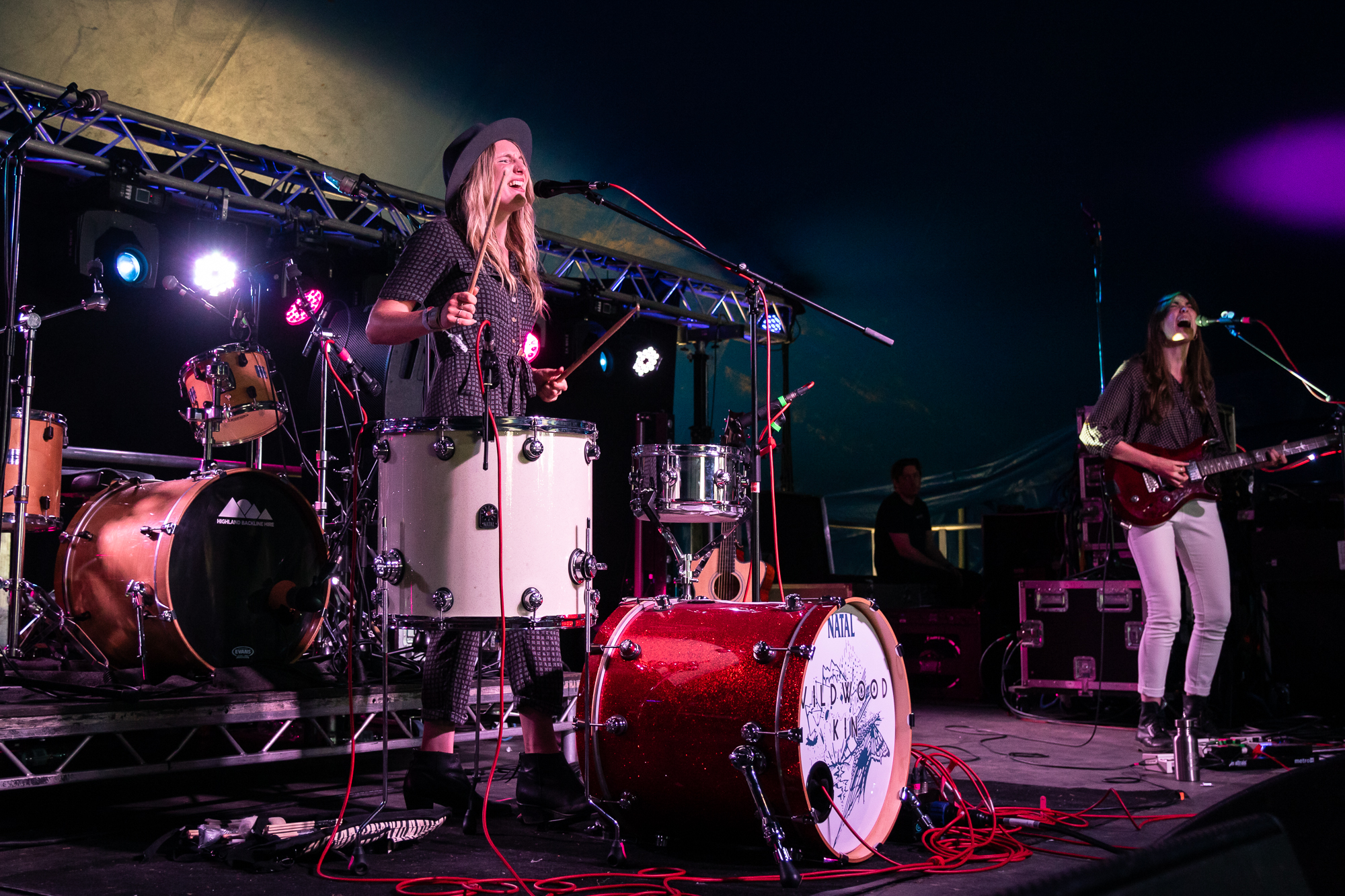
What more can genetically perfected harmonies bring to the British Americana scene that we haven’t seen before? Perhaps not a lot, even with gifted multi-instrumentalists Wildwood Kin. But there’s absolutely nothing more enjoyable than hearing brilliant songs performed well. With the audience hanging on their every gorgeous note you couldn’t help swooning for the Devon trio. Latest singles “Never Alone” and “Beauty In Your Brokenness” were both shimmering and powerful.

Wildwood Kin

5. Man of Moon

Still yet to release their debut LP, the Edinburgh two-piece are evolving from a mildly psychedelic grunge act into some glorious electro-rock outfit with heavy shoegaze undertones. Drawing comparisons to Depeche Mode and The Twilight Sad doesn’t quite do justice to what they deliver in the live setting. The dynamic between singer/guitarist Chris Bainbridge and drummer Michael Reid is in constant flux and, without being unsettling, songs like “I Run” and “Skin” play out with exciting twists and turns. Consistently one of the best live bands of the last few years, they proved their sound is ready for the big stages.

6. Boy Division

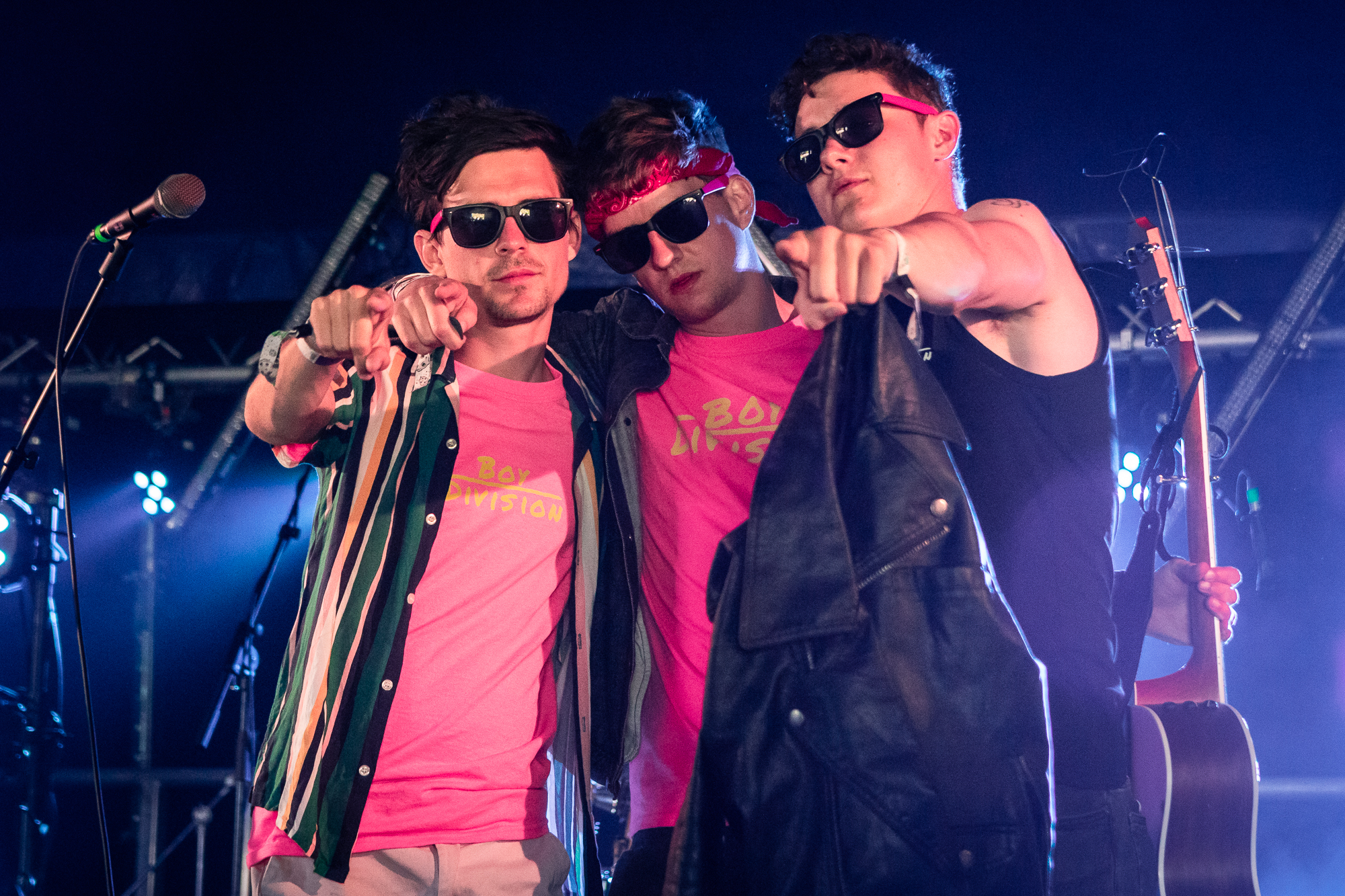
Being moved from the Bella Bar Stage to the Seedlings Stage made this performance feel even more intimate and special for Divisionists (every great pop act has to have a name for their fan collective, right?) and the upgrade seemed to benefit Chris, Noah and Kieran as well, as they delivered note-perfect harmonies with seamless choreography throughout their brief but breathtaking performance. Pop music is streaming forward with unparalleled levels of self-awareness and these guys are already cresting the wave.

Boy Division

7. Ferris and Sylvester

Like every great song that finishes too soon, Ferris and Sylvester’s Grassroots stage set left their audience wanting. From the high energy blues-folk of “Burning River” to the aching sweetness of “Flying Visits” with one microphone between them, they commanded attention in the kindest possible way.

Ferris and Sylvester

8. Glasvegas

Given the honour of headlining the Hothouse Stage up against fellow Glaswegians Chvrches, Glasvegas were the perfect antithesis of their Garden Stage peers. Mere silhouettes against a wash of red and white lights, they allowed their songs to swell and cascade out over the enormous crowd that couldn’t be contained by the walls of the sweaty tent. Spontaneous singalongs erupted frequently and singer James Allen noted that the audience participation on acoustic track “Whitey” would go down as his highlight of the festival. It was spirited and emotional from start to end, and heartening to see the band still at the top of their live game.

9. Self Esteem

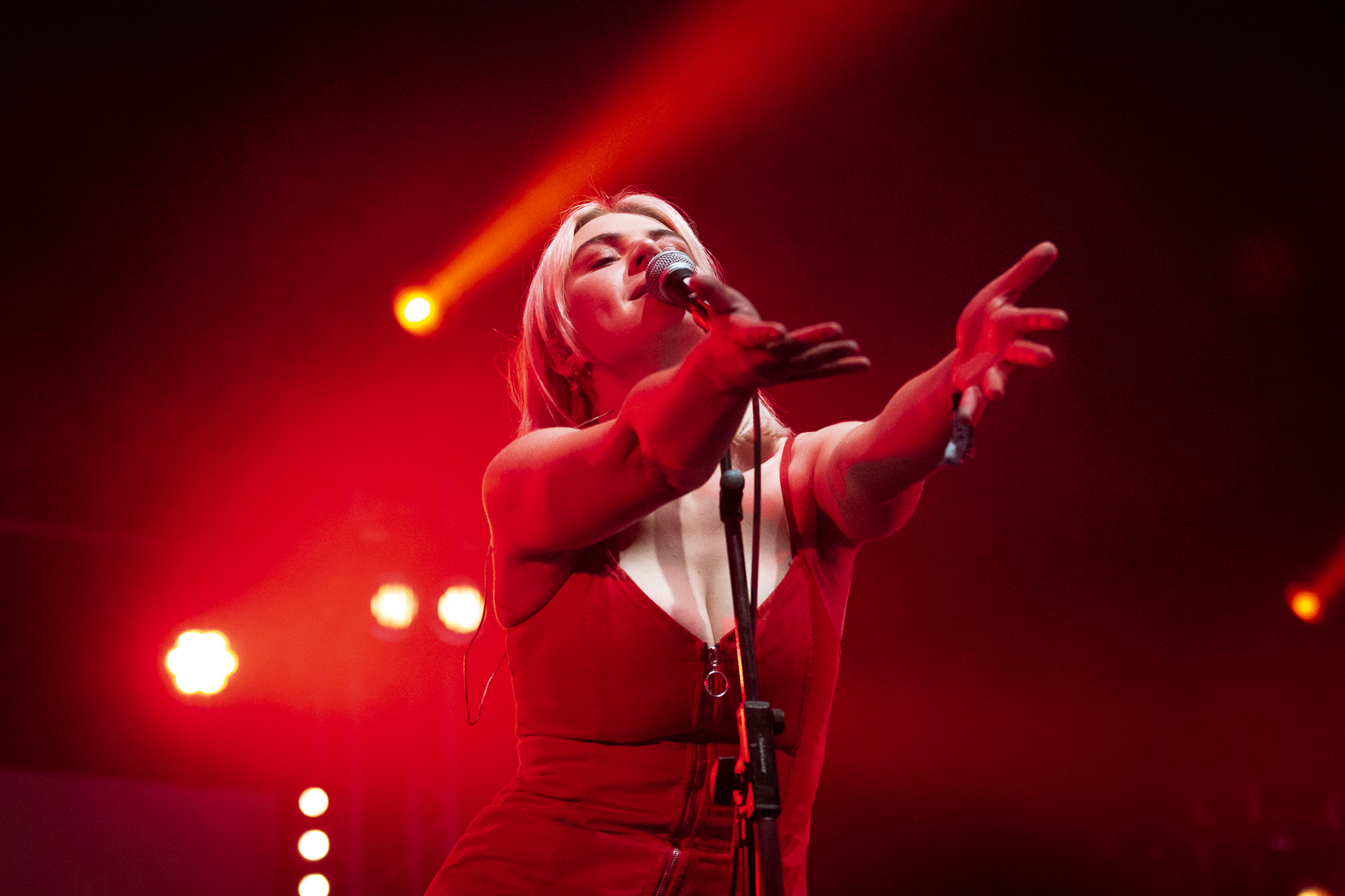
Probably the most impressive and enjoyable performance of the whole weekend, Rebecca Taylor as Self Esteem is everything pop music should be in 2019; witty, honest, fun. With her band dressed all in red and working through some sultry tongue-in-cheek dance routines, while singing poignant and catchy songs about sexuality, relationships and identity, she is the musical role model you wish mass media was championing instead of the next vapid internet fad. Emphasis on the fun.

Self Esteem

10. Lewis Capaldi’s Reception

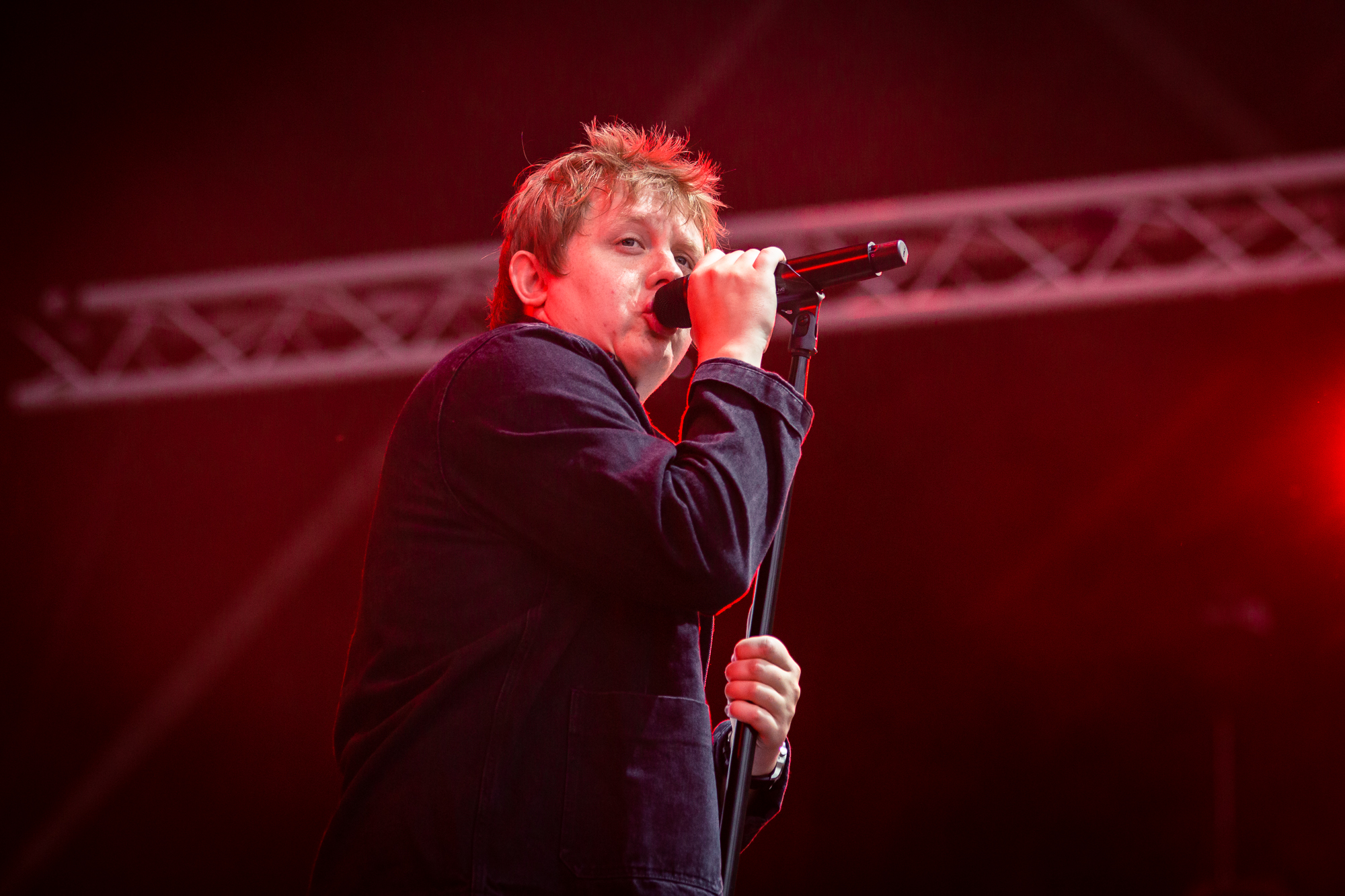
With a genuine talent and charm like Capaldi’s there’s not much point discussing his performance. It was great, as expected. The atmosphere when he came onstage however, that was something else. It’s hard to say accurately how many of Belladrum’s 20,000 capacity crowd was actually in front of the Garden Stage at 8pm on Saturday night but it was a majority. Like a big majority. An unprecedented volume by all accounts. And the atmosphere was incomparable. I’ve been to plenty of festivals and stadium shows and I’ve heard some screams. Capaldi’s arrival was met with the kind of noise that makes you think defenders over your earplugs would have been a good shout. Tinnitus on command. It was equally the most terrifying and exciting moment I’ve experienced in the photo pit; I wouldn’t like to do it again but I’d recommend it to anyone. And what’s more it was sustained. It was as if the crowd had been sparing themselves all weekend waiting for this one set. Even if you didn’t like the guy’s music you couldn’t help but stand in awe of what he brought to the event.

Lewis Capaldi

All that said, there were a few weak spots; the overcrowding around the Garden Stage for Lewis Capaldi created tension as security had to restrict access while some folk tried to reserve spaces with hazardous camping chairs or blankets. Arguments on the periphery and discomfort in the middle felt very much like a catastrophe waiting to happen. At the same time Peat & Diesel were letting rip in the Hothouse and that too required added crowd-control measures that felt about as dangerous as the crowd crush itself with punters corralled inside the tent.

The impact of crowding was further demonstrated in traffic queues entering and, especially, leaving the site with some patrons reporting waits of 3 to 5 hours to vacate the carpark. A good service of shuttle buses from Inverness city centre helped to manage the flow of day visitors but delays could be further alleviated with the addition of a park and ride nearby to reduce the volume of cars accessing the property directly down the tiny roads. Density on site meant mobile functionality was reduced. It wasn’t the lack of Snapchat and Instagram so much that was frustrating, but trying to find friends or family to coordinate meals, transport and basic welfare was a bit of a nightmare. For the most part these were minor gripes and the overall feedback around the festival grounds was naturally very positive again this year.

The one major blight on Belladrum is still the masses of rubbish it generates in an otherwise pristine community. The use of disposables at a festival of this scale is unnecessary and does nothing to encourage respectful or resourceful behaviour. It’s 2019; dropping plastic cups anywhere is unacceptable.

Hopefully these are matters the new owners will look to address moving forward with the festival, to maintain the safety and sustainability of their wonderfully warm, family-friendly event. For now, with the many musical blessings of this year playing over in our minds, as the rain sets in to soothe and cleanse the grounds the countdown to Belladrum 2020 can begin.

Sheryl Crow – Glasgow Royal Concert Hall

Live music, Music Review

Having recently opened shows for the likes of legendary artists Phil Collins and the Eagles, Sheryl Crow is grateful to be back in front of her own audience for a while. With the promise of a two-hour set featuring “a bunch of old things and…some new things too” regulars know to expect a great night. For first-timers the setlist, front heavy with mega hits like “If It Makes You Happy” and “All I Wanna Do”, is a shock to the system and an assertive reminder of why Crow, now in her late 50s, has maintained a position as one of the most revered and sought-after songwriters and female vocalists for over 2 decades.

Her energy and enthusiasm is relentless and it’s clear Crow still enjoys playing the older songs. The crowd reacts with lively call and response singalongs and dancing in the aisles. Crow acknowledges, engaging audience participation, for at least as much as she can understand of the Glasgow accent and vernacular. She shies away from recent albums for the most part but introduces a few tracks from her forthcoming release Threads, due at the end of August. The first of these is “Prove You Wrong”, a collaboration with country star Maren Morris and rock veteran Stevie Nicks. It has an instant classic rock feel that tends a little formulaic towards the end but is no less enjoyable in the context of modern rock radio playlists. Another new single, “Live Wire”, comes under the blues influence of its contributors Bonnie Raitt and Mavis Staples, and is introduced with a cracking anecdote from the recording session with Staples. As one of the slower songs in the set – and it’s by no means a ballad – “Live Wire” is evidence that Crow still has the skill to craft a meaningful and catchy song without sounding like a rehash of former glories or a nostalgic tribute to the successes of youth.

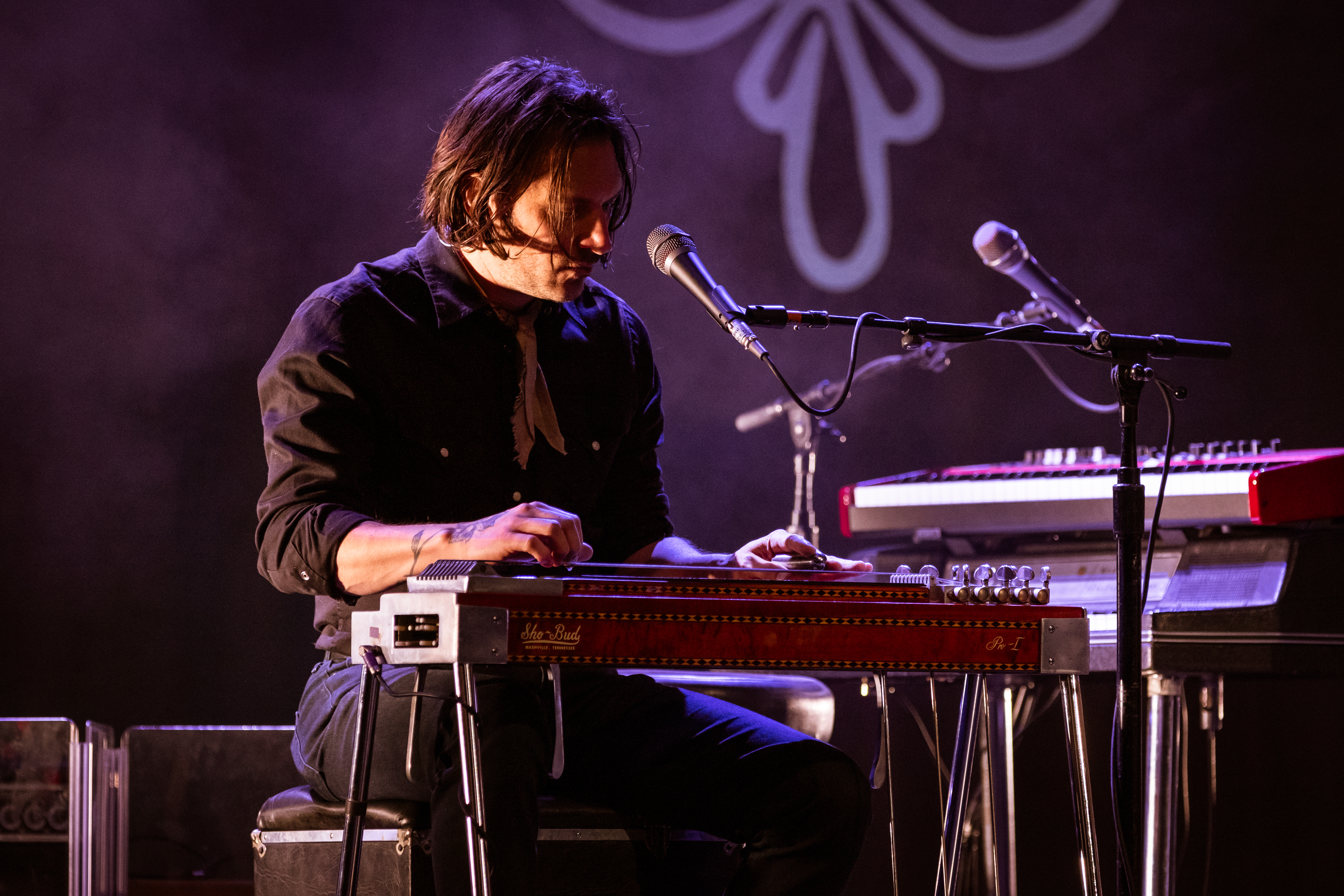
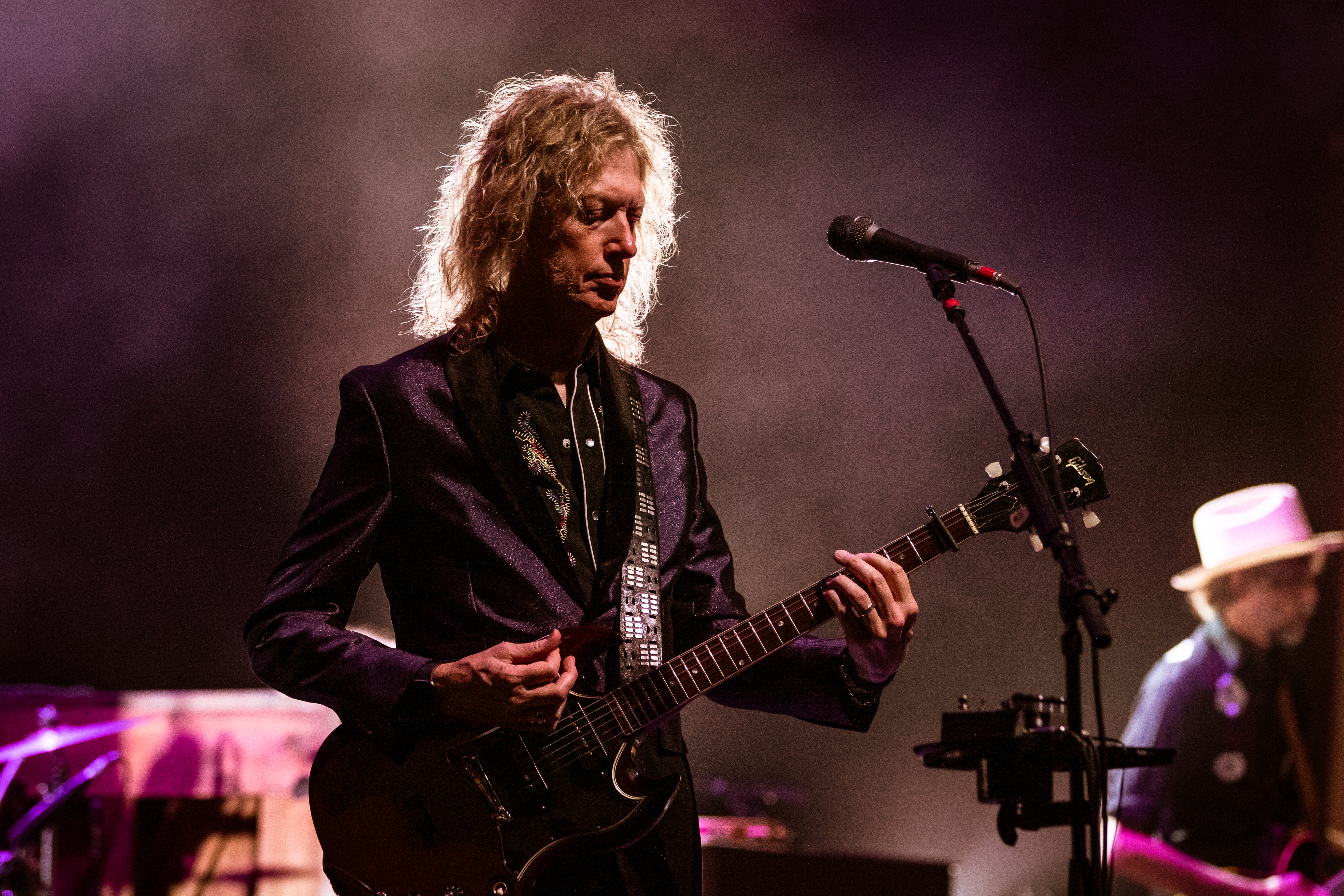
Despite adhering mostly to the acoustic guitar throughout, Crow’s knack for creating rock anthems is indisputable and well supported by her six-piece band that includes two lead guitarists of equal genius in Audley Freed and Peter Stroud; the latter garnering extra attention from the singer for his “snazzy jacket” in addition to his expertise with the six-string. The sound is further embellished with Joshua Grange on pedal steel, Jen Gunderman on piano and Robert Kearns providing bass and particularly stand out vocals as a substitute for Joe Walsh on new duet “Still The Good Old Days”, a song that Crow admits is “about being my age”. Yet the clarity and ease of her voice on the opening of “The Difficult Kind” shows an ageless strength and beauty; her voice is as good as it’s ever been. Sadly, there are times when the full force of the band is too much and Crow’s still-powerful vocal is overwhelmed, mainly by the treble of her own guitar. It’s disappointing to experience this in a room like the Concert Hall which usually delivers perfectly balanced levels, for any genre or musical style. Nevertheless the crowd is on her side and she receives a standing ovation before she’s even finished the set. Admittedly, the performance of “Best Of Times” is well deserving; Crow takes her microphone from its stand and commands the stage from end to end with multiple charged harmonica solos, set against intense strobing as the band gathers around the drum kit to pool and play off  their collective energies.

The final song of the set, “Steve McQueen”, features Crow playing a glittery red, white and blue electric guitar while her two sons – acting as occasional guitar techs throughout the night – join in on maracas from behind the keyboards. When she returns for an encore she mentions that they spent their day over at the Glasgow Science Centre and had a great time taking in the city. She dedicates “Soak Up The Sun” to her Glasgow audience in honour of the beautiful weather, before closing out with a grand rendition of “Real Gone”. The crowd need no further persuasion and remain on their feet for the duration. Warmly received at the top of the show is Hebridean singer-songwriter Colin MacLeod, himself no stranger to opening some pretty big stages, having supported the likes of Van Morrison, Robert Plant and Roger Waters in the last twelve months alone. He played a brief but beautiful solo set of melancholic-sounding songs, drawn mainly from his 2018 debut Bloodlines, with two new songs performed on acoustic guitar sandwiched into the middle of his set. MacLeod shows himself to be a versatile performer; an accomplished guitarist as well as a gifted storyteller and songwriter, with a voice as warm and mellow as a 21 year old single malt.

Idlewild – Aberdeen Music Hall

Live music, Music Review

On the weekend that Idlewild released their latest album Interview Music they played 3 separate sets in Aberdeen; two at the AECC for the BrewDog shareholders’ AGM and one semi-acoustic instore at HMV. Whether by coincidence or by design they also rounded out the UK leg of their Interview Music tour at the city’s recently transformed Music Hall on Sunday night with a rousing set of modern classics and old favourites.

The XCERTS had the privilege and responsibility of getting the bank holiday crowd warmed up for one of their own favourite bands, which proved to be more than within their capabilities. The three-piece, originally from Aberdeen, have been sailing a sea of praise since their fourth album Hold On To Your Heart was released at the beginning of 2018. Their unapologetically ripe blend of instantly sing-a-long-able choruses, almost-familiar riffs and heart-on-sleeve lyrics on this album and subsequent out-takes EP, Wildheart Dreaming, seem to connect with even the grittiest of old school Idlewild supporters. There’s no denying Murray MacLeod’s stunning vocal is the centrepiece of these songs; whether rocking out on upbeat openers Daydream and the Petty-esque Drive Me Wild, or crooning through piano-lead power ballad The Dark, his delivery is loaded with melodrama and earnest romanticism. The ten-song set rushes by to close with the irresistible a cappella chorus of Feels Like Falling In Love. Job done. The crowd is suitably thawed.

Following a career highlight tenth show at the Barrowlands in Glasgow the night before Idlewild seem astonishingly relaxed when they take to the Music Hall stage. Their energy and resolve is not diminished any by the previous night’s antics however and they set straight to task bringing Interview Music alive for their assembled followers. Dream Variations introduces the new album straight away with equal measures of everything this band is about in 2019; a rock-solid rhythm section, duelling guitars and piano, soaring harmonies and, of course, Roddy Woomble’s abstract lyricism. A curious feature on the new album that comes into play further as the set progresses is the mid-song change-up; a different tempo, a different energy, new melodic ideas break through. The title track takes one of these moments to catch its breath before launching an all out sonic assault. It’s not out of place, more a reminder that the band still love to jam, still love to throw everything into their performance.

New songs are few and far between, for being an album-specific tour, but where they do come they’re well received by the Aberdonian crowd. Woomble points out that the record sold particularly well in the city, so it’s unsurprising to see so many people singing along. Radio single Same Things Twice sees fists in the air and voices raised as if it’s been in the set for the last decade. Admittedly, it has one of the catchiest choruses on the new album, and live it takes on a coarseness and density to rival anything off 100 Broken Windows. Indeed songs like Roseability and Little Discourage elicit spontaneous pitch perfect sing-a-longs and the crowd need little prompting to join in when Woomble says he’s needing support on Live In A Hiding Place. Another mid-set highlight is the frenetic and angular A Ghost In The Arcade. Washed in strobing green, white and blue lights, it closes with a rambunctious solo from guitarist, Rod Jones, and finds Woomble watching on not from his usual shadowy side-of-stage vantage point but from the front corner of the stage; an indication of just how relaxed he is within the performance.

From the point of American English the set takes off on a melodic upward trajectory, buoyed by the crowd and reciprocated by the band. It leaps from El Capitan to yet another reworked rendition of the fan favourite When I Argue I See Shapes, altogether faster and fuzzier than on the previous tour but still not as messy as the original. This could be its best incarnation yet.

The band wave a brief “thank you and goodnight” but don’t waste much time before returning for their encore. They still have a lot to deliver but spare some grace to introduce the first song, in tribute to Scott Hutchison, a cover of the gut-punching Frightened Rabbit anthem Head Rolls Off. It’s powerfully uplifting from start to finish, leaving many faces scorched with defiantly jubilant tears. The encore is relentless rock after that, wringing out every last ounce of love from either side of the barrier. As if the band had something to prove. Finishing with In Remote Part / Scottish Fiction there’s still a sense that the band could come back for a second encore and the crowd are restless and demanding until the house lights finally come on. It’s enough, for now. They’ll probably be back; seems they quite like playing Aberdeen. And they would be welcome, any time.

Travis; The Man Who 19th Anniversary – SSE Hydro

Live music, Music Review

You don’t need an excuse to listen to Travis’ 1999 sophomore album The Man Who; it’s a beautiful, timeless record loaded with endearing melodies, vibrant acoustic guitars and po-faced love songs. It’s the sort of album you listen to because you still like it, because you can’t remember a time when you didn’t like it, and probably because you can remember a time in your life when it didn’t exist and that time wasn’t as good. It’s polarising in that sense; life before and life after The Man Who. Music before, and music after. If you’ve welcomed this album into your life then you know what I’m talking about. Released in the wake of Britpop when pastiche was less of a trend, The Man Who marked a turning point, or at least a dividing line, in pop music. Without any knowing guidance, and despite being sonically informed by Oasis at the time, Travis came to define the sensitive sound of the four-piece male rock band at the turn of the century. Their iconic songs, loved or loathed, dominated radio the world over and lead the way for so many bands to follow from Coldplay through Snow Patrol and up to Mumford & Sons.

In light of this then, Travis themselves need no excuse to celebrate and tour the album that launched them into the pop-rock stratosphere so many years ago. 19 years ago, in fact. 19 is not a significant anniversary but The Man Who is a great album so why not? Fans want to hear it, the band want to play it. The music economy doesn’t get simpler than that these days. A run of shows earlier in the summer took in numerous venues across England, as well as some festival slots, so the final two-weeks of 2018 bring them around again and home to Glasgow’s SSE Hydro just in time for Christmas, and 2 years to the day since they last played here on the Everything At Once Tour.

Isle of Lewis singer songwriter Colin Macleod released one of the year’s best albums in Bloodlines and as the first of two supports for the night he delivers stripped back renditions of five songs from the record, as well as a melancholy interpretation of Ring of Fire. Beautifully understated and delicate from beginning to end, his set feels naturally calm amid the excitement and anticipation of the evening. He concedes his own disbelief at opening the show, admitting that Writing To Reach You was the first song he ever played. Right now though his own songcraft is fully matured and his confidence on stage serves him well, alone in the spotlight.

The second support are relative “old favourites” of Travis’ audience, and certainly owe a debt to the acoustic rock path paved by The Man Who. That said Turin Brakes have never stood in the shadows and since touring with Travis in 2001 they have remained friends and contemporaries, not rivals. Their divergent musical roads couldn’t be better exemplified than in tonight’s performance. A 10-song set draws from across their catalogue, never focussing heavily on one period and certainly not trading on nostalgia, but rather offering a cohesive sonic representation of where the band are now. And it’s a great sound. They’ve always been known to indulge their rock tendencies in the live setting and tonight is no exception. They’re clearly having a lot of fun; whether it’s because they’re out to impress as a support act, or because they don’t have the pressure of headlining, it doesn’t seem to matter, their performance is top shelf. Older hits like Painkiller and Underdog are reworked with fresh intros and some mint distortion on the acoustic guitars. If anyone walked in during Black Rabbit expecting a Travis concert they’d be very surprised by the rambling proggy jam happening on stage. It keeps on the sunny side of excess though and the band are sent off with just the appropriate level of enthusiasm ahead of the main act.

I want to be objective about what happened next but there’s an obvious reason I bought a ticket for this show. Here instead are some facts about the gig:

Between support sets Fran Healy came out to the barrier and met fans, shook hands, posed for photos, signed things, chatted to people.

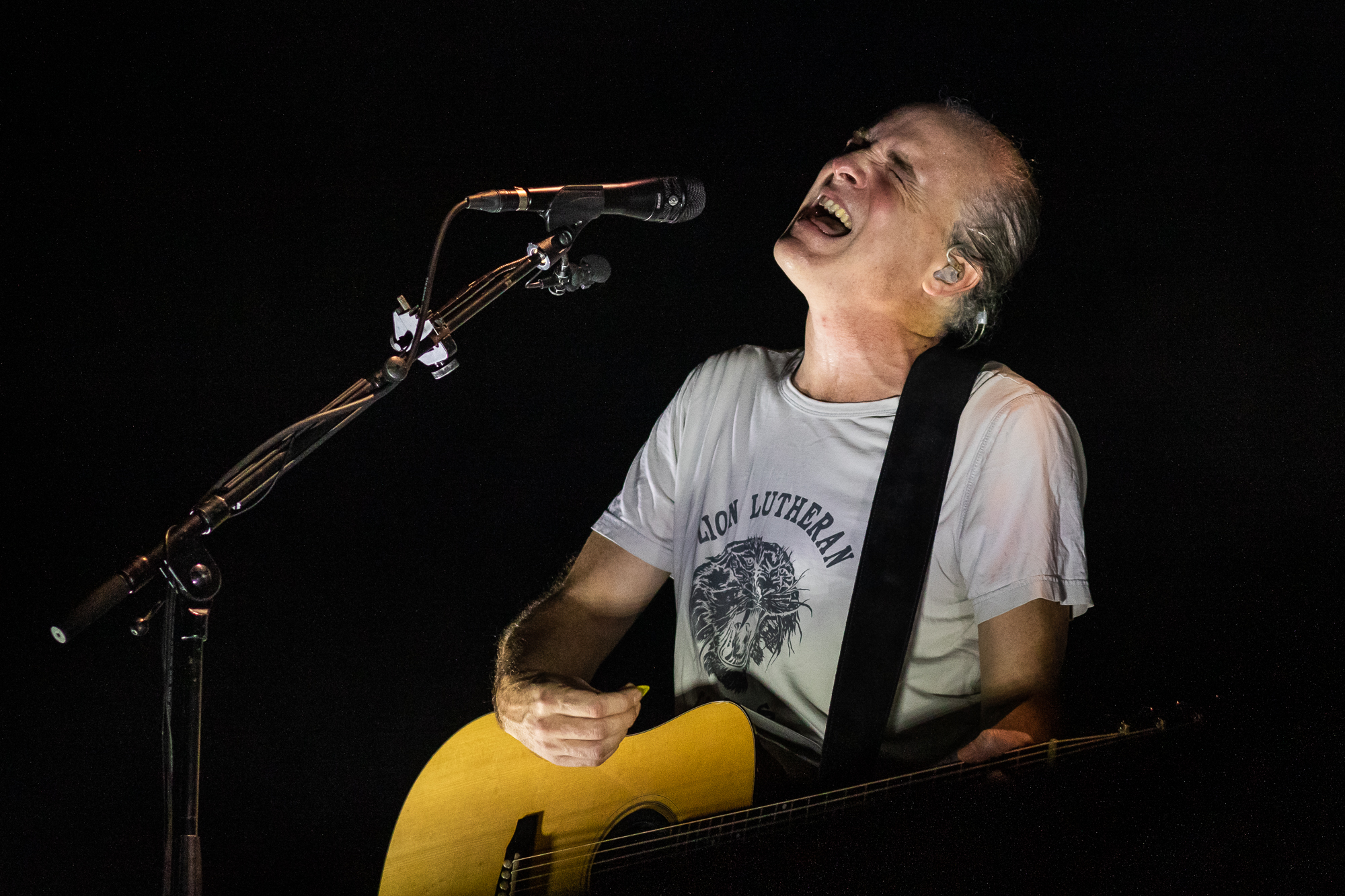
On stage Fran wore a kilt and a “Zion Lutheran Cougars” t-shirt identical to the one he wore in the video for Why Does It Always Rain On Me?

Andy Dunlop got very sweaty, very quickly.

Dougie Payne smiled a lot.

The band played The Man Who from start to finish, including its hidden track Blue Flashing Light, and then left the stage.

The second half of the set comprised a “best of” selection of singles and closed with a Christmas medley, accompanied by a couple of brawling jakey Santas.

But what was it like? Well honestly, it was pretty special. The nature of a start to end album show is that inevitably a band has to play their hits as they lie, i.e. Driftwood, Turn and Why Does It Always Rain On Me? went out in the first half. It’s unorthodox to play your biggest single in the first hour of your show and it felt a bit strange to be pogo-ing  so early in the night but the other side of this is that the band get to play some songs that otherwise wouldn’t make it onto the usual setlist. I haven’t heard Last Laugh of the Laughter in years and the harmonies were sweeter than I can ever remember. It was perhaps the only song that sounded different from the album version, and only because of the strength of the backing vocals, the rest was very true to the original sound. Another take on this format is that some of the band’s more challenging songs also have to come out. Much as they might be endeared to the hardcore fandom moments like Luv and She’s So Strange were reminders of why The Man Who was critically derided as a collection of “sad” “ballads”, the latter in particular proving a bit of a stretch for Fran’s vocal chords. But there were fond memories and pleasing anecdotes to go along with these old songs and the band have never lost their wondrous humour which always keeps their live shows so engaging and entertaining.

The second half of the set highlighted a few other things about The Man Who. Firstly, that the significance of the album to fans cannot be understated; once upon a time these were some of the only Travis songs in existence and they were adored mightily and whole-heartedly which, in the context of the live show, means the album falls so naturally and familiarly on the ears that it sounds like a “best of” in itself, even up against the established singles like Side and Closer. Every song is so well received. Secondly, that Travis’ true nature has always been as a rock band. From the opening chord of Blue Flashing Light the atmosphere in the arena is completely changed, electrified, amplified. The Man Who happens to be a cohesive collection of quiet songs and there are many others in the catalogue (see The Invisible Band) but when given a platform, or an entire half a set, the band choose to play loud, choose to rock out, choose guitar solos, choose to traverse the stage, choose to jump off the drum kit. The Man Who is another side to that band but it was never the limit of their abilities or interests. Lastly, that Travis are a band from Glasgow and were they not, they would never have written as iconic a song as Why Does It Always Rain On Me? because where else in the world could they have found inspiration in the best audience of voices to belt out such an anthem?

Jeff Wayne’s The War Of The Worlds – SSE Hydro

Live music, Music Review

As a young child I visited the cassette drawer of my parents’ entertainment unit regularly. It contained so many treasures; a selection of Neil Diamond albums; various ABC Radio compilations; a cleverly duplicated copy of the Young Einstein soundtrack; the all important head-cleaning tape and fluid pack and multiple anti-static cloths for our records. Buried in the back right-hand corner, presumably because it didn’t fit the individual slots of the cassette trays, there was a double album that intrigued me for a long time. When I finally enquired with my Mum about this block of tapes – I hadn’t seen a double album on tape before, it was a block – she related to me the story of how The War of the Worlds had been broadcast as a radio play in the 1930s and caused mass panic, even alleged suicide, because people thought an alien invasion was taking place. I found that story absolutely terrifying. From then on I regarded that double album with a kind of universal fear that I couldn’t even understand.

I must have been about 10 or 11 years old the first time I felt bravely curious enough to listen to that album. The album was, of course, Jeff Wayne’s Musical Adaptation of The War of the Worlds: Not nearly as terrifying as an American radio play adapted from H.G. Wells original invasion novel. Or so I told myself. You know that way frightened children rationalise with themselves about the dark? “There’s nothing to be afraid of” I told myself as the notorious “Ullas” sounded. I nearly survived Tape 1, Side A before turning it off. I made several more attempts but couldn’t get my stomach beyond the notion of that chorus; “But still, they come!”

When I was a little older, maybe 14 or 15, and in the prime of my teen horror film phase I discovered this album again in the record collection of my best friend’s parents. Late one Saturday night while sleeping over with a couple of other girl friends, after a binge of scary movies, we decided to put it on. This time I got all the way to turning over to Side B and was just about to drop the needle when one of the others girls interrupted, “Do we have to? I really don’t like it; it’s scary.” We let it go for the night and later, when it was just me and my best friend, we played Side B. But by the end of that we were bored. The musical themes were still dramatic and frightening, and the narration eerily haunting, but in the light of Sunday afternoon it just didn’t seem as interesting.

It was a long time before I revisited TWOTW, it was on the same long haul flight where I first listened to Mike Oldfield’s Tubular Bells in full. I had some time to kill. In the confines of the plane I drifted in and out of consciousness and in and out of the nightmarish commentary. When I eventually came around for a meal service the album was somewhere in the middle of its third or fourth repeat, so I can definitely say I’ve played it all the way through. In my memory though it’s still a terrifying listen. Even the titles of the songs/chapters give me chills; one mention of a “heat ray” and I get that sinking feeling in my stomach. There’s no question in my mind: It is a masterpiece! A truly haunting masterpiece.

Never in all these years did I imagine seeing a live stage production of something that so traumatised me as a child. Yet, when the 40th Anniversary arena tour was announced I knew I needed to see it. I could think of no better way to experience this album than in a vast chamber with enormous light and sound capacity, surrounded by an audience of thousands. Yes, this would be the perfect environment to conquer my fear of the “Fighting Machines”.

I had no idea what to expect and for my own enjoyment, or perhaps torture, I didn’t look into the previous stage productions. I wanted to engage with the performance, fresh and naive, like I had done with the album. And really, I did. At first the simplicity of the set appeared disappointingly dull.

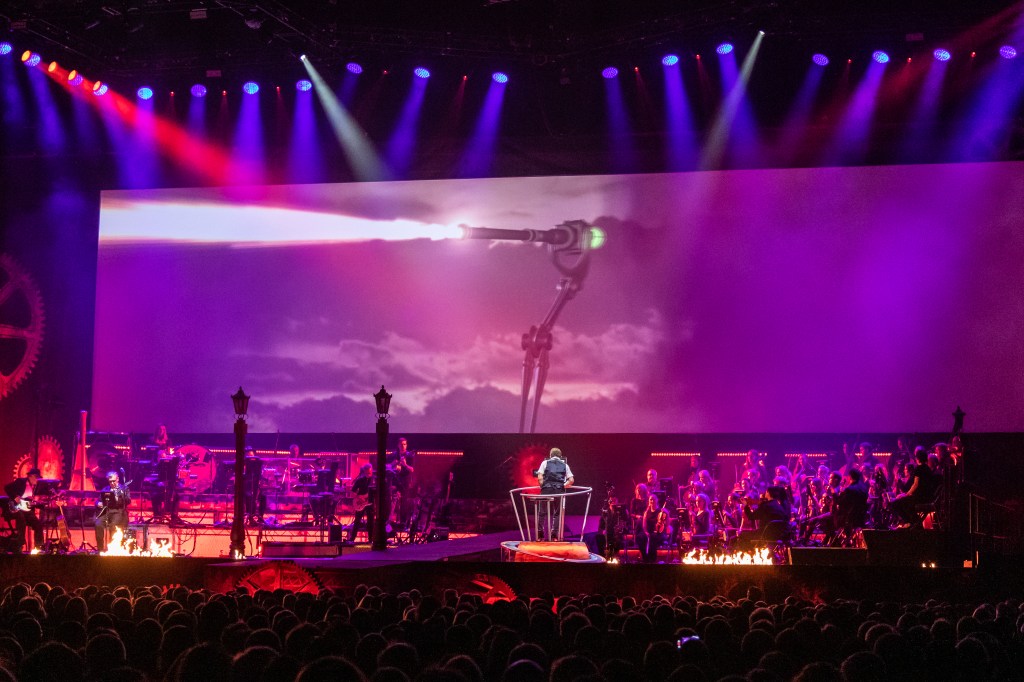
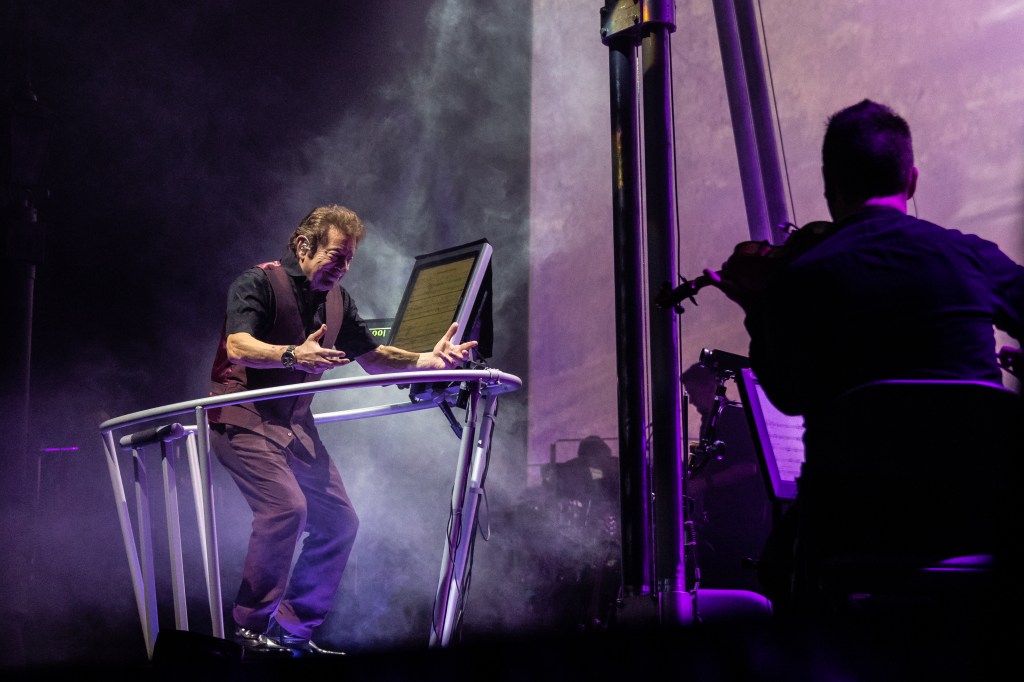
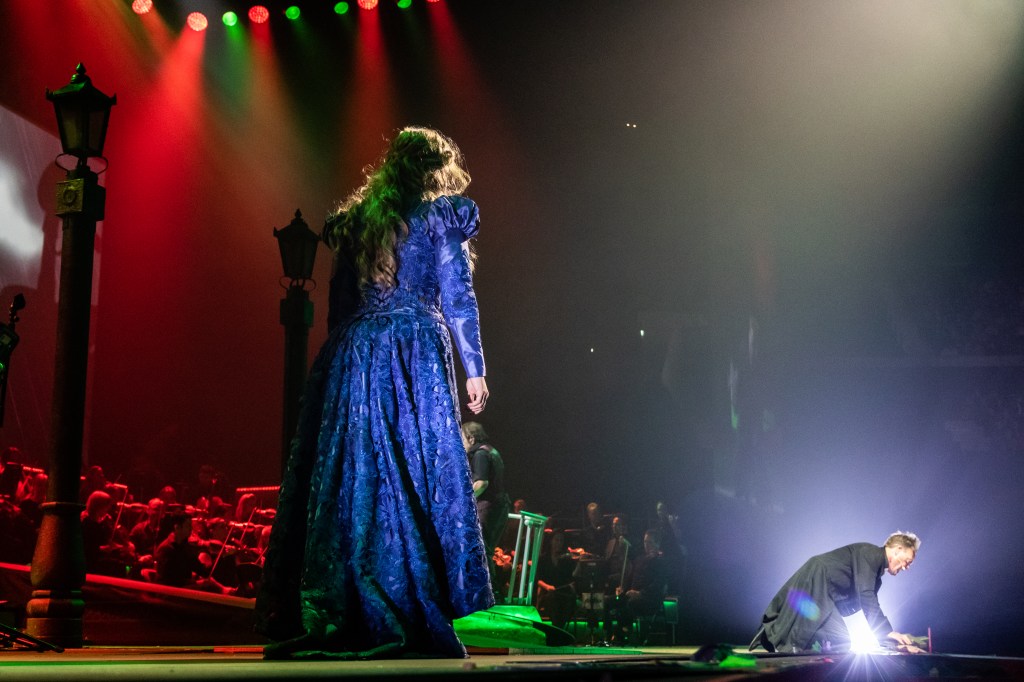
A ramp from the back of the stage running between two lamp posts lead the actors into position in front of the band, string orchestra and conductor, while a secondary stage in the centre of the arena was bare. However, as my eyes adjusted to the contrasting light from the large screens behind and on either side of the stage I began to see the finer details. Giant cogs, metal discs, scaffold railings, beams and pillars, adorned the stage surrounds with an industrial charm.

The musicians were often silhouetted but occasional highlights would reveal some glamorous fabrics. The cast, as they featured one-by-one, or at times in pairs, were all fully characterised by their respective wardrobes. And the visuals projected on the screens were loaded with detail and stimulation, particularly fitting to the pace of the narration. In some moments of intense action the density of the production was nearly overwhelming; there was so much to take in. A street scene of destruction featuring “Jeff’s Music  Emporium” was one of those moments where your eyes could have been watching anything and you would have seen so much, but missed so much at the same time.
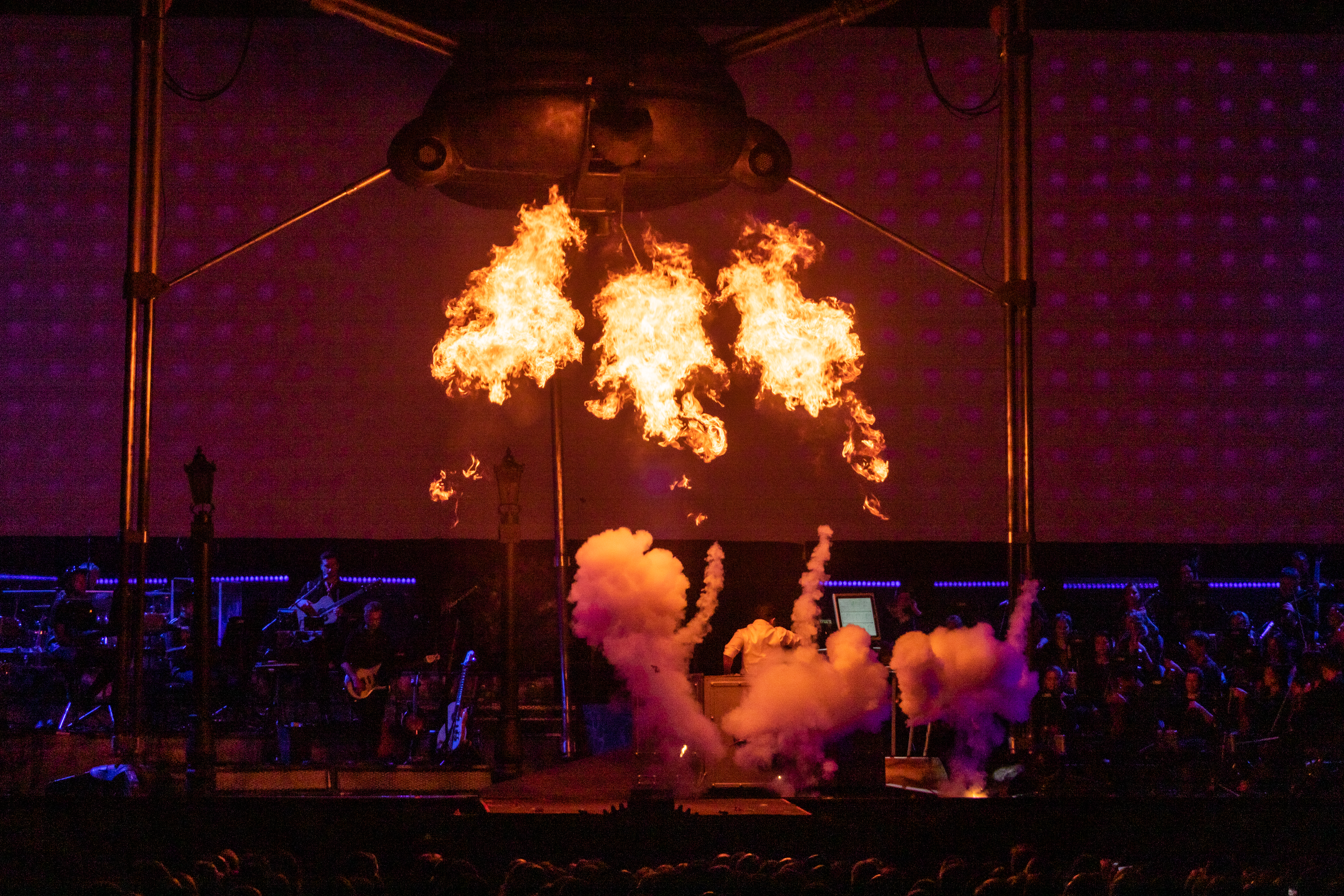
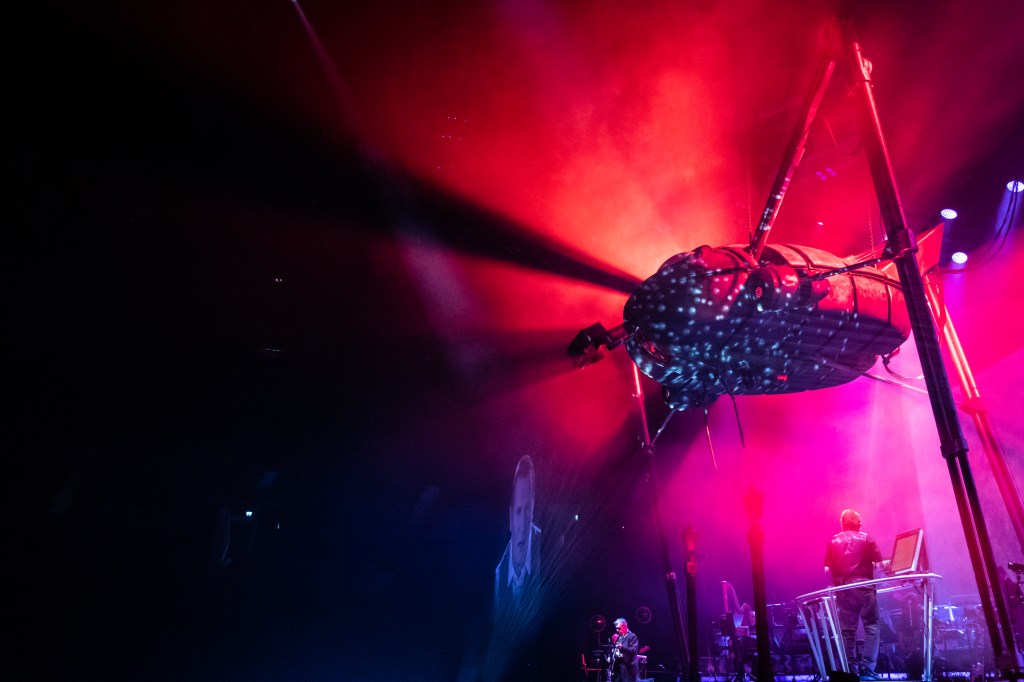
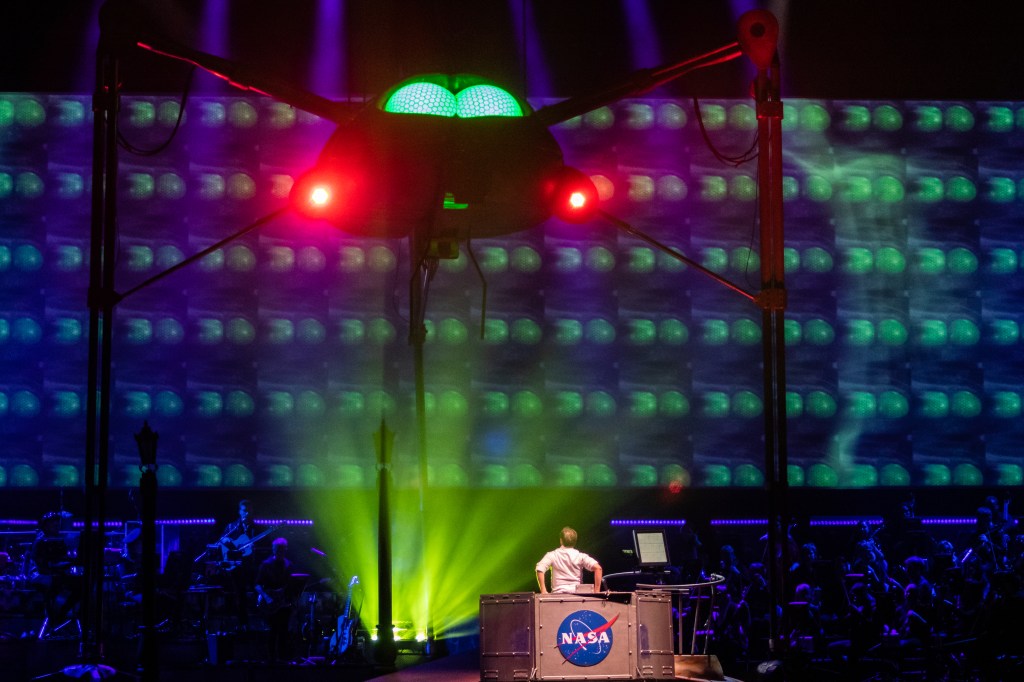
 As it turned out the scale of the set was just right for The Hydro. The measure of this was when the Martian Fighting Machine descended upon the stage, unleashing fiery blasts, the heat from which could be felt across the entire stalls and beyond. I have to be completely honest; my jaw hit the floor when I saw that thing coming down! My heart rate was already elevated from the tension of the story; the unscrewing of the first cylinder, the panic at the use of the heat ray; seeing a life-sized alien craft standing right before my eyes was quite extraordinary. I may have lost my breath for just a moment.

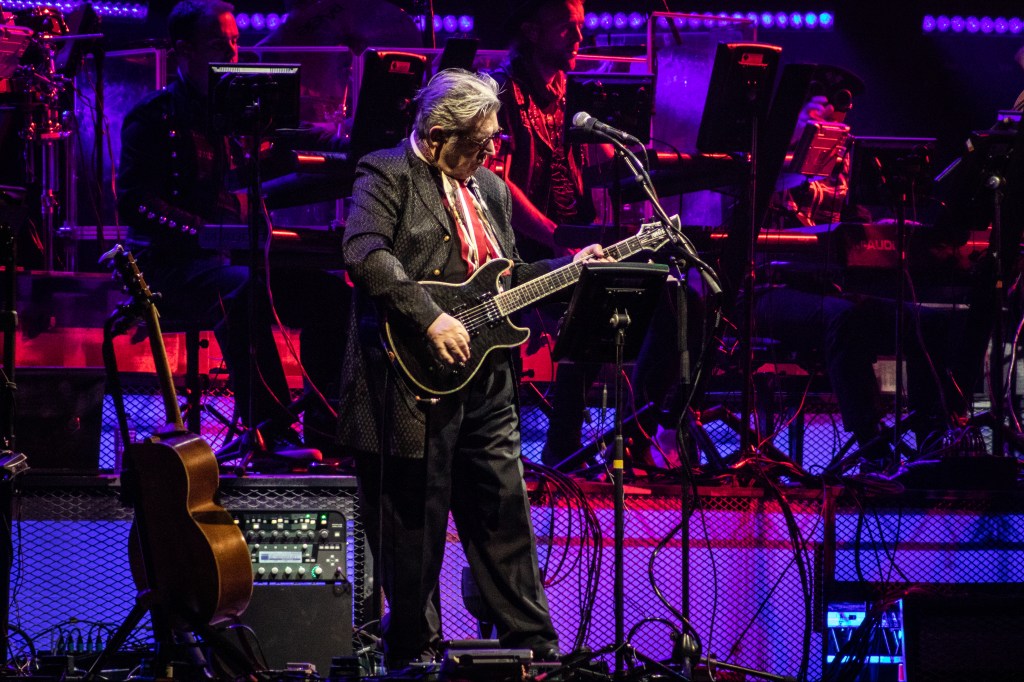
The accompanying sound too, was beyond my imagining. I could physically feel the landing of each cylinder, every explosion, and the Thunder Child certainly lived up to its name. The bone-melting cry from the Martians was enough to induce prog-rock sci-fi nightmares for at least another 4 decades to come. Musically I couldn’t fault the performance and the engineers really controlled the sound well. Original session guitarist, Chris Spedding, and bassist, Herbie Flowers, delivered their iconic parts with incredible vitality and effortlessness. I can imagine some fans of the original recording might be put out by the addition of new music (Life Begins Again was introduced in the 2014 production) but I’d like to think fans of this musical style, and the way the story develops through the music, can appreciate Jeff Wayne’s desire to grow his work and legacy through the evolution of the live performance.

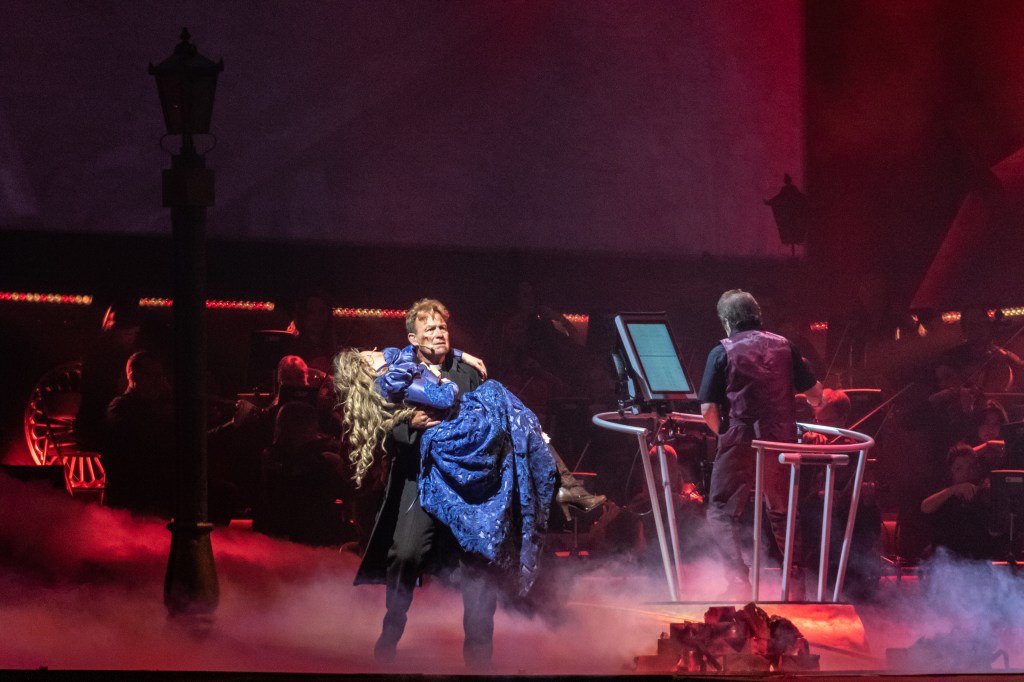
As the show went on I became increasingly conscious of the wonderfully effective synchronicity between light and sound; not just in the obvious and violent moments, as in the flashes of destruction and battle, but through the more passive sequences too. The heavy stillness on stage as the alien red weed covered the landscape was so subtle but so crucial to the changing atmosphere at the beginning of the second act. The darkness over the band during the Forever Autumn Reprise duet created a magical moment between just The Journalist, the endeared narrator, and his distant fiancรฉe.

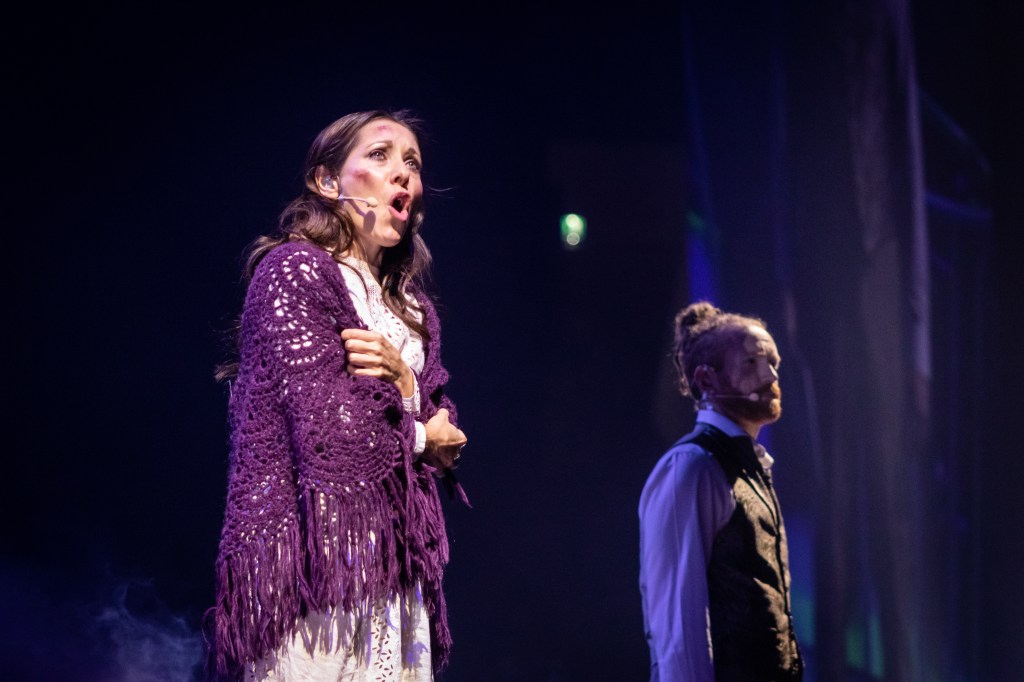
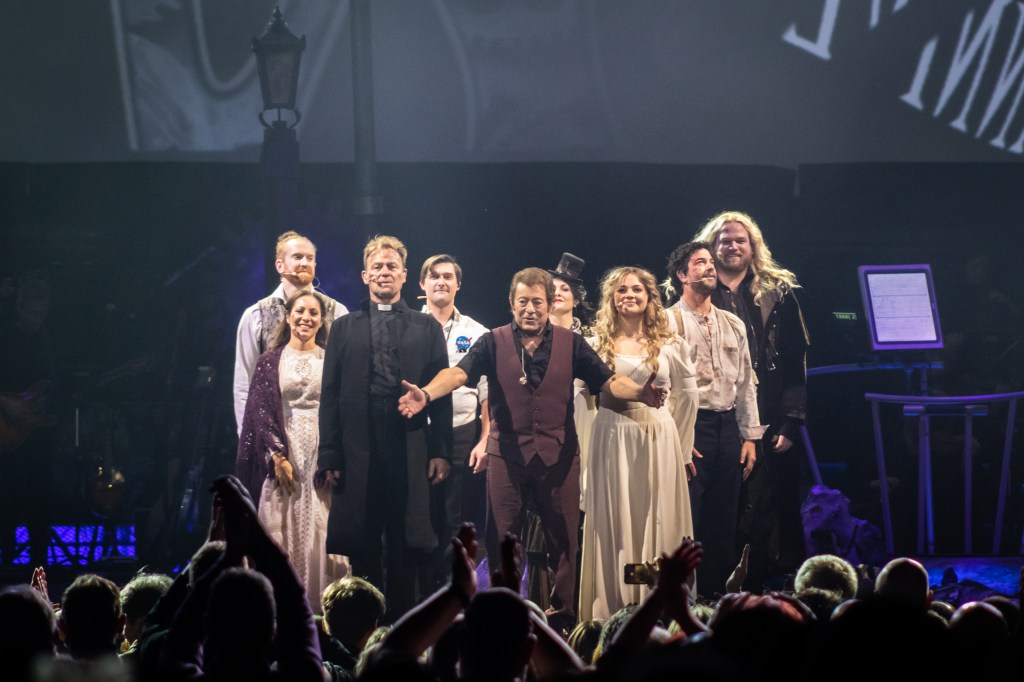
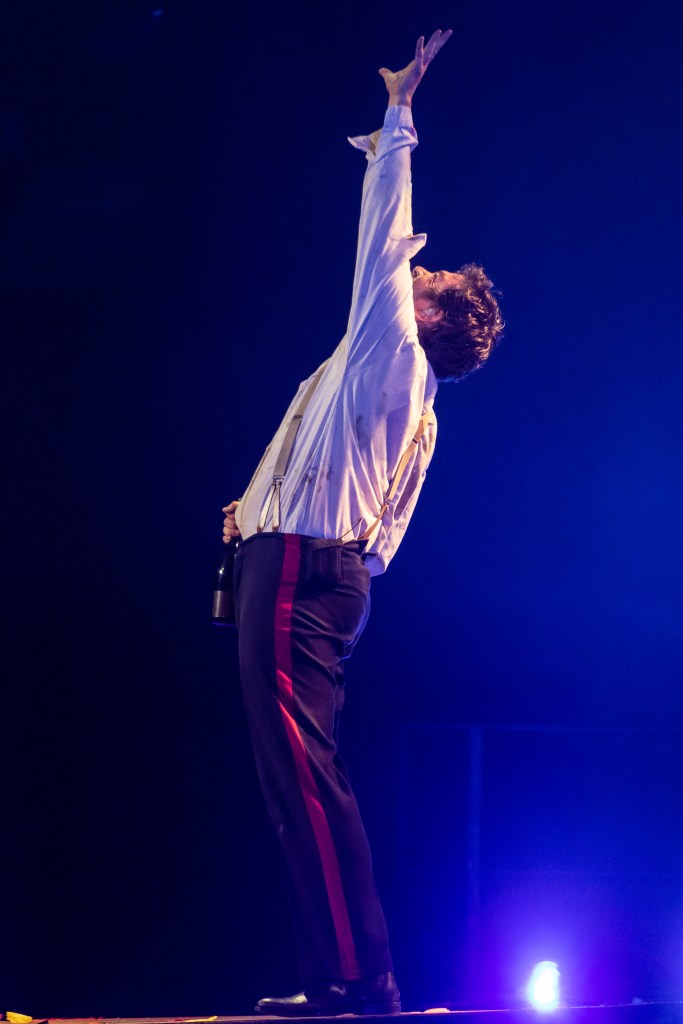
Having said I didn’t know what to expect going in, I was familiar with many of the performers, and I was still really impressed. Jason Donovan portrayed the grotesque anger and distressing confusion of Parson Nathaniel to the point of apparent fatigue. I was exhausted by the end of his frantic ravings. Playing opposite the delightful airiness of Carrie Hope Fletcher really emphasised the conflicted rage of his character; the two were dynamically juxtaposed brilliantly.

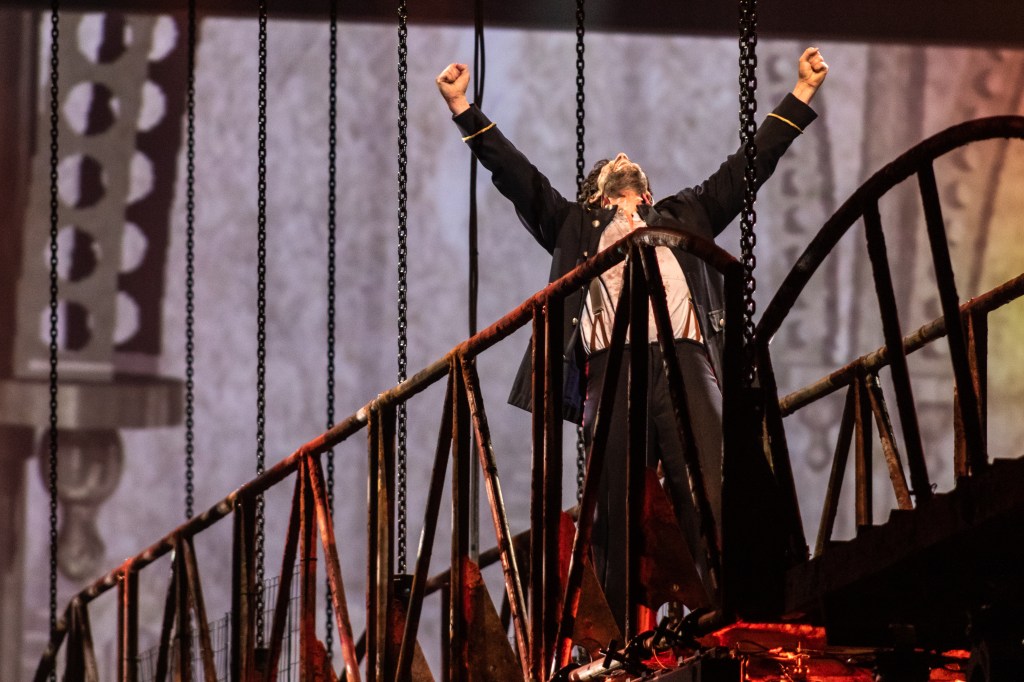
I found Adam Garcia as The Artilleryman a little bewildering at first, not that he didn’t embody the shell of a man gone to war with aliens, but that he didn’t in any way sound English at the first encounter. It wasn’t a major drawback because he really nailed it when he returned in the second act. His high note phrase – “We’ll start all over again!” – was perfect every time. Absolutely smashed it! His physicality was admirable too; he really worked to make his contribution immersive for the audience. Running through the crowd at first, and later summoning and scaling a bridge across the stalls added so much human energy to the overall performance.

The story shifts pace up and down throughout but the final resolution still feels hastily simplistic. The spectacular demise of NASA in the epilogue does well to offset this by concluding with a rather deliberately darker message than the narrator himself delivered. After all that had gone on I felt uneasy.

Later as I was leaving I overheard a woman telling a friend how her Dad had banned her from listening to the album when she was young. Apparently she played it all the time and it gave her nightmares. I would love to have been so defiantly brave as a kid! Her friend admitted “It still scares me” and the woman replied, “Me too; I won’t sleep tonight”. I slept alright actually.

Shakey Graves – SWG3 TV Studio

Live music, Music Review

It’s been more than a minute since Shakey Graves played to an audience in Glasgow. The artist from Austin, Texas was scheduled to appear at The Art School back in March of this year but the so-called “Beast From The East” snowstorm brought an early end to his tour and Scottish fans were left bereft for the time being as the show was cancelled, rather than postponed. Gratefully, another tour was announced for the Autumn but in the wake of the Glasgow School of Art Mackintosh Building fire an alternative venue was chosen and ultimately the gig took place in SWG3’s TV Studio – the very same room Shakey Graves last played in Glasgow over two and a half years ago.

Shakey Graves is the nom de plume of Alejandro Rose-Garcia, whose reputation precedes him through a kind of cultish following. He’s far from the mainstream as far as UK music press is concerned, yet he can find a devoted audience on just about every continent. This latest tour is in support of his new record Can’t Wake Up, released in May on Dualtone and, as anyone familiar this artist will attest, it’s a vastly different sound he’s touting these days.  Gone are the crunchy blues guitar riffs, raw-worn vocals and erratic one-man-band percussion. In their place is an overall more polished, controlled production; the lilting melodies and jaunty accompaniment have a kind of soft-focus and even Rose-Garcia’s voice is pastel-toned. Lyrically the songs are as mythical and mystical as anything in the alt-folk /Americana / country blues / southern rock canon, but with an added dreaminess that elevates them from being intensely personal to universally quizzical.
How then to marry these diverse sonic themes into a cohesive live set? Well, if anyone can do it and do it convincingly, it’s Shakey Graves. A stunning support set from Pennsylvanian artist Petal precedes the main event and is tragically disregarded by sections of the audience. Not even her exquisite cover of Fleetwood Mac’s Silver Springs could grasp the attention of many but it’s nothing personal; for reasons beyond comprehension the crowd are as distractedly chatty throughout the entire show.

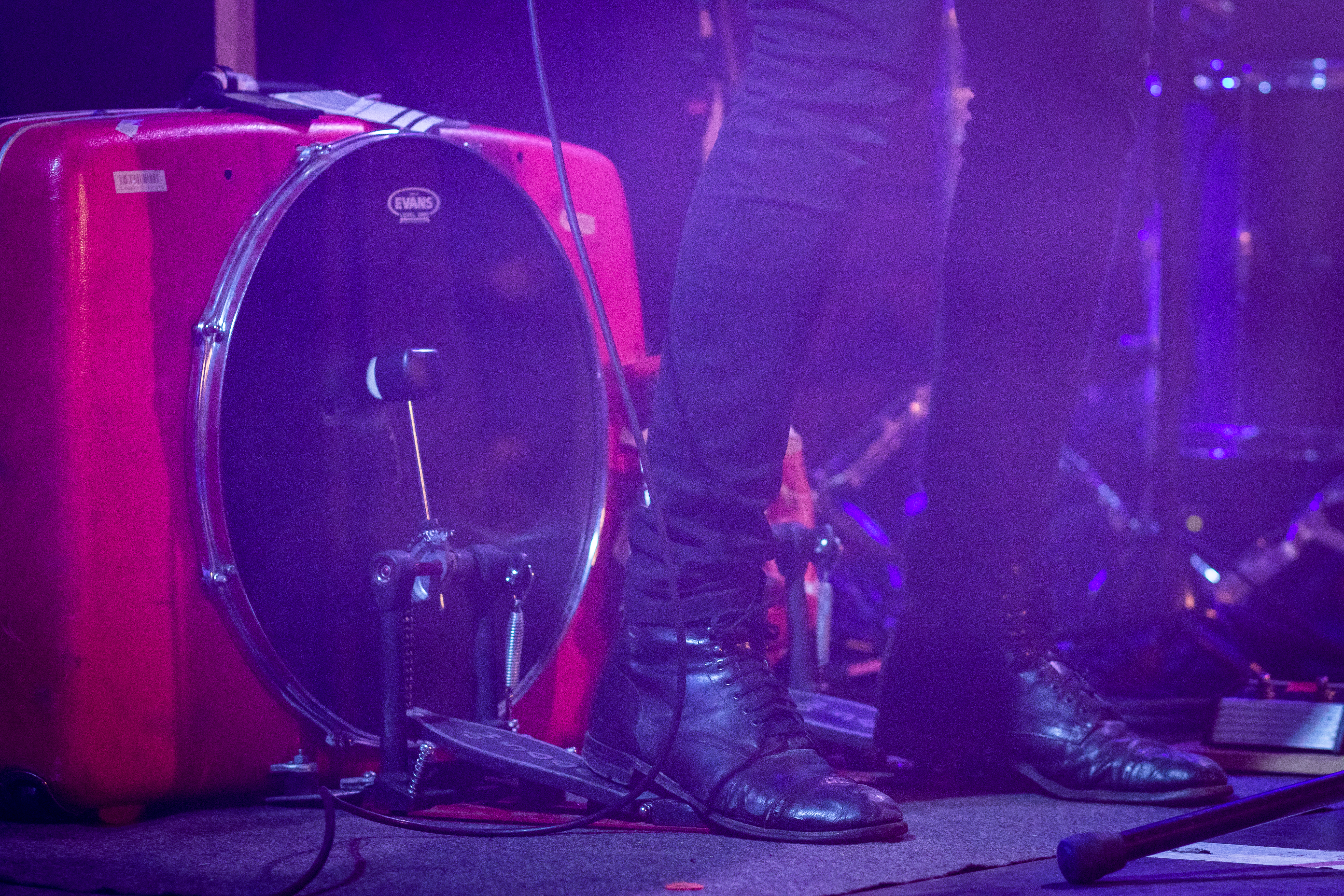
Arriving solo to the stage Rose-Garcia begins in familiar territory that sees the most vocal of his audience joining in. Armed with just an electric guitar and his suitcase kick drum and tambourine combo Roll The Bones glistens. The Perfect Parts swings into a pretty rendition of Pansy Waltz before he is joined by the other three members of his band. Christopher Boosahda on drums, Jon Shaw on bass and Patrick O’Connor on guitar complete the Shakey Graves touring line-up as well as being the core performers on the latest album. Immediately the more sophisticated beat behind Big Bad Wolf introduces the next chapter of the show gently. The mesmeric chirp of guitar on Mansion Door distracts from the darkness in its lyrics while the airy shuffling blues of Dining Alone lays its misery bare. The mood is never quite sullen and Rose-Garcia’s expression always tells more than each tale reveals.

Unknown Legend is the point where it really comes together, where the band and crowd are fully invested and committed to the groove; guitars are playing off one another, smiles are being exchanged and Rose-Garcia is especially talkative and comfortable in his banter. Excuses capitalises on this sweet moment with particularly dynamic playing – loud drums against soft vocals – matching the urgency of the lyrics “I can’t wait for summer, I can’t wait for spring / I can’t wait for someone who can’t wait for me”. It’s a natural climax at this point of the night and is followed up with yet another change of pace. Adequately sweaty for now, the band takes their leave to allow for a set of rootsier acoustic songs; Tomorrow, Family Tree and City In A Bottle prove to be definite crowd-pleasers with phones hoisted to film throughout, while the poignant Word of Mouth closes out the set in hushed awe. It’s a lengthy moral that ebbs and flows, drawing the crowd in until they’re hanging on every word. Shakey Graves is the complete entertainer at this point; he sticks his plectrum to his sweaty forehead for a time and dances on the spot. The crowd goes nuts. As the band returns and is officially introduced there’s a sense that the night is still just warming up but quickly then the realisation that we are, in fact, nearing the end settles and the crowd becomes restless and shouty once more.

A boisterous and out of tune singalong ensues on Dearly Departed which, from the band, seems to lack effort in the face of such an energetic reception. Rose-Garcia acknowledges the strict curfew saying “I’m not even going to fake going off” as he ventures one final morbid tale; Late July. The ending hits hard and he blows a kiss from the stage before waving farewell to his adoring fans. With such an extensive back catalogue to choose from, sixteen songs is never going to feel like enough for the cult of Shakey, but they take what they can get and show their fervent appreciation. It’s not so hard to settle for quality over quantity and there’s no disputing; this was a quality performance.