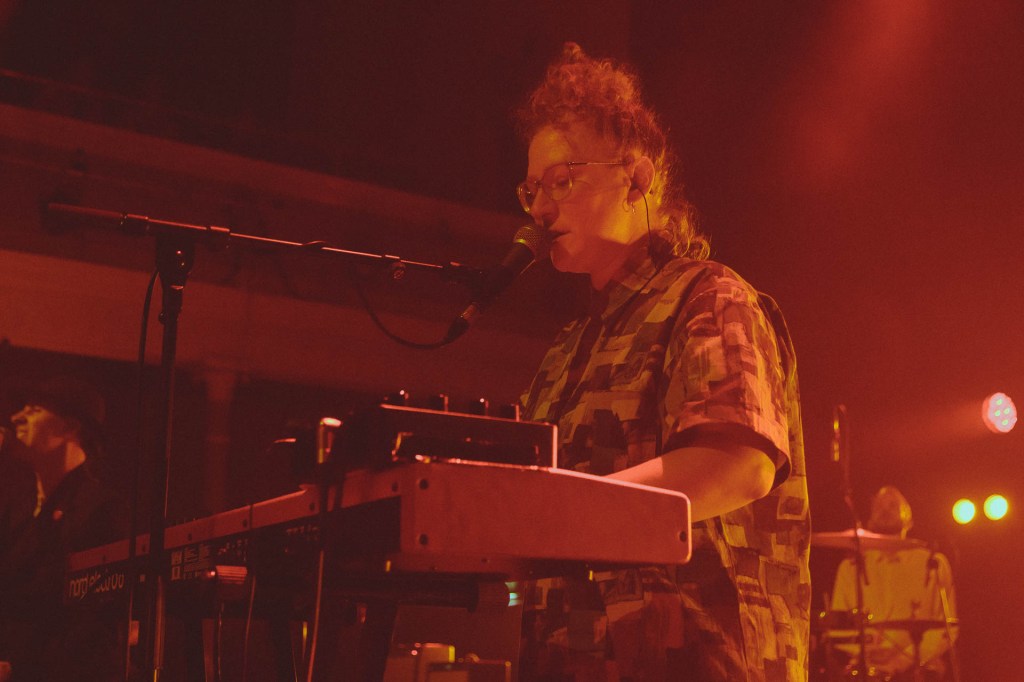
Inhaler – O2 Academy, Glasgow

Live music, Music Review, Opinion

The Show Must Go On – Inhaler deliver a night to remember despite health struggles

When have you “made it” as an artist? How do you know? Is it selling out a headline show? Or simply playing a headline show? Is it a headline tour? An international tour? Are venues important? Venues of a certain prestige or capacity? Is selling out a 2500-seat theatre enough to say you’ve arrived? What about selling out a 2500-seat theatre for a second time, over two years later, and on two successive nights? Or is it in chart positions? Does a top 10 album certify you into the big league? What’s a number 1 album worth? Do awards count for anything – not that creative expression is a competition – or is there some other way to gauge it? What does success ultimately look like for a band in 2025?

It feels like the metrics of success have been thrown out the window in recent years, not only with the rise of independent artists through self-driven and organic channels, but also in the way artists – and, more importantly, fans – engage with traditional industry behaviours. Having “creative control” always seemed like the biggest power struggle but, increasingly, it feels like professional autonomy is the greatest goal for artists now; that is, the ability to say ‘yes’ or ‘no’ based on one’s own best interests or intuition. It’s self-representation and doing what you feel is right.

These last few years in particular have highlighted the sustainability value in respecting the personal and professional boundaries of artists as more and more high-profile figures speak out about their experiences of abuse and exploitation. Yet one thing that still sits uncomfortably between artists and their fans, even since 2020, is the cancellation of shows for health reasons. Most people are understanding – we’re all human – but there remains a stigma about prioritising one person’s wellbeing over an entire audience’s pleasure, and that’s without mentioning the economic and logistical implications. This struggle and perception of artists’ autonomy, coupled with unprecedented accessibility online, leaves people in a difficult position if they become unwell. So to the point of ‘success’ in 2025 – is being able to cancel a show because of sickness the peak, or is it perhaps being forgiven for doing so?

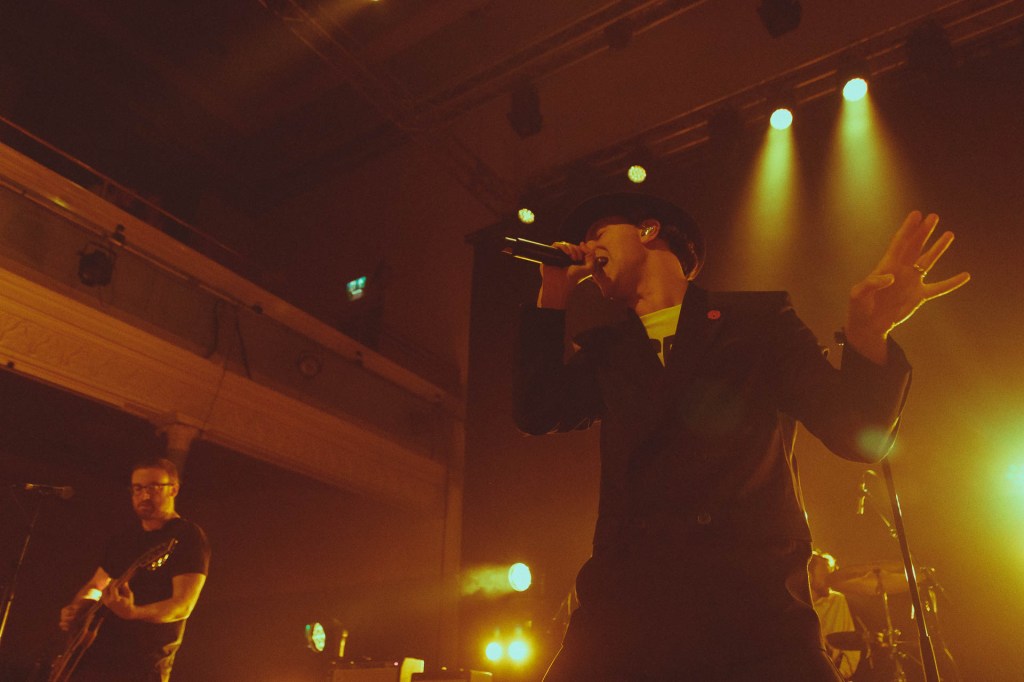
Inhaler’s debut album topped the UK charts upon its release in 2021. Their sophomore album peaked at number 2. Their third album, Open Wide, was denied the top spot earlier this month by coinciding with the physical issue of a Taylor Swift live recording from 2023. That’s a tough break, entering a chart battle with pop music’s messiah. Nevertheless, Inhaler have had a good run of record sales. Touring has also proven to be one of their great strengths and they even capped off the 2023 release cycle for Cuts & Bruises with a sold-out hometown show at Dublin’s 13,000-capacity 3Arena. By traditional measures they conquered music some time ago. Throughout that final 2023 show frontman Elijah Hewson was losing his voice, perhaps with the fatigue of touring, or that coinciding with the winter flu season, but he soldiered on through a career-defining night for the band. Having proven themselves at such a level, surely the band are allowed a little grace now if they fall under the weather? This raises the question: What’s worse for your fans – giving maybe an 80% performance or postponing shows altogether until you can come back at 100%? Well on Tuesday night in Glasgow Inhaler decided to make a statement: They went ahead with the 80% performance and it was 100% everything fans could have hoped for.

Liverpool four-piece Permanent (Joy) were forced to take to the stage before even half the queue outside had been admitted. Unperturbed and at ease with their responsibility, the band turned on a casual charm, delivering a brief yet unhurried set of songs that sounded as if they were forged in that turn-of-the-millennium melting pot where American post-grunge minced with British alternative rock. It was a clean, dark and moody introduction to the evening.

Meanwhile Dublin outfit Gurriers sparked a different energy throughout their support slot. Spitting lyrics with endearing punk conviction, theirs is a sound akin to organised chaos – polished – with a harsh edge and overall urgency that commands attention. Both openers deserved better lighting than they received but that didn’t deny either of a genuine audience connection, the importance of which can never be undervalued.

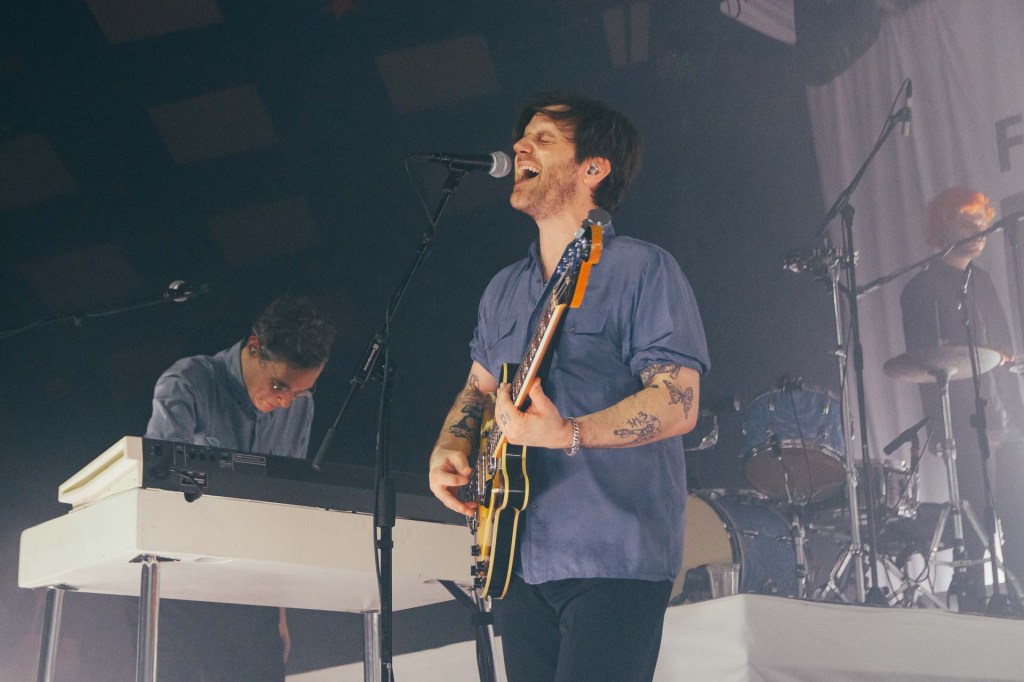
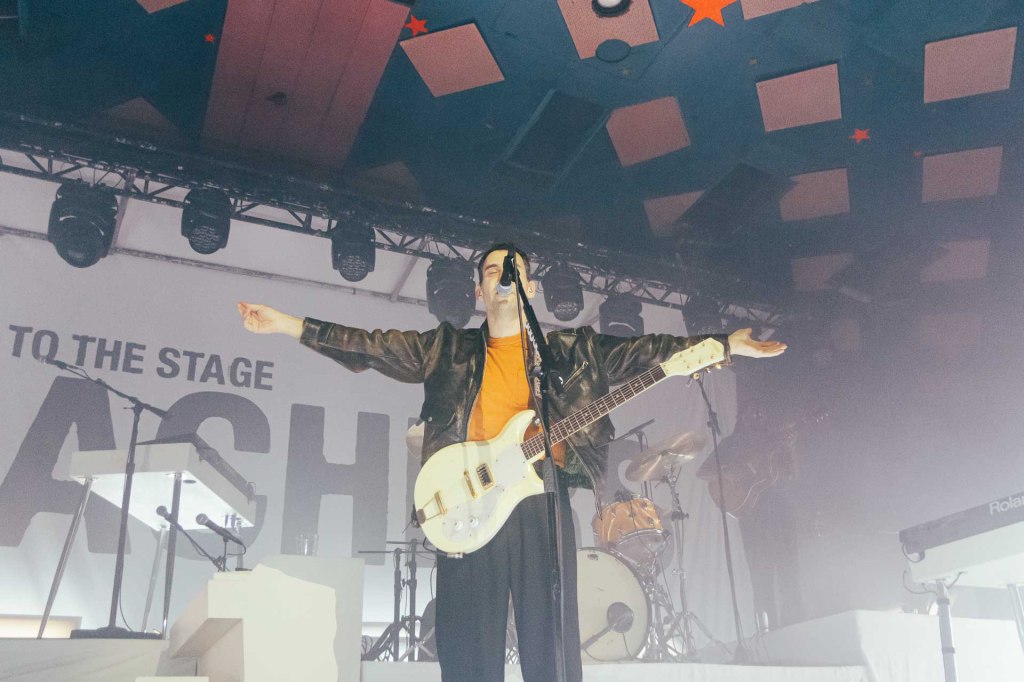
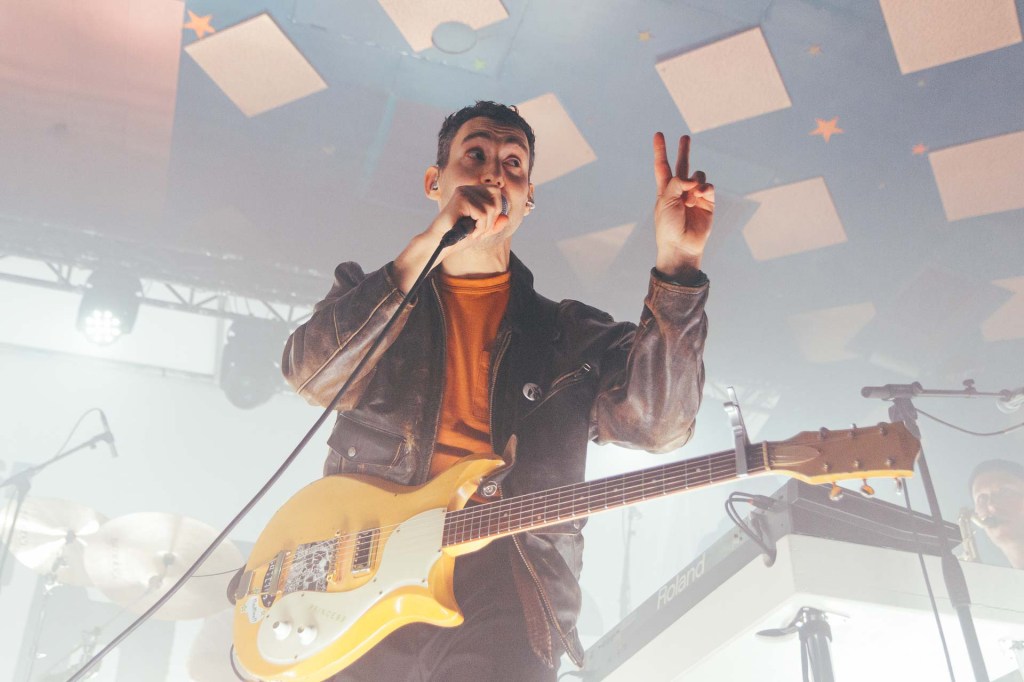
Finally, precipitated by piercing screams as the lights went down, Inhaler appeared like lightning through a storm front, forcing everyone in the balcony to their feet. My Honest Face spliced the air, warm and heavy with anticipation. Hewson confessed to illness immediately but insisted that they hadn’t wanted to cancel; Glasgow has consistently delivered some of the band’s favourite shows over the years and they were still riding high from Monday night’s reception. His declaration held a weighty expectation that the crowd would carry them through, and so it was implicitly agreed and the audience obliged.

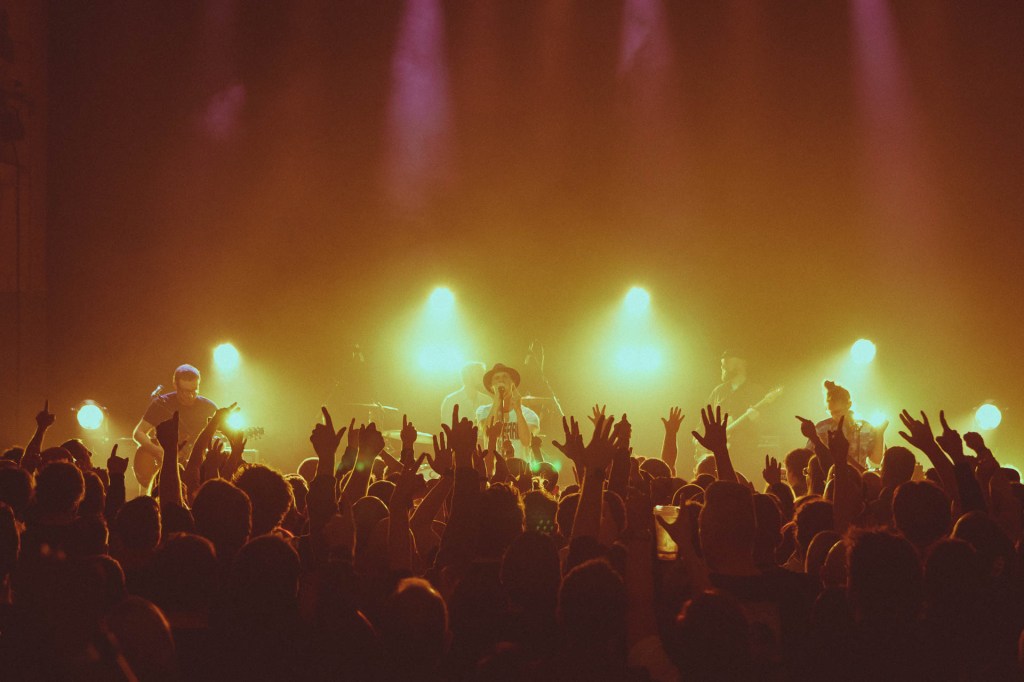
New songs were generously received like old favourites, and the old favourites were scream-sung so loud the whole room shifted frequency. A Question Of You had an elevated grit about it while the added crunchiness on Little Things and X-Ray set them in a different genre to their recorded versions. My King Will Be Kind marked the apogee of crowd participation at the halfway point of the set, where band and audience fully synergised. From there on the whole concert experience felt like a formidable and inevitable triumph.

There was minimal banter in between songs, owing largely to the preservation of energy and Hewson’s voice, but no-one seemed to mind or even notice, as the frontman used his few spoken interludes to repeatedly praise the audience for their support. The band’s typically concise songwriting gives way on Dublin in Ecstasy to an extended instrumental section. Hewson took this opportunity to leave the stage, not in search of medical aid or respite but to get closer to fans, extending the reach of his microphone so as to converse with a few lucky punters on the barrier. The crowd reaction was immediate, desperate and unequivocal, as fans near the front pressed into each other, arms stretching out and eyes straining for attention, while those further back watched on with eyes and mouths agape in awe and envy. Anyone in close enough proximity captured a core memory. This is really how artists earn their stripes and Hewson seems innately aware of it.

To question his judgement in this moment, given the health implications for himself and fans, is to undermine the point of live music entirely. Moments of deep, spontaneous and inspired connection cannot be faked or forced, they cannot be scripted or replicated, and for these reasons they are the most treasured, most prized, most valuable of experiences.  Chart positions are arbitrary; ticket sales mean nothing to fans; awards alone don’t provide longevity (although occasionally prize money helps). Live shows are the real proving ground for talent: Are the songs well received? Do audiences care enough to listen? Are people invested to show up early, to stay to the end? Is everyone having a great time? When these questions are answered affirmatively, that’s when a band has succeeded.

As to the matter of cancelling shows, to artists seeking compassion and understanding, there is no universal answer. The best rewards in life are rarely without risk. Inhaler chanced their luck in Glasgow and it paid off, giving fans an unforgettable night. Two nights later, in Manchester, they saw the other side of the coin. Either way, they’ve surely made it, by any definition.
Maximo Park – Queen’s Hall

Live music, Music Review

Maximo Park are thrilled to play the Queen’s Hall for the first time, even when things don’t go exactly to plan.

The music of Maximo Park, the indie rock outfit from northeast England, has been called many things over the band’s 20-plus-year history, including – but not limited to – “intellectual”, “energetic”, “intense”, “political”, “optimistic”, “endearing”, “romantic”, “emotional”, “passionate” and “sincere”. A lot of very broad, human qualities embodied in their sound and in their lyrics especially. At different times they’ve been categorised as “alternative rock” and “post punk” and “art pop” but regardless of pigeonholing the loudest reviews have generally been quite positive; critics like to say nice things about this band.

I’m not here to argue with the tastemakers of history but one thing that isn’t mentioned enough, in my opinion, is how awkwardly self-aware this band is and has always been. And when I say “this band” I’m really talking about its most expressive incarnation, its mouthpiece. I’m talking about Paul Smith, frontman, lyricist, self-anointed spokesperson, social media manager, mailing list usurper. The singer who appears to be 105% present in every performance and 110% in his head at all times.

Paul Smith has made a career out of turning the banal surreal, out of punctuating abstract scenes with his own unmistakable, visceral, whiplash-inducing lyrical couplets. He’s very good with the words. And dancing. And singing, too; excellent with the singing. Yet, when he’s on stage he often comes across as if he’s dodging imaginary word bullets. It’s like his superpower is intuiting what not to say so as to avoid getting retroactively cancelled in 30 years’ time. It must be a real struggle when you have such an actively extensive lexicon, to find just the right way of saying “this song is about geographical privilege in the arts” or “bodily autonomy”, for example – legitimate examples, by the way – and yet Smith insists on trying this for every song, or at least every other song and most songs in between. It’s distracting to watch him calculating in real time – he talks a lot for someone who says very little – but true fans and word nerds understand and appreciate the effort. He’s really a sensitive, new age guy.

Anyway, no-one talks about this nearly enough for my liking.

You know what makes this band so great? And, especially, what makes this band so great live?

Duncan Lloyd: Founder, guitarist, songwriter and former co-frontman – once-upon-a-time, before the incumbent magnetic frontman arrived – this guy is just effortlessly cool. His mere presence brings the average temperature of any room down by approximately six degrees Celsius. Understated is an understatement when you’re talking about Duncan Lloyd – he’s on stage, guitar is everywhere but you have no idea where it’s coming from because this guy has effervesced into pure sonic air. That’s right, this guy is so cool he defies physics. Also if you look up the Maximo Park Wikipedia timeline of band members you’ll see that for the last five years Lloyd is credited with guitars, keys, bass and backing vocals; the guy could literally form a Maximo Park one-man tribute band.

Speaking of one-man bands…

You know what else makes this band so great?

Tom English plays the drumkit like it’s an orchestra, like he’s an orchestra. Like he’s conductor and concertmaster; melody, counter melody, harmony and – of course – percussion. He exacts tonality, timbre and tempo from his instrument with the stone-faced charm of Charlie Watts doing his best impression of Animal from The Muppets, or vice versa. His style is emphatic, idiosyncratic. His fills often underscore the ferocity of Lloyd’s own percussive strumming without ever entertaining the spotlight for even a second, though you’d happily listen to him pound out a sixteen-minute solo, given half the chance.

I could go on. I will go on.

Jemma Freese, joined the band as a touring member in 2019 following original keyboardist Lukas Wooller’s departure and immigration to Australia – he’s doing fine; he DJs with a friend of mine in Melbourne sometimes, comes back to visit family in Yorkshire and complain about the weather. Jemma Freese is now an integral part of the Maximo Park live set-up and like Smith’s higher consciousness she probably doesn’t get the attention she deserves. There are times when, especially on the earlier songs, the only thing elevating their performance above the band’s very energetic original recordings is that deliciously indefinable X-factor that is the human voice, Jemma’s voice, and also a particularly juicy keyboard line delivered with just the right amount of spice. Jemma Freese is a musical master chef and connoisseur of tone. When she sings, you listen. When she plays, you feel something: sated.

What’s missing?

Bass. Okay, sure, sometimes in acoustic sets they’ll go without, but you wouldn’t go without, if you had a choice. Listening to Maximo Park songs without bass would be like watching The Wizard of Oz without the colour green. It’s the same story and the characters are all accounted for but suddenly that witch isn’t so scary and the Emerald City is, well, it’s just a city, isn’t it? There’s a fantastical magic about the basslines that Maximo Park deploy, something elemental, that was forged in their very beginning and that carries on today through the presence of Andrew Lowther who was loaned to the band by their musical brothers, Field Music, and who now, like a shared favourite toy, has to be agreeably passed back and forth between the two bands seemingly until one of them outgrows their enjoyment of him, or he’s broken beyond repair. Hopefully never the latter.

So these five humans get together in Edinburgh on a gloomy, autumnal Friday night in 2024. They bash out 18 songs in roughly 75 minutes. I know without checking my watch that it’s about 75 minutes because in the 30-something times I’ve seen them live they’ve only once pushed the 80-minute mark. They have a setlist formula and – eight albums in – they’re sticking to it. The sound is surprisingly good for a room that’s not designed for or suited to amplified instruments.

It’s going well for them until halfway through when a crackle in the monitors breaks Smith’s concentration and the system has to be rebooted. It’s fine, actually, they weren’t building great momentum with the new song / old song / new song rhythm at that point anyway, more of a haunted house stop-start carnival ride energy. This added bit of improvised drama plays into the performance-as-art-installation vibe they’ve been cultivating on the recent instore junket for Stream of Life, their latest collective release about geographical privilege and bodily autonomy (among other things). They persevere serendipitously towards emotional and technical catharsis through a semi-acoustic rendition of the album’s title track that’s really nice. And then they power through the rest of the set like it’s business as usual, which it is: Two back-to-back smash hits to close out the set and then two unsuspecting old favourites for the encore.

Now there’s a word to describe Maximo Park that doesn’t come up very often: Consistent. They’re a consistent live band. They’re consistent on record. They’re reliable. Professional. These aren’t the sexy qualities that we lust after in our Rock Gods and Pop Stars, these are traits on a whole other level. These are the characteristics we seek out in life partners, ride-or-die besties, colleagues, godparents to our children and, importantly, qualities we aspire to embody ourselves. We seek and we find them in our favourite bands. No wonder critics like to say such nice things about them.

The National – Edinburgh Castle

Festivals, Live music, Music Review

No matter how many times you’ve seen The National live before, you never quite know what their next performance will deliver: Chaos; Ecstasy; Frivolity; Indignation; the Apocalypse. Just about anything is possible.

The darkly solemn lyrics of frontman Matt Berninger coupled with the delicately euphoric indie rock tones of his six bandmates are a heady mix on record but when given the large-scale flesh-and-blood treatment of an arena – or temporary stadium, in front of a castle, atop an extinct volcano – the experience is thoroughly intoxicating.

Their headline performance at Edinburgh Castle capped off a string of hugely successful summer festival dates and open-air shows across Europe and the UK including Primavera Sound, Montreux Jazz Festival and Glastonbury, and as testament to their still ever-growing popularity, fans travelled from all over to be in attendance, with some transient international visitors even buying tickets on the night.

Bess Atwell opened the night; her buttery, mellifluous vocal resonating over the Old Town in the early evening sun. The ease of her performance belied any end-of-tour emotions she may have been feeling, as well as the illness which she later disclosed via social media. Instead she played with an easy charm, drawing mostly on songs from her latest album “Light Sleeper” which was produced by The National’s Aaron Dessner. The opening 1-2 of “Everybody Who’s Not In Love With You Is Wrong” and “Release Myself” was even more devastating than on record and the building beauty of “Something Now” soared as the clouds broke to allow a little golden light onto the highest grandstand seating.

When The National arrived on stage Berninger was in a savagely playful mood, mingling and tormenting fans and occasionally spouting political quips. At times his voice came with more force than melody but as the set wore on he seemed to settle into the songs with a commanding -and less threatening- presence.

Throughout “Don’t Swallow The Cap” he focused his effort on collecting and arranging cardboard signs from the audience; an unusual recent phenomenon for anyone other than Springsteen but it seems this expression of fandom is making a welcome comeback.

The run of “I Need My Girl”, “Slow Show” and “Sorrow” drew a particularly adoring reaction from the crowd but the intensity was regularly offset by Berninger’s tangential introductions and he even maliciously disembowelled a soft toy with his teeth during “Alien”.

The set concluded with “Fake Empire” before the band returned for a five-song power-encore that featured a duet with Bess Atwell, a dedication to Scott Hutchison and Tiny Changes and Berninger testing the limit of his microphone lead as he roamed the audience during “Terrible Love”. The almost-traditional closer of an unplugged “Vanderlyle Crybaby Geeks” cascaded from all sides of the castle as Berninger gathered his cardboard mementos and exited the stage, leaving just acoustic guitars and a few hundred voices echoing their refrain.

Bleachers – Barrowland Ballroom

Live music, Music Review

On their triumphant return to Glasgow, Bleachers prove that the only way from here is up – and two saxophones are better than one!

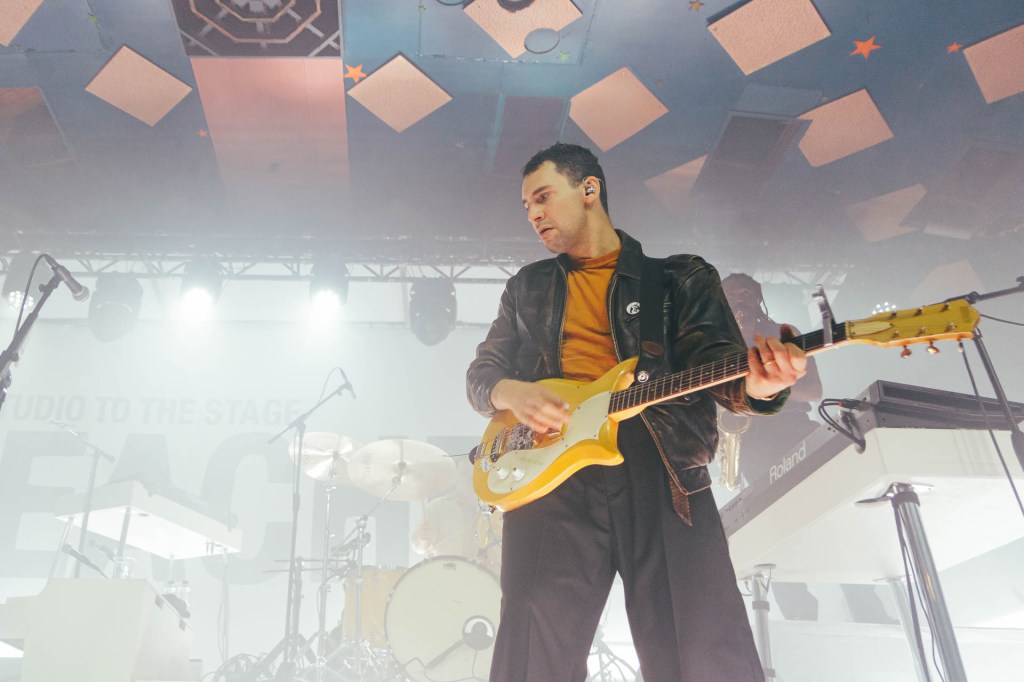
Bleachers’ frontman Jack Antonoff alleges that the first and only time his band played in Glasgow there were nine people in the audience. Speaking to fans who were in attendance that night it was more likely into triple digits but for the bargain price of £10 – even in 2015 – it seems almost criminal that anyone could’ve passed up such a gig. In the nine intervening years, the band has expanded their catalogue to four albums of nostalgia therapy; Breakfast Club anthems touching on love, loss and the general specific of 21st century angst. While Antonoff has collaborated on many, wildly successful projects with other artists it’s in Bleachers that his musical identity is its most raw and authentic. The sound is iconically New Jersey, iconically millennial, and in this Bleachers has forged an irresistible dynamic. And so for their second Glasgow outing – at more than triple the ticket price – Bleachers upscaled not once but twice, from SWG3 to the iconic almost-2000-capacity Barrowlands Ballroom, and sold it out.

Scottish-born, London-based artist Kaeto landed the coveted support slot for this From The Studio to The Stage Tour and duly delivers an uncompromising set of amalgam pop which is simultaneously ethereal and violent. Closing with the instantly familiar groove of No Body, she ensures the energy in the room is high ahead of the main event as she heads to the merch desk to give away postcards.

With the pervasive oscillation that is characteristic of their songs, Bleachers opt for an understated start as latest album opener I Am Right On Time winds the crowd up gently. It’s going to be a long night but no-one quite knows that yet. They come out all guns blazing on Modern Girl though. There are three saxophones on the stage and they’re immediately threatening on this track. In fact, there’s very limited relief from the intensity of dual saxes and dual drums throughout.

The fierce urgency of How Dare You Want More fades into the sweet simplicity of Wake Me. Antonoff recalls that first Glasgow gig with energetic sincerity and dedicates his cathartic grief bop Everybody Lost Somebody to the supposed nine people who showed up in 2015. His affection and genuine appreciation for the Scottish audience is voiced often and the love is clearly reciprocated with exaggerated ovations and occasionally thunderous singalongs.

The romantic devotional Me Before You carries tones of Springsteen’s Secret Garden and so when it segues tenderly into an actual Springsteen collaboration – hypnotic dream sequence, Chinatown – the crowd is already there waiting. As a songwriter, Antonoff really excels at building these quite straight-forward, mildly intense and melodramatic, love songs and the mid-set is loaded with them. There’s very few artists who can pull off 80s pastiche with both earnestness and self-awareness but this is where Bleachers have made their niche. Addressing the crowd, he speaks with an almost aggressive friendliness (New Jersey, man! IYKYK) about what it all means to him; where music comes from, inspiration and genius; what he loves to feel in music as a listener and as a performer, and eventually he rambles onto a cover of The Waterboys that nearly brings the house down through audience participation.

They carry on, unrelenting still. The one-two punch of Rollercoaster and Let’s Get Married sees Antonoff commanding the crowd to rise on one another’s shoulders and later he even plays his acoustic guitar with such ferocity that his hand requires minor medical attention. They’re not fucking around. It’s after 10.30pm when Antonoff announces that they’re foregoing the false-encore protocol. Thank God! the applause has been exhausting!

Their 20-song set crescendos in the last quarter with a sequence of what can only be described as “absolute bangers”; an embarrassment of riches representing each of their studio albums. At 11pm Antonoff calls to put the lights up on the audience so that the band can take in the full glorious scene of their triumphant “Glasgow 2” and with the promise of “Glasgow 3: as soon as fucking possible” they launch into Don’t Take The Money, closing the night with a crash of euphoric bitter-sweetness. Bleachers leave it all on the stage, regardless of how many people they’re playing for, and the feeling from this performance is that it could’ve been a lot bigger. For certain it could not have been smaller and it might not be this small again. Time will tell. Hopefully not too much time though.

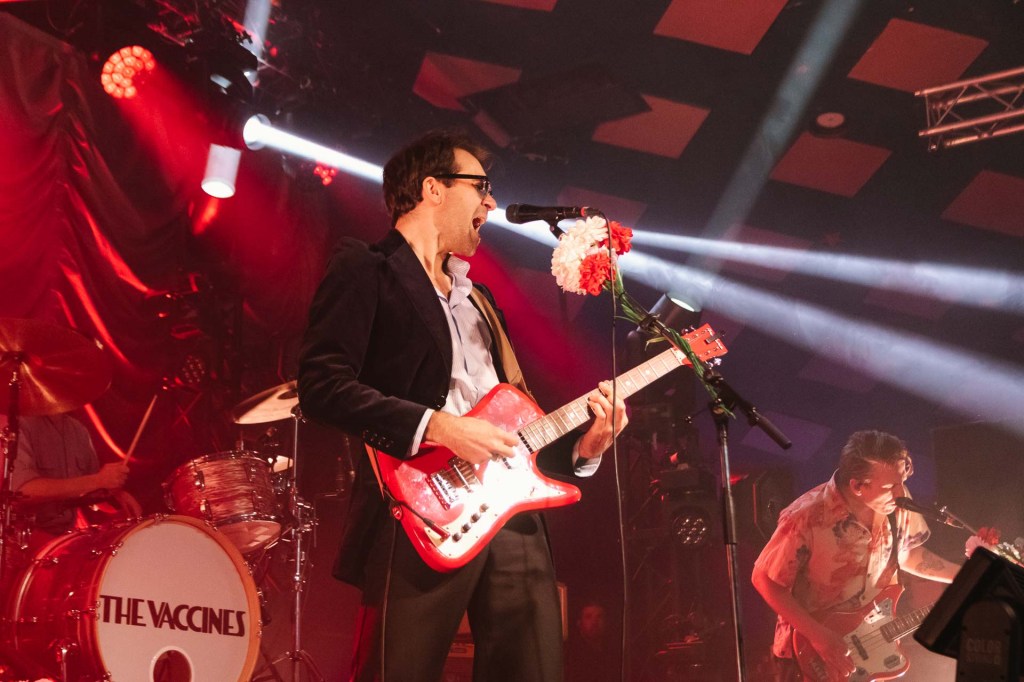
The Vaccines – Barrowland Ballroom

Live music, Music Review

No-one else does glamorous indie rock and roll quite like The Vaccines.

When The Vaccines emerged onto the UK music scene with their debut album in 2011 they immediately landed themselves in no-band’s land. Pop music was in a transitional phase with the girls (Rhianna, Lady Gaga, Katy Perry, Adele) on top and the folk rock revival (Mumford & Sons et al.) gaining momentum. Guitar bands were already “so two-thousand and late”. Arriving at the wake of landfill indie to find the buffet cleared and the chairs stacked, The Vaccines had no business hanging around. And yet…they delivered their first two LPs with such a moreish blend of earnestness and – ironically – irony that they almost single handedly revived the genre. Thirteen years later it’s hard to say whether the longevity and success of The Vaccines is an underdog story, or if contempt for their particular brand of English lad rock is merely a play in the culture wars waged between those Millennials utilising their university degrees in gainful employment and those who are not. It doesn’t really matter either way. What matters is that they’re still doing what they do, and doing it incredibly well.

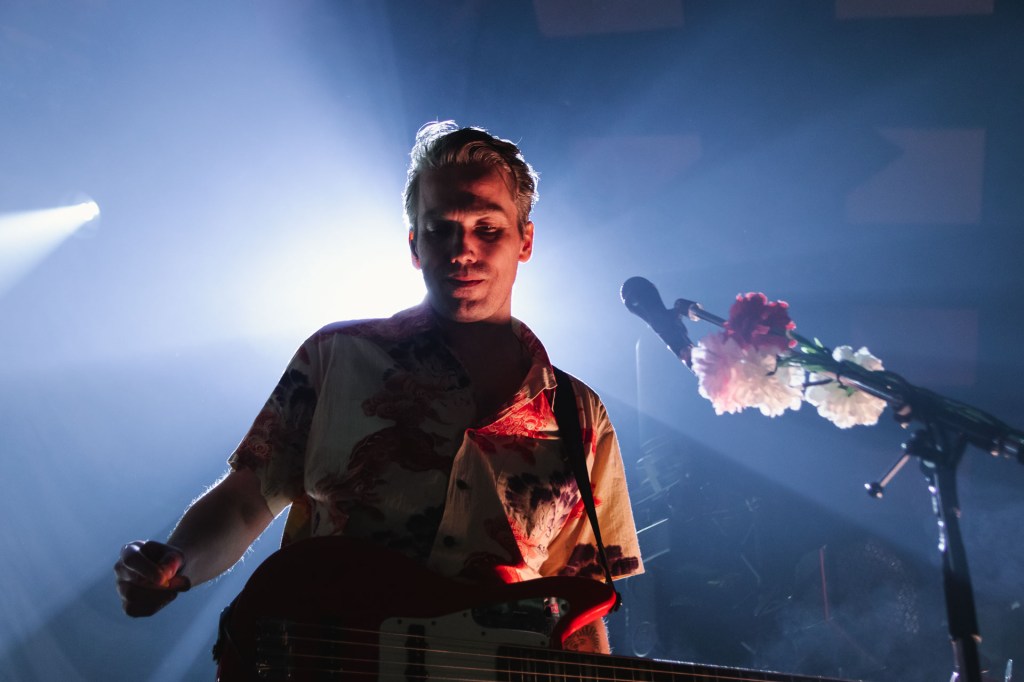
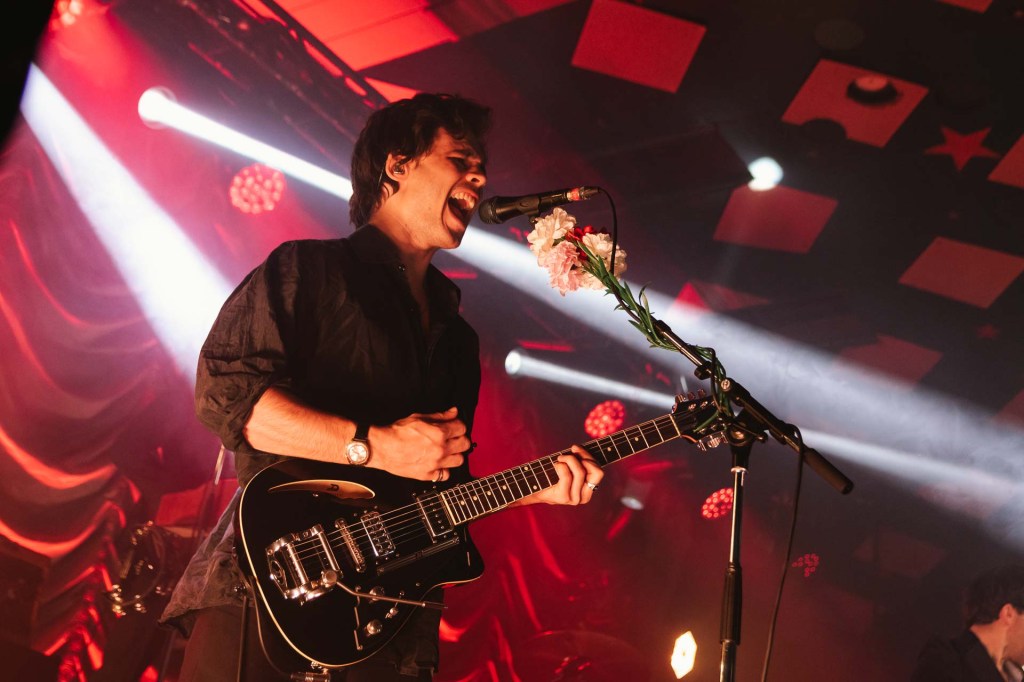
In support of their latest studio album, Pick-Up Full of Pink Carnations, the band brought a scintillating energy to their sold out show at Glasgow’s iconic Barrowland Ballroom. Their 75 minute performance encompassed an unrelenting 21-song set that made the two opening acts – Divorce and Teen Jesus & the Jean Teasers – seem like a completely separate gig, on a whole other night of the month, such was the intensity and immersive quality of The Vaccines frenetic musical joyride. Each of their six albums was honoured and, as is the measure of any decent live act, the songs cohered seamlessly over the course of the set. One could argue that The Vaccines’ biggest weakness is that their songs all kind of sound the same but the flaw in this thinking is that it’s actually a fantastic sound. Tonally, there’s not a lot of diversity but each and every song contains a top tier melodic hook and at least one indisputably relatable lyrical truth.

Articulating highlights among the no-filler set is super subjective: Wetsuit sounds more poignant than ever; Discount De Kooning (Last One Standing) offers a cathartic, jubilant singalong; singer Justin Young in his element, effortlessly windmilling his way through Headphones Baby is something to behold and has the crowd frothing. It’s all delightfully inconsequential. With an average bpm somewhere around 140 the show is over breathlessly quick. A four-song encore that ends with an entirely crowd-sung Norgaard underscores the need for both fresh air and levity.

“The longer we do this the luckier we feel” declares Young and in the current music industry landscape it’s easy to believe him. No-one does it quite like The Vaccines, anymore.

Gregory Alan Isakov – SWG3 Galvaniser’s

Live music, Music Review

Gregory Alan Isakov may have set down roots in the US state of Colorado, both figuratively and literally, but he is very much at home in Scotland. It’s unsurprising, given this country’s traditions of crofting and folk music – vocations that still go hand in hand to this day – but he also lived in the far north east of the country for a while, tending earth and songs, and always speaks fondly with candour about the people and places he connected with here. His music naturally embodies the richness and simplicity of life attuned to the minutiae of the everyday, contextualised within the vastness of the Universe. It is both intimate and expansive, intentional and meandering, specifically surreal, and embellished with an intangible magic that is uniquely Isakov’s.

On his most recent album, Appaloosa Bones, his first new music in five years, Isakov explores the breadth and depth of human experiences he observed in recent years; he spotlights our strange collective loneliness, hardships and sorrows, as well as the strength and beauty of our relationships – romantic, platonic, situational or otherwise. Sonically the album is a little rawer than his previous compilations; it instinctually stays closer to home and only soars when absolutely necessary. Isakov said he initially set out to create a lo-fi rock record but as the songs of Appaloosa Bones revealed themselves over time the timbre of the project became something more gentle. Similarly when it comes to crafting live performances the songs take the lead.

The delicate tones of the A-side tracks on Appaloosa Bones punctuate the set with brighter moments of reprieve; Before The Sun and The Fall chime with glistening banjo and piano motifs and subtly-hinted optimism. Dark, Dark, Dark offers some deep catharsis before Steve Varney’s swirling, ethereal guitar takes flight across San Luis. Emerging in shadowy silhouette, Jeb Bows’ plaintive violin heralds the opening to a darker passage; This Empty Northern Hemisphere is a journey in which Isakov Goes Electric. It rattles and rumbles, cascading and ascending again as the six musicians on stage wrestle to contain their own sorcery, finally crash landing into a rapturous reception.

Isakov emerges briefly from within, apologetically breaking the fourth wall to introduce his “best friends” in the band before theyturn their hearts and hands to the tenderness of Miles To Go, a troubadour’s ode to life on the road, carried along by piano, steel guitar and harmonica.Big Black Car provides more opportunities for the band members to shine as they trade solos, in the true folk tradition, and then it’s time for them to step out for some air. Isakov takes the spotlight himself, just for a moment, as 3am pleads with regret and promise and resignation into pin-drop silence.

For as much as he deliberately says very little throughout the set, he makes a point to thank the audience profusely for their attendance. It seems like more effort and sacrifice goes into just getting out of the house these days and artists are at the mercy of many factors beyond their own popularity or commercial success. This has never been lost on Isakov despite him consistently selling out consecutive tours across Europe at increasing capacity. SWG3 Galvanizers marks his biggest headline show in Scotland and while the staff are typically lovely and the technical aspects are world class it can be a struggle for some punters to navigate transport around the venue, and in terms of ambiance…well, it’s industrial (in the nicest way) which sets the stripped down performance of Second Chances in stark relief, even within a collection of mellifluous folk ballads. Isakov, Varney and Bowsconjure a graceful waltz while the audience stands spellbound, overawed and barely swaying.Liarsdoesn’t so much build as explodes out of nowhere, a crescendo before the third act.

Dandelion Wine and Chemicals are particular fan favourites, adored for their simplicity and visceral immediacy, and each receives deserving reaction. Isakov prefaces the title track of Appaloosa Bones saying that it’s “too depressing, we’re not gonna leave you with this” before winding up the set with the gloriously weighty Caves, its meditative refrain inviting a full-bodied singalong: “Let’s put all these words away”.The enraptured audience obliges and then begs for more so an encore is respectfully provided. The intricate beauty of Amsterdam and a captivating rendition of The Stable Song– just Isakov on acoustic guitar and Varney on banjo – preludes the stunning finale of the whole band performing Silver Bell around a single microphone, open hearts firmly front and centre. The audience response lasts until well after the house lights have come on. It’s this generous reciprocity between Isakov and his fans that sustains the love between us over the years and many thousands of miles, that keeps him coming back no matter the size of his audience. And in truth, there’s hardly a room left in Scotland big enough to contain the adoration of his fans. Regardless of where he plays, of course, he’s welcome here any time.

Far From Saints – Oran Mor

Live music, Music Review

Far From Saints made their Scottish debut with an intimate, sold out show in Glasgow, giving fans a sneak preview of their live sound and forthcoming album, ahead of some high profile stadium support gigs and summer festivals this year.

It may have been only their third live performance as a band but Far From Saints are far from new to the business of live music, or to recorded music for that matter. Comprised of Stereophonics’ songwriter and lead vocalist Kelly Jones and Austin, Texas band The Wind + The Wave (Patty Lynn and Dwight Baker), the band have found a new thrill in collaboration that began when their respective projects toured together, first in 2013 and later when Jones invited the American duo to open for him on a solo tour in 2019. They bonded over a shared love of the classics – Fleetwood Mac, Neil Young, Led Zeppelin, Tom Petty – and by the end of that tour they had an album’s worth of songs. The resulting self-titled record was delayed significantly by the Covid-19 pandemic but with its now imminent release coming on June 16th, and the band set to perform a slew of open air events over the summer, including support gigs with Kings of Leon and Paul Weller, they wisely decided to throw on a couple of “warm-up” shows in Glasgow and Leeds.

In comparison to the venues Jones has been accustomed to selling out over his 25+ year career, Glasgow’s Oran Mor isn’t just physically small, it’s dangerously intimate. There’s almost no distance between the band, on a waist- high stage, and the 500 punters assembled on the other side of the barrier but moreover, there’s nowhere to hide if things go wrong. And sometimes things do.

While the band assume their positions on stage, Jones takes an extended moment to personalise the occasion with an anecdote about being recognised in a Timpson store earlier while asking for directions to a pharmacy. Two points to be made here: He feels at home in Glasgow and he’s battling a cold. With that information out in the open he tends to keep his chat fairly minimal throughout the rest of the set which, for those familiar with his often narrative-driven performances, is a bit of a letdown. They open with the album’s first track and latest single Screaming Hallelujah, a distinctly indie folk number which is buoyed by bright acoustic guitar and duelling chorus melodies.

From the outset we’re promised a run through of the album and then some covers to finish up. It’s not the exact running order of the album but rather Jones and Lynn alternating introductions and lead vocal duties in equal turns. This generally means switching between mellow (Jones’) and more uptempo (Lynn’s) songs but given that no-one’s heard more than three singles yet the crowd are none the wiser about how the energy “should” flow between these ten songs. What’s so interesting about the audience at Oran Mor, a modest but notable majority of whom are women, is that they seem substantially more enamoured with Lynn and Baker. This makes for a really interesting dynamic between songs where fans shout for their favourite band member – “I LOVE YOU PATTY!” “I LOVE YOU DWIGHT!” and less often “I LOVE YOU KELLY” – but there’s very limited recognition or reciprocity from the stage and eventually the cries become a bit tedious.

Jones launches No Fool Like An Old Fool. Instantly familiar and catchy with a 70s country folk ballad feel, it’s not quite Gram and Emmylou but you can clearly sense the magic that sparked this collaboration in the first place. Then it’s Lynn’s turn to lead Take It Through The Night, much to the raucous delight of the audience. “This is my favourite one to perform because I sing most of it” she declares, tongue loosely in cheek. While she claims to be channelling her inner Stevie Nicks on this number, the twang of the guitars and pounding drums bear more resemblance to Miranda Lambert in her heavier moments. There’s no denying though, Lynn’s voice is the star of the show here.

On Won’t Get Out Alive the contrasting tones of their voices become almost cinematic; Jones’ soft and cloud-like rasp gently enveloping Lynn’s richly bold and resonant delivery. Despite a false start – or two – the set runs smoothly towards the final Southern rock epic, The Ride. This one features more lush vocal duelling, a driving rhythm section and multiple guitar solos before it goes full ZZ Top with a swinging blues rock instrumental outro. It’s so much fun!

When the band return from their brief refreshment interlude – it can’t be called an encore because no-one demanded it, though a few tried here and there – they let everyone witness the duet that catalysed the whole project: a cover of Stop Draggin’ My Heart Around. It’s good enough. They don’t owe anyone more but they insist on another two covers because they’re obviously enjoying playing together. And after a long night listening to mostly unreleased songs the audience appreciate a a few familiar ones that they can sing along to. Lynn puts in a solid turn leading The Ronettes’ Be My Baby before they close out the night on Tom Petty’s American Girl, to genuinely overwhelming applause.

Marcus Mumford – SWG3 TV Studio

Live music, Music Review

Marcus Mumford’s (self-titled) is one of this year’s best albums. However you want to qualify it – by genre, by gender, by place of origin, by personnel – it’s a stunning piece of work. The songwriting is imbued with vulnerability, integrity, joy and resolution; the performances reflect a deep respect for and cohesion with the songs, and the production is flawless. Of course, none of that guarantees a great live show, even for an experienced artist like Mumford. For a really brilliant gig, the stars have to align in just the right formation; the venue, the crowd, the setlist, support, the band, even the weather conditions play a role in conjuring those truly memorable occasions. Was Saturday night in Glasgow one of those nights? Probably. Yes.

Despite musically never expanding massively beyond their humble indie-folk beginnings, Mumford & Sons have been a big deal – worldwide – for over a decade now. The idea of Marcus Mumford playing a room as (relatively) intimate as SWG3’s TV Studio is almost too much excitement for a lot of fans who have queued since the afternoon, somehow evading the periodic heavy showers. The venue is three-quarters full by the time Monica Martin steps on stage for her too-beautiful and too-brief support slot.

The former Phox singer has been honing her solo material for a number of years now, revealing that an album is finally imminent. Martin opens her set with the raw and melodic Cruel, accompanied on keys and stripped down percussion by Jake Sherman. The sparse arrangement allows her smoky and tender vocal to shimmer. She follows up with one of Sherman’s songs, Maureen, which she remixed and featured on this year, apologising to anyone in the audience named Maureen. “It’s not about you, I promise,” she quips. The crowd participation on “sad disco” track Say is encouraging and Martin is obviously delighted by the audience’s engagement which allows her to adlib some delicate and alluring vocals over the song’s ending. The highlight of her set though is its closer, Go Easy, Kid. A song about showing self-compassion, recognising one’s own flawed humanity, and not taking life’s knocks too seriously, it’s a perfect starting point for what’s to follow. Delivered with such a classically constructed melody and starkly vivid lyrics, it swaddles like a decades-old number 1.

When Marcus Mumford appears on stage the applause is a mix of nervous anticipation, polite expectation and unbridled adoration. He almost delivers his own warm-up in the first two acoustic songs – both Mumford & Sons hits, Awake My Soul and The Cave – which lyrically and thematically foreshadow a lot of (self-titled). This seems to placate the audience’s appetite for the old material while giving Mumford a chance to pace his introduction of the new project. It’s been a while since Mumford & Sons have toured or recorded together, so the singer is quick to address the elephant in the room; once these solo shows are over he plans to get back to his day job with the band.

Accompanied now by a four-piece band, the body of the set follows the running order of (self-titled). It couldn’t really be any other way. The album has a natural arc; a tension and discomfort which reveals at Cannibal and resolves at How. It’s a progression and journey towards healing and liberation with some very dark stops along the way. However, far from being an ugly and painful sonic exploration, the darkness is cut with so much beauty and love and understanding and forgiveness.

The captivating beginning of Cannibal eventually crashes with so much explosive release that it causes punters at the bar to jump. The sound ricochets off SWG3’s bunker-like walls and ceiling, hitting the audience with invigorating force. The room is alive! Grace immediately sees hands and pints swaying in the air as the intricacies of the full band set up are revealed. It’s definitely a rock show, there’s no doubt about that. “I can tell already this [show] is going to be one of my favourites,” Mumford declares.

Better Off High is another big hit with fans that sees Mumford unleashing his distinctive vocals and exorcising some problematic self-perceptions. Who can really judge whether singing about addiction should feel this good? Dangerous Game swells majestically, accompanied by pulsing red light and concluding with a blistering guitar solo from Mason Stoops. Mumford appears to be having the time of his life with this band and crew. Highlighting the fact it’s his guitar tech Ryan’s birthday, he leads the crowd in a Happy Birthday singalong before recording a “fuck you” message to his former tech who left him to tour with Harry Styles. It’s a most charmingly passive-aggressive bit of stage shenanigans that punctuates the last part of the main set.

Bringing Monica Martin out to sing her part on the stunning hymnal Go In Light is an obvious crescendo but, not content with this confection alone, the audience is then treated to the heavenly vocal talent of Madison Cunningham on Stonecatcher. Performing an entire album that clocks in under 40 minutes – even with expansive guitar solos and Billy Connolly references – doesn’t make for a long show so following the arresting set closer How, Mumford leaves the stage for an ornamental encore effect and returns without even feigned demand.

The conclusion then consists of a Taylor Swift cover and two of Mumford’s Bob Dylan/Taylor Goldsmith co-writes from The New Basement Tapes record Lost On The River, each far sultrier than Bob would’ve ever dreamed. The night finishes with Mumford alone and unplugged on the edge of the crowd singing I Will Wait, ironically after a much delayed start due an audience member having fainted deep within the crowd and requiring assistance. The whole experience has been harmonious and communally blissful, and this final act of trust and intimacy is a rare privilege which the audience dutifully respect and reciprocate. The room remains almost pin-drop silent until the crowd is invited to join in on the final chorus. Truly an unforgettable evening.

Photo: Marcus Mumford by Kendall Wilson

Brett Young – O2 Academy Glasgow

Live music, Music Review

As the shutters roll up on Glasgow’s O2 Academy at precisely 7pm there is a queue bunched along the footpath south, past the bus shelter, 150 meters to the corner of the block, and another 50 metres past the bend. The O2 priority queue runs half the width and the full length of the building in the opposite direction. It is busy! Even the threat of imminent rain hasn’t deterred fans from showing up early to wait it out: that’s a special kind of devotion typically reserved for pop music’s elite and their often youthful audiences. Increasingly though, UK music fans all over the country are coming out in unprecedented volumes for any live music veiled under the “country” banner and it’s unsurprising, given the statistics on streaming and sales of the genre in recent years. Ironically, much of country’s growing popularity here has been attributed to a lack of attention to genre or categorisation by Millennial and Gen Z audiences; that the music is thriving here in spite, rather than because, of being country. There is also something to be said for the genre-fluidity of UK radio and its listeners compared to the US where the scope for discovery is more rigidly limited. Whatever the reasons, Brett Young has sold out his entire UK run of shows this autumn. Having already delivered a headline-worthy performance at Glasgow’s OVO Hydro for C2C back in March, the California-via-Nashville singer songwriter has nothing left to prove to his Scottish fans tonight.

Some pressure, in theory, should sit on the shoulders of the tour’s opening act, Callista Clark, who is first to face Young’s hardcore fanbase each night. If the young Georgia-native is feeling any urgency to impress she doesn’t show it. Her delivery is easygoing as she takes time to introduce herself and each of her songs in turn, by title and theme. The opening lyric “Too old to cry and too young to drive” begins the title track of her debut album Real To Me: The Way I Feel and positions Clark’s youth and vulnerability at the fore of her songwriting. This bluesy lament feels familiar yet fresh with Clark’s surprisingly rich tone resonating cleanly over her acoustic guitar. An R&B influence shines equally bright on songs like Brave Girl and the lilting Sad, the latter of which Clark prefaces as one of her “sassy” country songs. Following this up with Worst Guy Ever, she demonstrates how sweet sincerity and witty wordplay have been foundational to the best songwriting within country, particularly in launching some of the genre’s biggest stars. Her straightforward lyricism and understated emotional delivery cut to the heart, especially in the live setting, and the audience grows increasingly attentive and endeared with each song. Closing her set with the catchy upbeat single It’s ‘Cause I Am ensures both Clark and the audience part in a high spirits.

The transition into Brett Young’s smooth country pop is seamless from here. Love is his lyrical specialism and over the course of 15 radio-friendly songs he dissects this subject – both noun and verb forms – from various angles. His vivid storytelling and affecting voice are an engaging combination; Catch and 1, 2, 3, Mississippi start the set off in heady new-romance territory, all butterflies and dizzying distraction, before the crushing comedowns of Like I Loved You and You Ain’t Here To Kiss Me. The tempo and energy switch up with the lyrical tone but the audience remain elated throughout, happy to sing along at every opportunity. Young is most dynamic when he is free to move about the stage, pointing, smiling, waving and directing his gaze towards fans, but when he takes up acoustic guitar in front of a static microphone he surrenders a degree of that connection. The performance doesn’t suffer for it though; the added instrumentation provides an extra layer of richness and vibrancy while grounding Young’s songs with a simplicity that is irresistible.

Tracks from his latest LP, Weekends Look A Little Different These Days, showcase a natural maturing in Young’s perspective and presentation of romantic relationships, whether he is mining personal experience or not. This and Not Yet muse on the power and potential of growing deeper in love with “your person” while later in the set, an earnest introduction precedes Lady, which is dedicated to Young’s wife and two daughters, his inspirations for writing it. Acknowledging that a lot of his songs are directed at happy couples, having just encouraged slow dancing to the dreamy ballad In Case You Didn’t Know, Young also offers some solace for the broken hearts in the room. Mercy is especially moving as the band is stripped down to just Young on vocals with bandmate Matt Ferranti on keys and the audience forming a boisterous but tender choir. The reception to this is so loud and sustained with applause, cheering and stamping, that Young is forced to pause for more than a minute before delivering the final “…have mercy”.

It’s unclear whether the final three songs are intended as an encore given Young’s periodic absences from the stage throughout the set. Perhaps he’s not well? Feeling homesick? Road-weary? Whatever the reason, the night winds up with You Didn’t, a track seemingly torn straight out of the Boyz II Men songbook, before closing early with a rousing singalong to the chart-topping single Sleep Without You. Despite being tightly packed in from the outset the crowd somehow find space to move and dance around for one final number, maximising every last note as the band plays on even after Young’s departure. Having waited so long, it’s totally understandable.

Kaiser Chiefs – OVO Hydro

Live music, Music Review

Seasoned indie rockers Kaiser Chiefs proved worth their billing at Glasgow’s OVO Hydro on Friday night.

The “All Together” Tour arrived in Glasgow at the end of a long week for Ricky Wilson. An exceptional off night at London’s O2 last Saturday gave fans and music press cause for concern that the Kaiser Chiefs’ singer might not be up to headlining an arena tour right now. All fears were emphatically allayed with a consummate performance by the band on Friday night.

Charged with opening proceedings was Yorkshire band The Sherlocks, followed by Glasgow’s own The Fratellis with their modern take on rock’n’roll that featured both brass and a sassy trio of ladies on backing vocals. From the outset, fans were treated to a solid night of radio-friendly guitar anthems with plenty of opportunities to raise their pints and sing along, arm-in-arm, with friends and strangers alike.

Dancing and pleasure were major themes throughout Kaiser Chiefs’ set, whether intended figuratively or literally, and it took the band all of about 20 seconds of being onstage before the audience had entirely submitted to their will for the evening. Never Miss A Beat still embodied an ironic joy just as prescient in 2022 as when it was released in 2008. The same could be said for a few of the older songs on the setlist, such as Modern Way and The Angry Mob but it was obvious that, for the most part, audiences were expected to feel rather than think their way through the performance.

New single How To Dance was introduced as something of a cure for anxiety which, if true, delivered a great deal of relief to those in attendance. Northern Holiday elevated the positive energy of the room further through its irresistible disco beat while a lengthy call-and-response introduction was added to mega-hit Everyday I Love You Less And Less in case the audience needed to warm up for the ensuing singalong. Wilson dedicated a fabulous rendition of Hole In My Soul to “everyone of you that’s stuck with us over the years”, jumping, dancing and generally running himself ragged all without missing a note. Any critics doubting his dedication or ability to deliver a thrilling arena show were resolutely silenced by the end of the night.

Fan favourite I Predict A Riot brought punters racing back from the bar and toilet queues as shirtless lads on their mates’ shoulders embraced their moment of revelry. A respectable turn around allowed for a two-song encore but with closer Oh My God running to about double its recorded length there was ample singing and dancing to get in before curfew, the band finally leaving to rapturous applause and a chorus of voices sing-chanting their lyrics all the way home.